Nikhil Prasad Fact checked by:Thailand Medical News Team Mar 28, 2026 6 months, 1 week, 5 hours, 33 minutes ago
Medical News: A growing body of medical evidence is raising alarm over the long-term effects of COVID-19 on the brain, revealing that the virus can trigger a wide spectrum of neurological complications—some mild and reversible, others severe and even fatal. A newly published case series offers a rare and detailed look into how these complications unfold across different stages of infection, shedding light on risks that many people may not even realize exist.
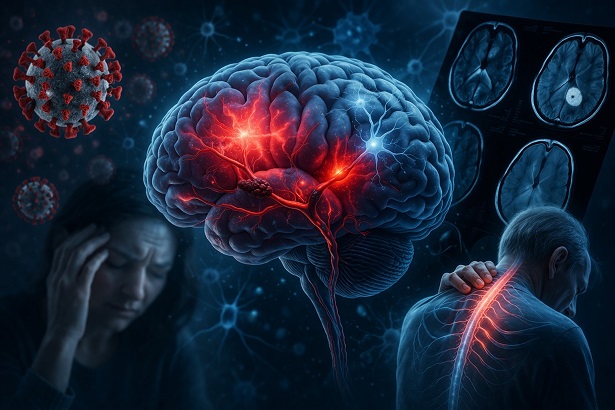 COVID-19 may silently trigger serious and delayed brain disorders even after recovery
Study Reveals Startling Neurological Cases
COVID-19 may silently trigger serious and delayed brain disorders even after recovery
Study Reveals Startling Neurological Cases
Researchers from the Medical University of Warsaw (Poland) and the Department of Neurology, Bielański Hospital (Warsaw, Poland) analyzed patient records from March 2020 to December 2023. Their focus was on individuals who developed new neurological symptoms during or after confirmed COVID-19 infection.
The study carefully examined six patients with varying degrees of illness. These cases ranged from lingering fatigue and brain fog to stroke, paralysis, spinal cord inflammation, and even fatal brain disease.
What makes this study particularly important is that it highlights how COVID-19 is not just a respiratory disease—it can directly and indirectly affect the nervous system in multiple ways.
From Brain Fog to Stroke and Paralysis
The findings reveal three main categories of neurological damage:
1. Lingering Symptoms After Mild Infection
One patient who had only a mild COVID-19 infection later developed long-term fatigue, reduced mental sharpness, headaches, and abnormal skin sensations. These symptoms lasted for months and significantly affected daily life.
Doctors believe this may be due to inflammation in the brain rather than permanent damage, offering hope for recovery over time.
2. Sudden and Severe Brain Events
Another case involved a 58-year-old man who developed a stroke just 10 days after infection. Imaging showed a blockage in a major artery supplying the brain, likely triggered by COVID-related blood clotting and inflammation.
Although treatment helped restore blood flow, the patient was left with lingering neurological deficits, including weakness and speech problems.
3. Autoimmune Attacks on the Nervous System
Several patients developed conditions where the immune system mistakenly attacked the body:
-One elderly patient developed Guillain–Barré syndrome, leading to near paralysis.
-Another suffered transverse myelitis, causing severe spinal cord inflammation and loss of mobility.
-A particularly severe case involved delayed brain vasculitis—an inflammatory attack on blood vessels in the brain—which ultimately led to death.
These cases show that neurological damage can appear weeks or even months after the initial infection.
Why COVID-1
9 Affects the Brain
Scientists believe multiple mechanisms are at play:
-Inflammation: The body’s immune response may damage brain tissue.
-Blood Clotting: COVID-19 increases the risk of dangerous clots that can block blood flow to the brain.
-Autoimmune Reactions: The immune system may attack nerves and brain cells after infection.
-Blood-Brain Barrier Damage: The protective barrier of the brain may become compromised, allowing harmful substances to enter.
This
Medical News report highlights that these mechanisms can overlap, making diagnosis and treatment more challenging.
Symptoms People Should Watch For
The study reinforces that neurological symptoms can vary widely, including:
-Persistent fatigue and brain fog
-Headaches and dizziness
-Loss of taste or smell
-Weakness or paralysis
-Speech difficulties
-Confusion or altered consciousness
Importantly, these symptoms may not appear immediately and can develop long after recovery from the initial infection.
Findings Raise Serious Concerns
The findings from this study clearly demonstrate that COVID-19 is far more than a temporary respiratory illness. It has the potential to trigger a cascade of neurological complications that can affect patients across different timeframes—from the acute phase to several months after recovery. While some individuals may experience mild and reversible symptoms, others may suffer life-altering or fatal conditions driven by inflammation, vascular damage, or autoimmune responses. The unpredictability of these outcomes makes it essential for both doctors and patients to remain vigilant. Long-term monitoring, early recognition of symptoms, and timely intervention could be critical in reducing the risk of severe neurological damage and improving recovery outcomes.
The study findings were published in the peer reviewed journal: COVID.
https://www.mdpi.com/2673-8112/6/4/57
For the latest COVID-19 news, keep on logging to Thailand
Medical News.
Read Also:
https://www.thailandmedical.news/
https://www.thailandmedical.news/articles/long-covid




 Share
Share
 Tweet
Tweet
 Share
Share

































