Nikhil Prasad Fact checked by:Thailand Medical News Team Aug 10, 2026 1 month, 3 weeks, 4 days, 3 hours, 54 minutes ago
Energy drinks have become a routine choice for teenagers and young adults seeking extra energy, sharper concentration or better athletic performance. But a new scientific review warns that these highly caffeinated beverages may temporarily alter the heart’s electrical activity and, in some circumstances, could help trigger dangerous abnormal heart rhythms.
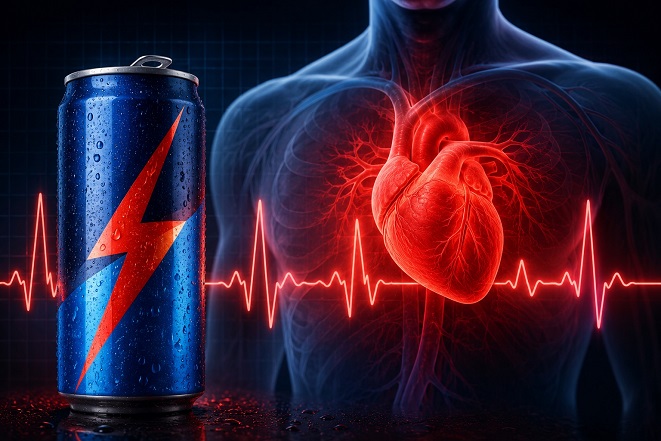 New research warns that energy drinks can temporarily alter heart rate and electrical activity in teenagers and young adults
Researchers reviewed evidence published over the past decade involving people aged 10 to 24. Their analysis included 22 studies: 10 randomized controlled trials, five non-randomized trials, one observational study and six case reports. Together, the findings raise concerns about what can happen to the heart shortly after energy drink consumption.
Researchers From Greece
The review was conducted by Antonios Constantinou, Christos Kogias, Elpida Emmanouilidou-Fotoulaki, Eleni P. Kotanidou, Andreas Giannopoulos, Charalampos Antachopoulos, Assimina Galli-Tsinopoulou and Maria Kavga.
The researchers are affiliated with the 3rd Department of Pediatrics, School of Medicine; Postgraduate Program in Adolescent Medicine and Adolescent Health Care, School of Medicine, Faculty of Health Sciences; 1st Department of Pediatrics, School of Medicine; and 2nd Department of Pediatrics, School of Medicine, all at Aristotle University of Thessaloniki, Greece.
Heart Rate Can Rise or Fall
One striking finding was that energy drinks did not affect everyone’s heart rate in the same direction. Several studies reported increases of about 3.5 to 10 beats per minute, particularly within 30 to 60 minutes. Under mental stress, one study recorded an increase reaching 20 beats per minute.
Other studies found temporary heart-rate reductions of around 3 to 8 beats per minute. Researchers suggested differences in drink volume, caffeine exposure, age, habitual caffeine use and other ingredients could help explain these contrasting responses.
Electrical Changes Seen on ECG Tests
This
Thailand Medical News report highlights another important finding: changes in the QTc interval, an ECG measurement reflecting how long the heart’s lower chambers take to electrically reset between beats. Several trials found QTc prolongation after higher-volume energy drinks, while others found shortening.
The reported QTc changes were roughly 6 to 20 milliseconds and remained within normal limits in the reviewed clinical studies. However, the authors cautioned that such changes could matter more in people already vulnerable to rhythm problems, including those with inherited or acquired QT abnormalities.
In adolescents, researchers also found increased supraventricular extrasystoles, essentially extra early heartbeats arising from the upper chambers. Another study reported more frequent ST-T changes after energy drink consumption.
Severe Cases Raise Concern&l
t;br />
Controlled trials did not record severe arrhythmias during monitored energy drink exposure. However, case reports described atrial fibrillation, ventricular fibrillation and cardiac arrest after energy drinks, sometimes combined with alcohol or other substances.
Major cases involving energy drinks alone generally followed amounts exceeding 500 milliliters, with several reports involving approximately 600 to 750 milliliters. Most ECG changes were temporary, but monitoring in clinical trials lasted no longer than 12 hours. The studies therefore cannot show whether repeated consumption causes accumulating or long-term effects.
Conclusion
The review suggests energy drinks can measurably influence heart rate and electrical activity in young consumers, although most observed changes were temporary and mild to moderate. Larger long-term studies are needed to determine whether frequent use, high doses, combined ingredients, exercise, stress, alcohol or individual susceptibility can turn these short-lived changes into a more serious cardiovascular danger.
The study findings were published in the peer reviewed journal: Medicina.
https://www.mdpi.com/1648-9144/62/8/1533
Read Also:
https://www.thailandmedical.news/articles/cardiology 



 Share
Share
 Tweet
Tweet
 Share
Share

































