Nikhil Prasad Fact checked by:Thailand Medical News Team Jun 10, 2026 3 months, 3 weeks, 3 days, 2 hours, 54 minutes ago
Medical News: A newly published case study is adding to growing concerns that COVID-19 may trigger inflammation of the pancreas, a potentially serious condition known as acute pancreatitis. While the coronavirus is primarily known for attacking the lungs and causing respiratory illness, doctors are increasingly discovering that the virus can affect multiple organs throughout the body. The latest report describes a woman with a highly complex medical history who developed acute pancreatitis shortly after being diagnosed with COVID-19 pneumonia, providing further evidence that SARS-CoV-2 infections may contribute to pancreatic injury.
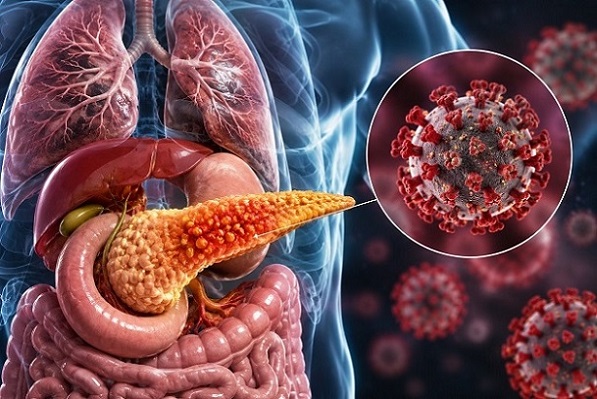 A new case study suggests that COVID-19 infection may trigger acute pancreatitis, highlighting the virus’s ability
to affect organs beyond the lungs
The case was documented by researchers from the Department of Infectious Diseases, Taizhou School of Clinical Medicine, The Affiliated Taizhou People’s Hospital of Nanjing Medical University, Nanjing Medical University, Taizhou, Jiangsu, China, and the Department of Pharmacy, Taizhou School of Clinical Medicine, The Affiliated Taizhou People’s Hospital of Nanjing Medical University, Nanjing Medical University, Taizhou, Jiangsu, China.
A Patient Facing Multiple Serious Health Challenges
The patient was a 59-year-old woman with a long and complicated medical history. She had previously undergone surgery for an adrenal tumor and later received a pancreaticoduodenectomy, also known as a Whipple procedure, to treat a gastrointestinal stromal tumor (GIST), a rare cancer affecting the digestive system. She also had a history of pulmonary tuberculosis that had been treated irregularly because of medication-related liver complications.
As a consequence of previous tuberculosis, she developed post-tuberculosis lung disease and chronic cavitary pulmonary aspergillosis, a severe fungal infection that develops in damaged lung cavities. For more than a year, she had suffered repeated episodes of hemoptysis, or coughing up blood, which had become progressively worse.
When she was admitted to the hospital, scans revealed extensive lung abnormalities including a fungal ball occupying a cavity in her left upper lung. Doctors initially treated her with oxygen, antifungal medications and antibiotics, but her condition failed to improve.
Life-Threatening Respiratory Complications
Because of persistent bleeding from the lungs, doctors performed a fifth bronchial artery embolization procedure in an effort to stop the hemorrhaging.
Unfortunately, shortly after the intervention, the woman suffered massive hemoptysis that caused airway obstruction and respiratory failure.
She required emergency intubation and mechanical ventilation to keep her alive. Bronchoscopy revealed bloody secretions within her airways, confirming the severity of the bleeding episode. Although she was eventually stabilized and removed from the ventilator several days later, new complications soon emerged.
The patient developed persistent fever and worsening respiratory symptoms. Advanced metagenomic next-generation sequencing of sputum samples identi
fied several pathogens, including SARS-CoV-2, the virus responsible for COVID-19. The testing also detected Escherichia coli and Enterococcus faecium bacteria.
Doctors immediately initiated treatment with Paxlovid and dexamethasone to combat COVID-19 pneumonia and reduce systemic inflammation.
A New and Unexpected Problem Emerges
Five days after COVID-19 treatment began, the patient's fever subsided and her respiratory condition improved. However, she then started experiencing upper abdominal pain and tenderness.
Laboratory testing revealed dramatically elevated pancreatic enzyme levels. Her amylase level rose to 503 U/L while lipase increased to 353 U/L, both far above normal values. A CT scan of the abdomen confirmed inflammation surrounding the pancreas.
Based on these findings, doctors diagnosed mild acute pancreatitis.
Acute pancreatitis occurs when digestive enzymes become activated within the pancreas, causing inflammation and tissue damage. The condition can result in severe pain and, in more serious cases, organ failure and death.
How Might COVID-19 Damage the Pancreas?
One of the most intriguing aspects of this case is the possible connection between COVID-19 and pancreatic injury.
Researchers explained that pancreatic cells contain high levels of ACE2 receptors, the same receptors that SARS-CoV-2 uses to enter human cells. This raises the possibility that the virus may directly infect pancreatic tissue.
Scientists have also proposed other mechanisms. COVID-19 can trigger widespread inflammation, abnormalities in blood clotting and microvascular injury, all of which could potentially damage the pancreas. Previous research has already demonstrated that pancreatic involvement can occur during or even after recovery from COVID-19 infection.
This
Medical News report notes that although a direct causal relationship cannot be conclusively proven from a single case, the timing of events strongly suggests that COVID-19 may have played an important role in the development of pancreatitis.
Other Possible Contributing Factors
The researchers were careful to point out that the patient's medical history was extraordinarily complex. Common causes of pancreatitis such as alcohol use, gallstones, elevated triglycerides and high calcium levels were ruled out.
However, other contributing factors remained possible. Certain medications, including antiviral and antifungal therapies, have occasionally been associated with pancreatic inflammation. The patient's previous pancreatic surgery, underlying cancer history and severe systemic illness may also have increased her vulnerability.
As a result, the investigators concluded that the pancreatitis was likely multifactorial, with COVID-19 infection representing one of several important contributors.
Recovery and Long-Term Follow-Up
The patient was treated conservatively with fasting, intravenous fluids, octreotide therapy and nutritional support. Her pancreatic enzyme levels gradually improved and she was eventually discharged from the hospital.
At a 12-month follow-up, she remained alive and had not developed any long-term pancreatic complications. However, doctors discovered recurrence of pulmonary tuberculosis as well as liver metastasis from her gastrointestinal stromal tumor. Despite these setbacks, there was no evidence of lasting pancreatic dysfunction.
Conclusion
This case provides important new evidence that COVID-19 infections may contribute to the development of acute pancreatitis, particularly in medically complex patients. Although the exact mechanism remains unclear, the close temporal relationship between COVID-19 pneumonia and pancreatic inflammation observed in this patient supports growing concerns that SARS-CoV-2 is capable of affecting organs beyond the respiratory system. The findings also highlight the importance of monitoring COVID-19 patients for unexpected abdominal symptoms, especially when common causes of pancreatitis have been excluded. As more cases are reported worldwide, researchers may gain a clearer understanding of how often pancreatic injury occurs during COVID-19 infection and which patients face the greatest risk. Until then, clinicians should remain vigilant and consider pancreatic involvement when evaluating individuals with COVID-19 who develop abdominal pain or unexplained elevations in pancreatic enzymes.
The study findings were published in the peer reviewed journal: Frontiers in Medicine.
https://www.frontiersin.org/journals/medicine/articles/10.3389/fmed.2026.1828229/full
For the latest COVID-19 news, keep on logging to Thailand
Medical News.
Read Also:
https://www.thailandmedical.news/articles/coronavirus
https://www.thailandmedical.news/articles/long-covid




 Share
Share
 Tweet
Tweet
 Share
Share

































