Nikhil Prasad Fact checked by:Thailand Medical News Team Feb 21, 2026 6 months, 1 week, 2 days, 13 hours, 54 minutes ago
Medical News: Ancient Remedies Revisited in Modern Labs
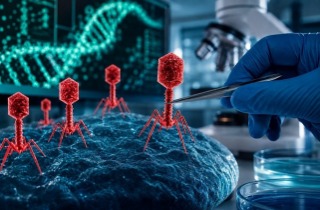
Scientists in Switzerland and Germany have turned to a 16th-century herbal manuscript in search of new antiviral solutions, and their findings are attracting attention. Researchers from the ZHAW Zurich University of Applied Sciences, Weihenstephan-Triesdorf University of Applied Sciences, Technical University of Munich, and the Spiez Laboratory of the Federal Office for Civil Protection investigated whether old medicinal plant recipes could help identify compounds active against SARS-CoV-2, the virus responsible for COVID-19.
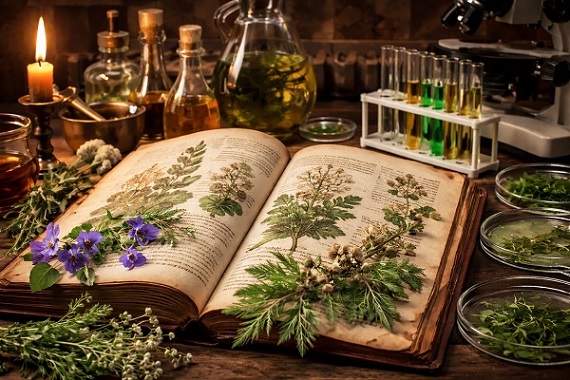 Researchers discover that centuries-old Swiss herbal remedies contain plant extracts showing strong laboratory activity against SARS-CoV-2.
The team explored a historic text known as the Receptarium of Burkhard III von Hallwyl, a Swiss herbal guide written in 1580 for ordinary people. The manuscript contains hundreds of plant-based remedies used for skin conditions and illnesses that, when interpreted using modern medicine, may have been caused by viral infections. Researchers believed that these historical clues might lead to forgotten medicinal plants with real antiviral potential.
How the Study Was Carried Out
The scientists selected ten plants described in the manuscript and prepared extracts using water and alcohol-based methods. They then tested these extracts in laboratory cell models exposed to SARS-CoV-2. The goal was to see whether the plant compounds could stop the virus from damaging cells while remaining non-toxic.
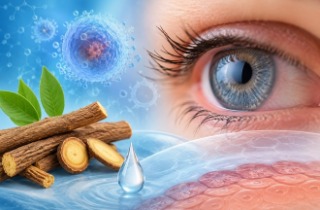
Out of 22 tested extracts, only hydroethanolic preparations showed strong activity. Four plants stood out: Artemisia vulgaris (common mugwort), Geranium robertianum (herb Robert), Sambucus nigra (elderberry leaves), and Viola odorata (sweet violet leaves). These extracts showed at least 50 percent antiviral activity at low concentrations while maintaining acceptable cell survival.
The researchers then separated these extracts into smaller chemical fractions. The ethyl acetate fractions of several plants showed nearly complete antiviral activity at very low doses, with sweet violet showing the strongest effect, reducing virus-related damage by more than 85 percent at just 1.9 micrograms per milliliter.
Why Historical Medicine Matters
This
Medical News report highlights how the study demonstrates that historical medical texts can serve as valuable scientific resources. The manuscript was originally intended for common people and included practical recipes passed down through generations. Interestingly, some plant uses recorded in the text do not appear in major herbal books of the same era, suggesting that local knowledge preserved unique therapeutic insights.
Researchers emphasized that many of these plants are no longer widely used in modern evidence-based herbal medicine. Yet, the laboratory findings suggest that some forgotten remedies may still hold biological activity worth exploring. The work also shows how combining ethnopharmacology with modern virology can open new research paths.
r />
Key Scientific Insights
The team performed advanced chemical fingerprinting to identify marker compounds in the active extracts. Compounds such as chlorogenic acid, kaempferol, and violanthin were detected, giving clues about which chemical families may contribute to antiviral action.
However, the researchers also warned that these are early-stage results. The tests were done in cell cultures using an early strain of SARS-CoV-2, and further studies are required to isolate active molecules, confirm safety, and determine whether effects remain consistent across newer viral variants.
Conclusions
The findings suggest that historical herbal knowledge can provide a surprisingly effective starting point for modern antiviral research. While the study does not prove that these plants can treat COVID-19 in humans, it strongly supports further investigation into their active compounds. The results show that several plants, once widely used but now largely forgotten, may contain potent antiviral agents worthy of deeper pharmacological study. Future research will need to confirm safety, determine mechanisms, and evaluate whether these compounds can be developed into practical therapies or preventive options.
The study findings were published in the peer reviewed journal: Frontiers in Pharmacology.
https://www.frontiersin.org/journals/pharmacology/articles/10.3389/fphar.2025.1731629/full
For the latest on Herbs and Phytochemicals, keep on logging to Thailand Medical News.
Read Also:
https://www.thailandmedical.news/articles/herbs-and-phytochemicals
https://www.thailandmedical.news/articles/coronavirus
https://www.thailandmedical.news/articles/long-covid




 Share
Share
 Tweet
Tweet
 Share
Share