Nikhil Prasad Fact checked by:Thailand Medical News Team Jun 14, 2026 3 months, 2 weeks, 6 days, 7 hours, 13 minutes ago
Medical News: As rates of hyperuricemia and gout continue to climb worldwide, scientists are increasingly searching for safer alternatives to conventional medications. A new study has revealed that a phytochemical compound called engeletin, found in a traditional Chinese medicinal herb, may help lower uric acid levels—but in a surprising way. Rather than acting directly, the compound appears to rely on metabolites produced inside the body to deliver its beneficial effects.
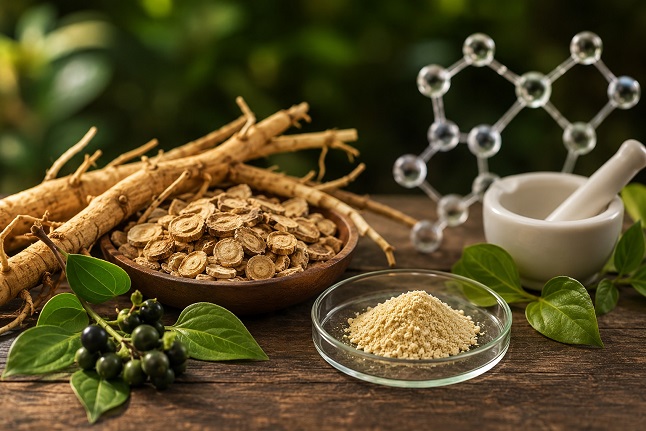 Scientists discover that metabolites produced from the natural flavonoid engeletin may be responsible for lowering uric acid
levels and could inspire new gout treatments
Researchers Uncover Hidden Activity Behind Engeletin
The study was conducted by researchers from the State Key Laboratory of Natural and Biomimetic Drugs, School of Pharmaceutical Sciences, Peking University; the Division of Pharmacognosy, School of Pharmaceutical Sciences, Peking University Health Science Center; Zhejiang Chinese Medical University; and the Department of Chemical Biology, Peking University Health Science Center, all in China.
Engeletin is one of the major flavonoids found in Smilacis Glabrae Rhizoma, a traditional Chinese medicinal herb commonly used to manage elevated uric acid levels. Hyperuricemia occurs when uric acid accumulates in the blood and is a major risk factor for gout. It is also linked to diabetes, hypertension, and kidney disease.
Current treatments such as allopurinol and febuxostat can effectively lower uric acid but are associated with potentially serious side effects, creating demand for safer alternatives.
Tracking What Happens Inside the Body
To better understand how engeletin works, the researchers investigated what happens to the compound after it enters the body. Using advanced analytical techniques, they identified an astonishing 52 different forms of engeletin circulating in mice, including the original compound and 51 metabolites produced through natural metabolic processes.
The team found that engeletin undergoes extensive transformation through processes such as glucuronidation, sulfation, hydrolysis, methylation, and hydroxylation. These chemical modifications create new molecules that may have biological activities distinct from the parent compound.
Remarkably, the scientists discovered 16 previously unreported metabolites, greatly expanding scientific understanding of how this natural substance behaves in living organisms.
The Real Uric Acid Fighters Were Metabolites
One of the most unexpected findings was that engeletin itself showed no meaningful ability to inhibit xanthine oxidase, the enzyme responsible for producing uric acid. However, two metabolites generated from engeletin—neoisoastilbin and naringenin—displayed significant enzyme-blocking activity.
Neoisoastilbin demonstrated stronger activity than naringenin, although both were less potent than the prescription drug allopurinol.
Computer-based molecular docking studies further revealed that both metabolites could bind directly to
critical regions of the xanthine oxidase enzyme. By occupying these sites, they may interfere with the enzyme's ability to generate uric acid and also block access of natural substrates needed for uric acid production.
This
Medical News report highlights an increasingly important concept in natural medicine research: sometimes the compounds people consume are not the true therapeutic agents. Instead, the body converts them into new molecules that carry out the actual biological activity.
Animal Tests Confirm Uric Acid-Lowering Effects
The researchers then tested engeletin and its metabolites in mice with experimentally induced hyperuricemia.
Despite lacking direct enzyme inhibition in laboratory tests, engeletin significantly reduced blood uric acid levels in the animals when administered at higher doses. Neoisoastilbin also produced strong uric acid-lowering effects, while naringenin reduced uric acid levels at sufficient doses.
The findings suggest that once engeletin is metabolized in the body, its breakdown products become active contributors to lowering uric acid. The researchers also believe that gut bacteria may play a crucial role in transforming engeletin into these beneficial metabolites, adding another layer to its mechanism of action.
A New Direction for Future Gout Treatments
The study provides valuable evidence that engeletin's anti-hyperuricemic effects are largely driven by metabolites rather than the original compound itself. By identifying neoisoastilbin and naringenin as key active forms, researchers now have promising new targets for future drug development.
Conclusion
The discovery that engeletin acts through active metabolites rather than directly represents a significant advance in understanding how plant-based therapies may combat hyperuricemia. The identification of neoisoastilbin and naringenin as uric acid-lowering agents opens new possibilities for developing safer treatments for gout and related metabolic disorders. Future studies will need to confirm how these metabolites behave in humans, determine optimal dosing strategies, and explore the important role of gut microbes in generating these therapeutic compounds.
The study findings were published in the peer reviewed International Journal of Molecular Sciences.
https://www.mdpi.com/1422-0067/27/12/5353
For the latest on herbs and phytochemicals, keep on logging to Thailand
Medical News.
Read Also:
https://www.thailandmedical.news/articles/herbs-and-phytochemicals
Medical Disclaimer: All content published by Thailand Medical News is based on scientific research and is intended for informational and educational purposes only. It is not medical advice, diagnosis, or treatment recommendations. Readers must not attempt to use, apply, or experiment with any protocols, compounds, or therapies mentioned without first consulting a qualified and licensed medical doctor. Many findings discussed are experimental or preliminary, and only a licensed healthcare professional can determine what is safe and appropriate for an individual’s specific medical condition.




 Share
Share
 Tweet
Tweet
 Share
Share

































