Nikhil Prasad Fact checked by:Thailand Medical News Team Jun 30, 2026 2 months, 2 days, 14 hours, 51 minutes ago
Medical News: A growing body of research is raising fresh concerns about microplastics—tiny plastic particles now found almost everywhere on Earth. Scientists are beginning to understand that these particles may not just be environmental pollutants, but could also play a role in helping viruses survive longer and spread more widely, potentially increasing risks to human health.
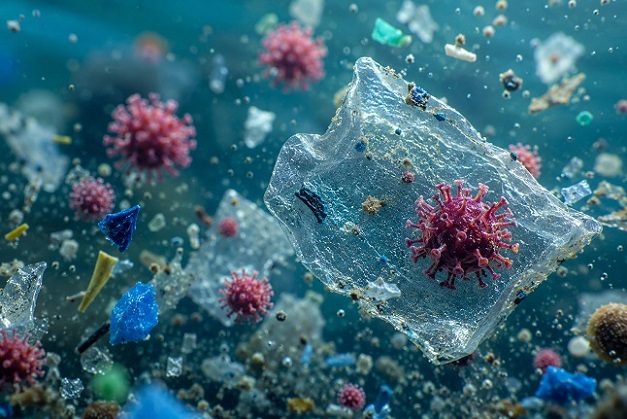 Microplastics may act as hidden carriers that help viruses survive longer and spread further across the environment
Tiny Plastics Are Everywhere
Microplastics may act as hidden carriers that help viruses survive longer and spread further across the environment
Tiny Plastics Are Everywhere
Microplastics are extremely small plastic fragments, usually less than 5 millimeters in size. They form when larger plastic items break down over time or are produced intentionally for use in cosmetics and industrial products.
These particles are now found in oceans, rivers, soil, and even in the air we breathe. Because of their size, they can easily enter the human body through food, water, or inhalation. What makes them especially concerning is their ability to attract and carry harmful substances.
Scientists Investigate a Hidden Threat
The research was carried out by scientists from several institutions in Italy, including the Department of Medicine, Surgery and Dentistry at the University of Salerno, the Department of Chemistry and Biology “Adolfo Zambelli” at the University of Salerno, the Department of Civil Engineering at the University of Salerno, the InterUniversity Centre for the Prediction and Prevention of Major Hazards (C.U.G.RI), and the Microbiology and Virology Unit at A.O.U. San Giovanni di Dio e Ruggi d’Aragona.
Their work explores how microplastics interact with viruses and why this interaction could pose a serious environmental and health concern.
How Microplastics Protect Viruses
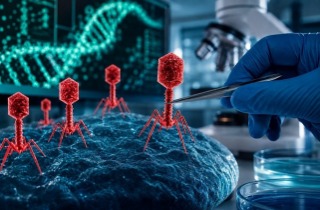
Viruses usually do not survive long outside a host. However, microplastics appear to provide them with a protective surface.
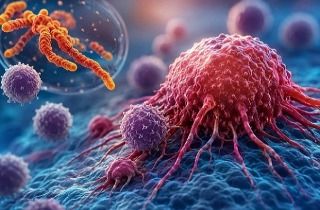
Viruses can attach to microplastics through natural forces such as electrical attraction and water-repelling interactions. Once attached, they can become part of a biofilm—a sticky layer made up of microorganisms.
Inside this layer, viruses are shielded from sunlight, heat, and disinfectants. This protection allows them to remain stable and potentially infectious for longer periods than they normally would.
A New Environmental Transmission Pathway
This
Medical News report highlights that microplastics may act like moving platforms that transport viruses across different environments.
Because these particles can travel through water and air over long distances, they may carry viruses far from their original source. This raises concerns that infections could spread in new and unexpected ways.
Strong Evidence from Laboratory Studies
Laboratory findings show that some types of microplastic
s, especially polystyrene, have a strong ability to bind viruses. In certain experiments, up to 98 percent of viral particles attached to these plastic surfaces.
Other studies found that microplastics in wastewater could retain nearly 90 percent of viral material. This means that microplastics can concentrate viruses in specific areas, increasing the chances of exposure.
There is also evidence suggesting that these interactions may influence how viruses behave in the body, possibly affecting how the immune system responds.
What It Means for Public Health
Although there is still no direct proof that microplastics cause infections in humans, the findings raise important concerns. Their ability to protect and transport viruses could increase the likelihood of human exposure.
Another complication is that current testing methods cannot easily determine whether the viruses attached to microplastics are still infectious. This makes it difficult to fully measure the real-world risk.
Scientists are calling for more detailed studies to better understand how these particles behave in real-life environments and how they might affect disease transmission.
Conclusion
The findings suggest that microplastics are not just passive pollutants but active environmental players capable of interacting with viruses in complex ways. By providing surfaces for viral attachment, protecting them from environmental damage, and enabling long-distance transport, these particles may contribute to the persistence and spread of infectious agents. While more research is needed to confirm direct impacts on human health, the evidence is strong enough to warrant concern. Reducing plastic pollution and improving environmental monitoring should now be seen as part of a broader strategy to protect public health.
The study findings were published in the peer reviewed journal: Environmental Research.
https://www.sciencedirect.com/science/article/pii/S0013935126014696
For the latest on the health risks of microplastics, keep on logging to Thailand
Medical News.
Read Also:
https://www.thailandmedical.news/news/plastic-particles-in-food-linked-to-gut-inflammation-and-colon-cancer-risk
https://www.thailandmedical.news/news/microplastic-and-nanoplastic-particles-threaten-male-fertility-worldwide
https://www.thailandmedical.news/news/shocking-discovery-of-microplastics-in-human-brains




 Share
Share
 Tweet
Tweet
 Share
Share