Nikhil Prasad Fact checked by:Thailand Medical News Team Mar 27, 2026 6 months, 1 week, 3 days, 11 hours, 53 minutes ago
Medical News: Olive Oil Ingredient Shows Strong Anti-Cancer Potential
A natural compound found in extra virgin olive oil is drawing growing attention after new research revealed its ability to weaken and damage breast cancer cells. The compound, known as oleocanthal, has long been recognized for its anti-inflammatory benefits, but scientists have now uncovered deeper effects that could reshape how certain cancers are treated.
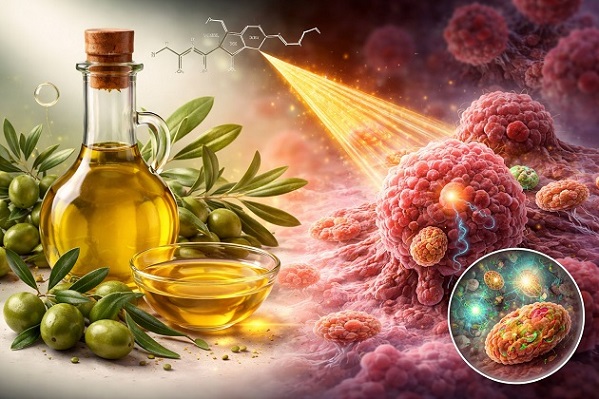 Natural olive oil compound disrupts cancer cell energy and survival mechanisms
In this
Medical News report, researchers examined how oleocanthal interacts with different types of breast cancer cells and found that it disrupts the internal systems that cancer cells rely on to survive and grow. The findings point toward a new way of targeting cancer by interfering with its energy production.
Researchers and Study Background
The study was conducted by scientists from the Grup Multidisciplinari d’Oncologia Translacional, Institut Universitari d’Investigació en Ciències de la Salut (IUNICS), Universitat de les Illes Balears (UIB), Spain; Institut d’Investigació Sanitària de les Illes Balears (IdISBa), Spain; and CIBER Fisiopatología de la Obesidad y Nutrición, Instituto de Salud Carlos III, Madrid, Spain.
The researchers focused on understanding how oleocanthal affects cancer cell metabolism, particularly in breast cancer subtypes that behave very differently from one another.
How Oleocanthal Weakens Cancer Cells
The study showed that oleocanthal significantly reduced the survival of breast cancer cells. The effect was strongest in aggressive forms such as triple-negative breast cancer, where cell viability dropped sharply when exposed to the compound.
One of the most important findings was that oleocanthal interferes with glycolysis, the process cancer cells use to rapidly produce energy. By lowering the activity of key enzymes, the compound effectively cuts off a major energy source.
At the same time, oleocanthal disrupts mitochondria, the structures inside cells responsible for energy production. In aggressive cancer cells, mitochondrial activity decreased significantly, and the structure of these energy units became fragmented and unstable. This double impact makes it much harder for cancer cells to survive.
Differences Between Cancer Types
Not all breast cancer cells responded in the same way. The aggressive triple-negative cells showed the most dramatic effects, including severe energy disruption and structural damage within the cell.
Other types, such as luminal breast cancer cells, showed mixed responses. Some experienced increased mitochondrial activity as a temporary reaction, while others were less affected overall. This suggests that the effectiveness of oleocanthal depends on the specific biology of the cancer.
A key factor identified in the study was the level of a protein cal
led c-MET. Cancer cells with higher levels of this protein were much more sensitive to oleocanthal. This is important because high c-MET levels are often linked to more aggressive disease and poorer patient outcomes.
A New Approach to Cancer Treatment
Unlike traditional chemotherapy, which often targets DNA directly, oleocanthal works by disrupting how cancer cells produce and manage energy. By attacking both glycolysis and mitochondrial function, it creates a powerful stress on cancer cells.
This approach may offer a new direction in cancer treatment, especially for difficult-to-treat cancers that rely heavily on altered metabolism. The compound also increases internal stress within cancer cells, leading to further damage and reduced ability to grow or spread.
Challenges and Future Potential
While the findings are promising, researchers note that the concentrations used in the study may not be easily achieved through diet alone. The compound also showed some effects on normal cells under certain conditions, meaning more research is needed to ensure safety.
However, there is growing interest in developing oleocanthal-based therapies or formulations that could deliver effective doses in a controlled way. Early signs suggest that such approaches could eventually complement existing cancer treatments.
Conclusion
This study highlights oleocanthal as a powerful natural compound capable of disrupting cancer cell metabolism and weakening their survival systems. Its strongest effects were seen in aggressive breast cancers with high c-MET levels, suggesting a potential targeted use. Although more research is needed, these findings open the door to new treatment strategies that focus on starving cancer cells of energy while damaging their internal structures.
The study findings were published in the peer reviewed journal: Antioxidants.
https://www.mdpi.com/2076-3921/15/4/410
For the latest COVID-19 News, keep on logging to Thailand
Medical News.
Read Also:
https://www.thailandmedical.news/articles/cancer




 Share
Share
 Tweet
Tweet
 Share
Share