Nikhil Prasad Fact checked by:Thailand Medical News Team Oct 19, 2026 48 minutes ago
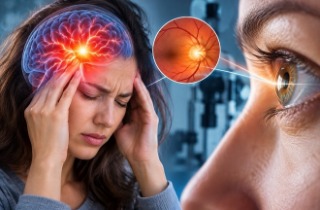
Eye problems may continue for years after COVID-19, even when standard examinations reveal no obvious abnormalities. A new Austrian study has found that patients previously hospitalized with COVID-19 can experience persistent blurred vision, burning sensations, and light sensitivity nearly three years after infection.
 New research reveals that blurred vision, light sensitivity, and other eye problems can persist for years after COVID-19,
potentially involving changes in nerve function.
Researchers from the Medical University of Graz and Medical University of Vienna in Austria investigated whether these lingering symptoms were associated with changes in corneal nerves, tear production, or the eye's surface.
Eye Symptoms Persist Nearly Three Years After Infection
The observational study examined 26 previously hospitalized COVID-19 patients after a median follow-up of 2.77 years.
Among 13 participants who experienced ocular symptoms during their initial infection, 12 individuals, representing 92.3%, continued reporting eye problems.
Interestingly, four of 13 patients who initially had no ocular complaints subsequently developed symptoms, including burning, light sensitivity, and pain around the eyes.
Overall, 16 participants experienced persistent or newly developed symptoms, while ten reported no current eye complaints.
Blurred Vision and Light Sensitivity Among Common Complaints
Blurred vision affected 11 of the 16 symptomatic participants, while eight experienced light sensitivity and seven reported itching, burning, or foreign-body sensations.
As highlighted in this
Thailand Medical News report, symptom severity differed considerably between the two groups.
Patients experiencing ocular discomfort recorded average Ocular Surface Disease Index scores of 41.5, compared with 21.8 among participants without current symptoms.
Similarly, overall FACE symptom scores averaged 4.25 versus 2.00, demonstrating significantly greater reported discomfort.
Conventional Eye Examinations Reveal Unexpected Findings
Despite these substantial differences in symptoms, researchers found no statistically significant differences in tear production, tear film stability, corneal staining, eyelid oil glands, or corneal sensitivity.
Tear production averaged 12.9 millimeters among symptomatic participants compared with 8.5 millimeters among those without complaints.
Advanced corneal imaging also revealed no significant differences in nerve density, nerve branching, or nerve fiber length.
These findings suggest that conventional dry eye measurements may not adequately explain persistent post-COVID ocular discomfort.
Corneal Nerves and Inflammation Under Investigation
Microscopic examinations identified dendritic immune cells in
100% of symptomatic participants and 90% of those without symptoms.
Microneuromas, small nerve structures potentially associated with nerve injury or regeneration, appeared in 62.5% and 50%, respectively. Neither difference was statistically significant.
Notably, numbing eye drops failed to relieve discomfort in 43.8% of symptomatic participants, suggesting possible involvement of altered nerve signaling.
Increasing age was also associated with reduced corneal nerve density and fiber length, particularly among symptomatic patients.
Conclusions
The findings suggest that persistent eye discomfort following COVID-19 hospitalization may involve mechanisms beyond conventional dry eye disease, potentially including nerve dysfunction or neuroinflammation. However, the small sample size, absence of preinfection measurements, and lack of uninfected controls prevent definitive conclusions. Larger studies are needed to clarify these mechanisms and identify effective treatments.
The study findings were published in the peer-reviewed journal: Clinical Ophthalmology.
https://www.tandfonline.com/doi/full/10.2147/OPTH.S653150#summary-abstract
Read Also:
https://www.thailandmedical.news/articles/coronavirus
https://www.thailandmedical.news/articles/long-covid




 Share
 Tweet
 Share