Nikhil Prasad Fact checked by:Thailand Medical News Team Mar 18, 2026 6 months, 2 weeks, 2 days, 22 hours, 25 minutes ago
Medical News: A growing body of research is beginning to uncover how subtle changes inside the body can shape how energetic or mentally driven we feel each day. A new study now points to homocysteine—a naturally occurring blood compound—as a potential factor influencing fatigue and motivation, even in otherwise healthy adults.
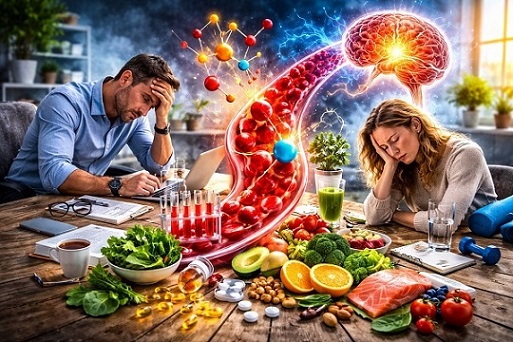 Elevated homocysteine levels may influence physical fatigue in men and reduce motivation in women
The research was carried out by scientists from Osaka Metropolitan University’s Graduate School of Human Life and Ecology, the Center for Health Science Innovation at Osaka Metropolitan University, Kobe University Graduate School of Science, Technology and Innovation, and Alinamin Pharmaceutical Co., Ltd.
What Researchers Were Trying to Understand
Fatigue is more than just feeling tired. It can affect physical strength, mental clarity, and overall quality of life. Motivation, on the other hand, reflects how willing and driven a person feels to complete tasks or stay engaged.
Scientists have long suspected that biological factors, not just lifestyle habits, may influence these feelings. In this study, researchers focused on homocysteine, a compound linked to vitamin B levels and metabolic health, to see whether it plays a role in fatigue-related symptoms.
How the Study Was Conducted
The study examined 602 healthy adults living in Japan. Blood samples were collected after fasting to measure homocysteine, vitamin B12, and folate levels. Participants also completed structured questionnaires that evaluated physical fatigue, mental fatigue, and motivation levels.
To better analyze the results, participants were divided into three groups based on their homocysteine levels, ranging from low to high.
What the Study Found
Clear patterns emerged when researchers compared the groups.
Among men, those with higher homocysteine levels consistently reported greater physical fatigue. They felt more physically drained and less able to sustain energy throughout daily activities.
Among women, the effect appeared differently. Higher homocysteine levels were linked to noticeably lower motivation scores. This means that women in the higher group felt less driven, less engaged, and less inclined to initiate or maintain tasks.
Importantly, these findings remained even after adjusting for factors such as sleep duration, work hours, exercise habits, body weight, and diet quality. This suggests that the observed effects are not simply due to lifestyle differences.
The Role of Vitamins and Metabolism
The study also confirmed a strong relationship between homocysteine and key vitamins. As homocysteine levels increased, vitamin B12 and folate levels decreased in both men and women.
However, these vitamins alone were not directly linked to fatigue or motivation in the analysis. This indicates that homocysteine may act as a broader signal of metabolic imbalance rather than a simple reflection of vitamin deficiency.
Why the Effects Differ Between Men and Women
The difference between men and women is one of the most interesting findings. Researchers suggest that hormonal influences and brain chemistry may explain why men experience more physical fatigue while women show reduced motivation.
Homocysteine is known to interfere with processes involved in producing important brain chemicals such as dopamine and serotonin. These chemicals are essential for regulating energy, mood, and motivation. Differences in how these systems function between men and women may lead to the distinct patterns observed.
What This Means Going Forward
This
Medical News report highlights that fatigue and low motivation may not always be caused by external factors like poor sleep or stress. Internal metabolic signals, such as elevated homocysteine, could also play a meaningful role.
At the same time, the findings should be interpreted carefully. The study does not prove that high homocysteine directly causes fatigue or low motivation. It only shows an association.
Conclusion
The findings offer valuable insight into how metabolic health may influence everyday feelings of energy and motivation. Elevated homocysteine appears to be linked with increased physical fatigue in men and reduced motivation in women, independent of common lifestyle factors. However, the relationship is complex and not yet fully understood. Larger and long-term studies are needed to determine whether reducing homocysteine levels can improve these symptoms and whether targeted nutritional or medical strategies could help support better energy and mental drive in the general population.
The study findings were published in the peer reviewed journal: Nutrients.
https://www.mdpi.com/2072-6643/18/6/941
For the latest on fatigue and other mental issues, keep on logging to Thailand
Medical News.
Read Also:
https://www.thailandmedical.news/articles/long-covid




 Share
Share
 Tweet
Tweet
 Share
Share

































