Gut Microbiome Dysbiosis May Play a Bigger Role in Stroke, Heart Attacks and Aging Than Previously Thought
Nikhil Prasad Fact checked by:Thailand Medical News Team Aug 05, 2026 1 month, 4 weeks, 2 days, 2 hours, 57 minutes ago
New research suggests that imbalances in the gut microbiome may have a far greater connection to stroke, heart attacks, and the aging process than scientists previously realized. Researchers found that these seemingly separate conditions share remarkably similar changes in gut bacteria, raising the possibility that gut microbiome dysbiosis could be an important contributor to the chronic inflammation and biological changes associated with cardiovascular disease and aging. However, the researchers emphasize that their findings are exploratory and do not prove that these microbial changes directly cause disease.
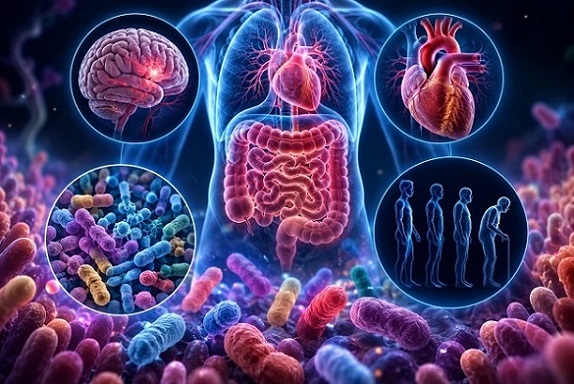 Researchers found that stroke, heart attacks, and aging share common gut microbiome changes, suggesting
dysbiosis may play a larger role in these conditions than previously recognized.
The study was conducted by researchers from the Chongqing Key Laboratory of Big Data for Bio Intelligence and the School of Life Health Information Science and Engineering at Chongqing University of Posts and Telecommunications, Chongqing, China.
Searching for a Common Microbial Signature
The gut microbiome consists of trillions of microorganisms that play critical roles in digestion, immune regulation, metabolism, and maintaining the integrity of the intestinal barrier. Previous studies have linked disturbances in this microbial ecosystem to both ischemic stroke and myocardial infarction, but whether these diseases share common microbial characteristics remained uncertain.
To answer this question, the researchers analyzed gut microbiome profiles from an internal ischemic stroke cohort alongside publicly available datasets involving stroke patients, heart attack patients, and more than 2,600 individuals from age-related and longevity-associated populations. By comparing multiple independent datasets, they sought to identify bacterial patterns that consistently appeared across different groups rather than findings unique to a single study.
Shared Bacterial Changes Across Diseases
The analysis revealed several bacterial genera that repeatedly appeared in both stroke and heart attack patients. Among the most striking were Escherichia-Shigella and Klebsiella, bacteria commonly associated with inflammation and opportunistic infections.
Conversely, several bacterial groups frequently associated with producing beneficial short-chain fatty acids, including Faecalibacterium, Blautia, and Roseburia, generally appeared at relatively lower abundances.
The researchers identified fifteen bacterial genera that consistently appeared across two independent stroke cohorts. Six of these genera remained consistently detectable when heart attack datasets and aging-related microbiome datasets were included, suggesting a shared microbial framework across ischemic diseases and aging rather than isolated disease-specific changes.
Aging Appears to Reshape the Gut Microbiome
One of the study's most interesting findings was that aging itself may gradually remodel the gut microbiome in ways that resemble changes seen in cardiovascular disease.
The researchers found that Escherichia-Shigella steadily increased
with advancing age, while bacteria such as Prevotella/Segatella became progressively less abundant. Another bacterial genus, Lachnoclostridium, consistently showed the highest abundance in heart attack patients, intermediate levels in stroke patients, and the lowest levels in healthy aging populations. In contrast, Bacteroides followed the opposite pattern.
These recurring microbial patterns were observed across different age groups and independent datasets, suggesting they may represent a shared ecological signature associated with aging and ischemic diseases.
Treatment Only Partially Restored the Gut Microbiome
The researchers also compared stroke patients before and after treatment. Patients who received treatment showed greater microbial diversity than untreated patients. Levels of potentially beneficial bacteria such as Faecalibacterium and Roseburia increased, while Escherichia-Shigella declined. Nevertheless, the gut microbiome did not fully return to the composition observed in healthy individuals, indicating that recovery of the intestinal microbial ecosystem may remain incomplete even after clinical improvement.
This
Medical News report highlights another important observation from the study. Rather than showing a complete reorganization of the gut microbiome, stroke appeared to involve selective shifts in specific bacterial groups, suggesting that relatively small microbial changes could still have important biological implications.
Important Limitations
Despite the compelling observations, the researchers repeatedly caution against overinterpreting the findings.
No bacterial genus remained statistically significant after correction for multiple comparisons in the internal stroke cohort, meaning all taxonomic observations should be considered descriptive rather than definitive. The study also did not directly measure short-chain fatty acids, gut barrier integrity, bacterial activity, inflammatory molecules, or microbial metabolites. Differences in diet, medications, geography, lifestyle, and sequencing methods among the various datasets could also have influenced the results.
As a result, the proposed biological mechanisms remain hypotheses that require confirmation through larger longitudinal studies incorporating metagenomics, metabolomics, clinical data, and laboratory experiments.
Conclusion
The study provides growing evidence that gut microbiome dysbiosis may be more closely linked to ischemic stroke, heart attacks, and aging than previously appreciated. Although the findings do not establish that microbial imbalances directly cause these conditions, the repeated appearance of similar bacterial patterns across multiple independent datasets suggests that common ecological changes within the gut microbiome could accompany both cardiovascular disease and biological aging. Future large-scale studies using direct functional measurements will be essential to determine whether these microbial alterations actively contribute to disease development or simply reflect the body's response to aging and chronic inflammation.
The study findings were published in the peer reviewed International Journal of Molecular Sciences.
https://www.mdpi.com/1422-0067/27/15/7020
Read Also:
https://www.thailandmedical.news/news/gut-bacteria-dysbiosis-drives-dangerous-kidney-aging-crisis
https://www.thailandmedical.news/news/covid-19-causes-serious-disruptions-to-gut-health-with-long-lasting-effects 



 Share
Share
 Tweet
Tweet
 Share
Share

































