Nikhil Prasad Fact checked by:Thailand Medical News Team Feb 08, 2026 7 months, 3 weeks, 2 days, 20 hours, 5 minutes ago
Medical News: Brief Exposure Shows Strong Biological Effects
A new laboratory-based study has revealed that even very short exposure to extremely low-frequency electromagnetic fields can trigger oxidative stress and DNA damage in certain cancer cells. The findings add to growing scientific interest in whether controlled electromagnetic fields could one day support cancer treatment strategies without the invasiveness of conventional therapies.
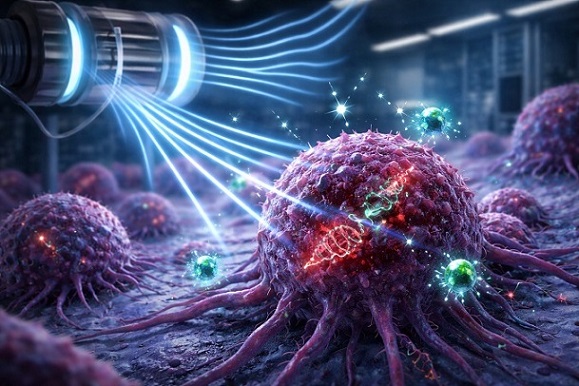 Short laboratory exposure to low-frequency electromagnetic fields triggers oxidative stress and DNA disruption
in multiple cancer cell types.
Research Teams and Institutions Involved
The study was conducted by researchers from the Interdisciplinary Centre for Preclinical and Clinical Research, Faculty of Biotechnology, Collegium Medicum, University of Rzeszow; the Department of Pharmaceutical Technology and Medical Physics, Faculty of Medicine, University of Rzeszow; the Institute of Physical Culture Studies, Collegium Medicum, University of Rzeszow; the Faculty of Biotechnology, Collegium Medicum, University of Rzeszow; and the Institute of Material Engineering, College of Natural Sciences, University of Rzeszow, Poland.
How the Study Was Conducted
Scientists examined cervical, ovarian, and prostate cancer cells grown in laboratory conditions. These cells were exposed to a 50 Hz extremely low-frequency electromagnetic field for just 15 or 30 minutes. After exposure, the researchers analyzed chemical stress signals, DNA repair responses, inflammation-related proteins, and gene-regulating enzymes to understand how the cells reacted at a molecular level.
Rise in Oxidative Stress Inside Cancer Cells
One of the most important observations was a clear increase in reactive oxygen species, or ROS, in ovarian and prostate cancer cells. ROS are unstable molecules that can damage DNA when present in excess. Elevated ROS levels were seen hours after exposure, suggesting that even brief electromagnetic stimulation can cause prolonged cellular stress. This
Medical News report highlights that oxidative stress is a known trigger for cancer cell damage and death.
DNA Damage and Repair Responses Detected
As oxidative stress increased, ovarian cancer cells activated several DNA repair proteins, including RAD51, APE1, and XRCC1. This indicates that the cells were attempting to repair newly formed genetic damage. In contrast, prostate cancer cells showed reduced levels of protective proteins such as BCL-2 and HSP90. These proteins normally help cancer cells survive stress, and their reduction may leave such cells more vulnerable to destruction.
Changes in Gene Regulation Mechanisms
The researchers also found changes in epigenetic regulators, proteins that influence how genes are switched on or off without altering DNA itself. Ovarian cancer cells displayed increased levels of NSUN2, while prostate cancer cells showed higher METTL3 levels after longer exposure. These changes suggest that electromagnetic fi
elds may influence cancer cell behavior beyond immediate DNA damage.
Why These Findings Are Important
In conclusion, the study demonstrates that short-term exposure to low-frequency electromagnetic fields can significantly disrupt cancer cells by increasing oxidative stress, triggering DNA damage, weakening survival mechanisms, and altering gene regulation pathways. While these findings are limited to laboratory experiments and are not ready for clinical use, they provide important insights into how non-invasive electromagnetic approaches might one day complement existing cancer treatments. Further animal and human studies will be essential to confirm safety, effectiveness, and real-world potential.
The study findings were published in the peer reviewed International Journal of Molecular Sciences.
https://www.mdpi.com/1422-0067/27/4/1630
For the latest cancer research, keep on logging to Thailand
Medical News.
Read Also:
https://www.thailandmedical.news/articles/cancer




 Share
Share
 Tweet
Tweet
 Share
Share

































