Nikhil Prasad Fact checked by:Thailand Medical News Team Jun 04, 2026 3 months, 4 weeks, 1 day, 23 hours, 44 minutes ago
Medical News: A new clinical study has found that a specialized milk protein supplement may significantly improve muscle recovery, reduce inflammation, and lower harmful oxidative stress in older adults recovering from knee or hip replacement surgery.
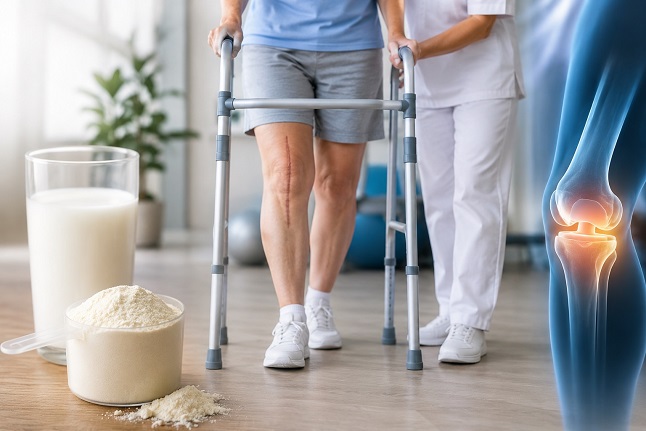 Daily milk protein supplementation helped joint replacement patients regain muscle, strength, and mobility while reducing
inflammation and oxidative stress
Researchers from the International Hellenic University in Thessaloniki, the Hellenic Mediterranean University in Crete, the University of Aegean in Limnos, and the 424 Military Hospital of Thessaloniki in Greece investigated whether a milk protein concentrate supplement could help patients regain strength and mobility after major joint replacement surgery.
Recovery Challenges After Joint Replacement
Total knee and hip replacement surgeries are among the most common treatments for severe osteoarthritis. While these procedures often restore mobility and reduce pain, the recovery period can be difficult. Many patients experience muscle loss, weakness, inflammation, and increased oxidative stress, all of which can slow rehabilitation and reduce quality of life.
Oxidative stress occurs when harmful molecules known as reactive oxygen species accumulate in the body. These molecules can damage cells, trigger inflammation, and accelerate muscle breakdown. Combined with reduced movement after surgery, this creates a perfect environment for rapid muscle loss.
The research team wanted to determine whether targeted nutritional support could help counter these effects and improve recovery outcomes.
How the Study Was Conducted
The randomized controlled trial involved 88 adults aged between 55 and 80 who underwent either total knee or total hip arthroplasty for end-stage osteoarthritis. Participants were divided into two groups.
One group received a daily milk protein concentrate supplement for 15 weeks alongside a Mediterranean-style diet and standard rehabilitation. The supplement provided 30 grams of milk protein concentrate per day, delivering approximately 27.5 grams of high-quality protein. The second group followed the same dietary and rehabilitation guidelines but did not receive the supplement.
Importantly, both groups consumed similar overall amounts of calories and protein, allowing researchers to isolate the effects of the specialized supplement itself rather than differences in total nutrition.
Significant Gains in Muscle Mass
The results were striking. Patients receiving the milk protein supplement experienced a significant increase in appendicular skeletal muscle mass, gaining an average of 2.34 kilograms compared to the control group. Their muscle mass index also improved substantially.
Researchers noted that preserving muscle after surgery is critical because muscles surrounding the joints provide stability, absorb physical stress, and help patients regain independence more quickly.
The intervention group also demonstrated improvements in a marker known as phase angle, which reflects cell
ular health and muscle quality. This suggests that the supplement not only helped patients build muscle but may also have improved the condition and function of muscle tissue itself.
Strength, Balance and Walking Ability Improved
The benefits extended beyond muscle measurements. Patients taking the supplement showed notable improvements in handgrip strength, walking speed, endurance, balance, and lower-limb power. Walking speed increased significantly, while performance in the two-minute walk test improved by more than 12 meters.
Balance tests also revealed major gains. Participants were able to stand on one leg for longer periods, indicating improved stability and reduced risk of falls.
These findings suggest that nutritional support can translate into meaningful real-world improvements that help patients return to normal daily activities faster.
Inflammation and Oxidative Stress Fell Dramatically
One of the most important discoveries involved biological markers linked to recovery.
Levels of 8-isoprostanes, considered one of the most reliable indicators of oxidative stress and cellular damage, fell dramatically among supplement users. Researchers also recorded significant reductions in C-reactive protein, a key marker of inflammation.
The study found a direct relationship between lower oxidative stress and better muscle preservation. Patients who experienced larger reductions in oxidative stress generally maintained more muscle mass.
This
Medical News report highlights an important emerging concept in orthopedic care: recovery may depend not only on physical therapy and surgery but also on controlling the biological processes that drive inflammation and muscle breakdown.
Why Milk Protein May Be So Effective
According to the researchers, the supplement's unique combination of whey and casein proteins may explain its success.
Whey protein is rapidly absorbed and quickly stimulates muscle protein synthesis, while casein releases amino acids more slowly, providing prolonged nutritional support. Together, they create a sustained anabolic environment that helps muscles recover and resist breakdown.
The supplement also supplied calcium and phosphorus in favorable proportions while maintaining low sodium and potassium levels, supporting bone health, muscle function, and postoperative recovery.
Conclusion
The findings suggest that specialized milk protein supplementation could become an important addition to rehabilitation programs following knee and hip replacement surgery. Patients who received the supplement experienced greater muscle preservation, improved strength, better balance, faster walking speeds, and lower levels of inflammation and oxidative stress. These benefits appeared despite both groups consuming similar amounts of total protein and participating in identical rehabilitation programs. The study indicates that the quality, timing, and composition of nutritional support may play a crucial role in recovery. If confirmed by larger studies, such nutritional strategies could help older adults regain independence more quickly, reduce postoperative disability, and improve long-term outcomes after joint replacement surgery.
The study findings were published in the peer reviewed journal: Antioxidants.
https://www.mdpi.com/2076-3921/15/6/706
For the latest news, keep on logging to Thailand
Medical News.
Read Also:
https://www.thailandmedical.news/articles/supplements
https://www.thailandmedical.news/articles/health-news




 Share
Share
 Tweet
Tweet
 Share
Share

































