Polish Study Finds That Long COVID May Quietly Disrupt Women's Reproductive Health
Nikhil Prasad Fact checked by:Thailand Medical News Team Jul 09, 2026 1 month, 3 weeks, 3 days, 12 hours, 47 minutes ago
Medical News: Long COVID may be affecting far more than the lungs, heart, and brain. Researchers are now warning that the lingering condition could also interfere with the female reproductive system, causing menstrual changes, temporary hormonal imbalances, and, in rare cases, potentially serious ovarian problems. While most women appear to recover without lasting reproductive damage, scientists stress that many important questions remain unanswered.
 New research suggests Long COVID may temporarily affect menstrual cycles, ovarian function, and female reproductive health
while raising important questions about long-term fertility
The research was conducted by scientists from the Doctoral School, the 1st Chair and Department of Gynecologic Oncology and Gynecology, the Department of Medical Chemistry, and the Independent Laboratory of Translational Medicine, Chair of Genetics, all at the Medical University of Lublin, Poland.
Menstrual Changes Are Among the Most Common Complaints
One of the strongest findings from the review is that Long COVID appears to be linked with changes in menstrual cycles. Around one-third of women living with Long COVID reported new problems after infection, including irregular periods, heavier bleeding, longer or shorter cycles, missed periods, and bleeding between menstrual cycles.
Several large international studies found that women with Long COVID were significantly more likely to experience these symptoms than women who had never been infected. Researchers also found that many women noticed their Long COVID symptoms, including fatigue, headaches, muscle pain, and shortness of breath, became worse just before or during menstruation, suggesting a complex interaction between reproductive hormones and persistent inflammation.
Ovarian Function May Be Temporarily Affected
The review also examined whether Long COVID damages the ovaries, which contain the eggs a woman is born with. Scientists looked at Anti-Müllerian Hormone (AMH), an important marker used to estimate ovarian reserve.
The results were mixed. Some studies reported noticeably lower AMH levels and fewer ovarian follicles after COVID-19, particularly among women who had severe infections. Other studies found little or no difference compared to healthy women.
Researchers believe these conflicting findings may reflect differences in illness severity, age, and how long after infection hormone levels were measured. Overall, the evidence suggests Long COVID may temporarily stress ovarian function rather than permanently destroy it in most women.
This
Medical News report highlights that hormone testing performed soon after recovery should be interpreted carefully because temporary changes could improve over time instead of representing permanent fertility loss.
Rare Cases Raise Concerns About Premature Ovarian Failure
Although uncommon, researchers identified several case reports describing women who develo
ped premature ovarian insufficiency after COVID-19. This condition causes the ovaries to stop functioning before the age of 40, leading to absent periods, infertility, and symptoms usually associated with menopause.
Some of these women showed evidence suggesting the immune system may have mistakenly attacked ovarian tissue after infection. In a few cases, ovarian function partially improved after treatment with corticosteroids, further supporting a possible immune-related mechanism. However, the researchers emphasize that these remain isolated reports and do not prove that Long COVID directly causes premature ovarian failure.
Inflammation May Be Driving Many Changes
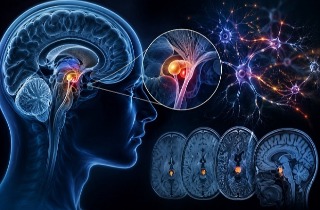
Instead of widespread viral infection inside the ovaries, scientists believe the more likely explanation involves persistent inflammation, immune system disruption, oxidative stress, blood vessel dysfunction, and disturbances within the hypothalamic-pituitary-ovarian axis that regulates female reproductive hormones.
These biological changes could interfere with ovulation, hormone production, follicle development, and the uterine lining. The review also found little evidence that COVID-19 vaccination harms fertility or ovarian reserve, providing additional reassurance for women concerned about vaccination.
Conclusion
The findings suggest that Long COVID should increasingly be viewed as a condition capable of affecting female reproductive health, even though most reproductive changes appear to be temporary and eventually improve. At present, there is no convincing evidence that Long COVID causes widespread permanent infertility, but persistent menstrual abnormalities, hormonal fluctuations, and the rare reports of premature ovarian insufficiency warrant careful medical evaluation.
The researchers stress that much longer follow-up studies spanning 10 to 15 years will be needed before scientists can determine whether Long COVID accelerates ovarian aging, alters menopause timing, or affects lifetime fertility. Until then, women experiencing persistent menstrual or fertility concerns after COVID-19 should seek appropriate medical assessment rather than assuming the symptoms will simply disappear.
The study findings were published in the peer reviewed journal: International Journal of Molecular Sciences.
https://www.mdpi.com/1422-0067/27/14/6127
For the latest on Long COVID, keep on logging to Thailand
Medical News.
Read Also:
https://www.thailandmedical.news/articles/long-covid




 Share
Share
 Tweet
Tweet
 Share
Share