Nikhil Prasad Fact checked by:Thailand Medical News Team Jan 23, 2026 8 months, 1 week, 5 days, 8 hours, 32 minutes ago
Medical News: A newly published scientific study has revealed that SARS-CoV-2 genetic material can spread between human cells through extracellular vesicles rather than intact virus particles. This discovery provides a clearer explanation for how COVID-19 may continue affecting different organs even after the main infection appears to have subsided.
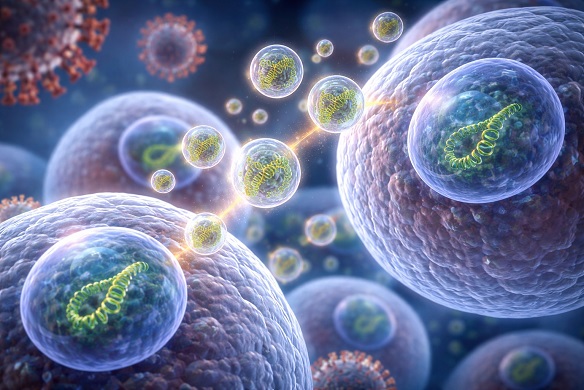 Study shows how extracellular vesicles allow SARS-CoV-2 RNA to spread between human cells without intact viruses
The research was carried out by American scientists from Tulane University Health Sciences Center in New Orleans, working alongside colleagues from Ochsner Health’s Institute of Translational Research and the Southeast Louisiana Veterans Health Care System. Their combined expertise allowed for a detailed investigation into how viral RNA behaves inside human cells.
What Are Extracellular Vesicles
Extracellular vesicles are tiny membrane-bound particles naturally released by cells to communicate with one another. Under healthy conditions, they carry proteins and genetic instructions that help maintain normal cellular functions. During SARS-CoV-2 infection, however, these vesicles can be exploited to transport viral RNA between cells without triggering immediate immune responses.
Because extracellular vesicles closely resemble normal cellular structures, they are able to move unnoticed through tissues, making them an effective vehicle for spreading viral material.
How The Study Was Conducted
To examine this process safely, researchers used a laboratory model containing SARS-CoV-2 sub-genomic RNA that cannot form infectious virus particles. Cells replicating this RNA released large quantities of extracellular vesicles loaded with viral genetic material.
When these vesicles were introduced to healthy human lung, intestinal, nerve, and blood vessel cells, the viral RNA successfully entered the cells and began replicating. This confirmed that SARS-CoV-2 RNA can spread independently of whole virus particles.
Key Findings from The Research
Cells that received viral RNA via extracellular vesicles underwent dramatic structural changes. They became enlarged, developed abnormal shapes, fused with neighboring cells, and accumulated unusual membrane structures linked to viral replication. Even after viral RNA was eliminated, many of these cellular abnormalities remained, suggesting long-lasting cellular reprogramming.
The researchers also tested the FDA-approved antiviral Paxlovid and found that it reduced viral RNA replication in a dose-dependent manner. This
Medical News report highlights that the model can be used to study antiviral effectiveness and persistent viral activity.
Why These Findings Matter
The ability of SARS-CoV-2 RNA to spread through extracellular vesicles may help explain long COVID symptoms, persistent inflammation, and organ damage in patients long after respiratory symptoms resolve. This pathway allows viral
genetic material to bypass immune surveillance and continue disrupting normal cellular processes across multiple tissues.
Conclusion
The study demonstrates that extracellular vesicles play a significant role in spreading SARS-CoV-2 genetic material between human cells without the presence of infectious virus particles. This mechanism may contribute to immune evasion, prolonged cellular damage, and chronic symptoms observed in COVID-19 patients. Understanding this pathway opens important avenues for targeted treatments and improved management of long-term COVID-19 complications.
The study findings were published in the peer reviewed journal: Viruses.
https://www.mdpi.com/1999-4915/18/1/145
For the latest COVID-19 news, keep on logging to Thailand
Medical News.
Read Also:
https://www.thailandmedical.news/articles/coronavirus
https://www.thailandmedical.news/articles/long-covid




 Share
Share
 Tweet
Tweet
 Share
Share

































