Nikhil Prasad Fact checked by:Thailand Medical News Team Jun 13, 2026 3 months, 3 weeks, 3 hours, 30 minutes ago
Medical News: A rare but alarming medical case has revealed how a common form of immune deficiency can quietly fuel years of infections and inflammation, eventually leading to a potentially life-threatening condition known as AA amyloidosis. Researchers are warning that delayed diagnosis of Common Variable Immunodeficiency (CVID), one of the most frequently diagnosed primary immune disorders in adults, can result in severe organ damage if left untreated.
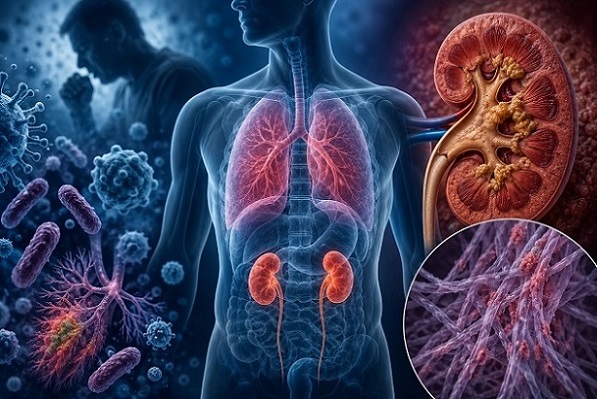 Decades of undiagnosed CVID triggered chronic infections and inflammation that ultimately led to
organ-damaging AA amyloidosis.
The case involved a 37-year-old man whose recurrent infections since childhood ultimately led to extensive kidney damage, chronic lung disease, and AA amyloidosis, highlighting the importance of recognizing immune deficiencies before irreversible complications develop.
The study was conducted by researchers from Pirogov Russian National Research Medical University, Clinical Hospital No. 31 Named After G.M. Savelieva of the Moscow Health Department, NRC Institute of Immunology FMBA of Russia, and the Institute of Nuclear Medicine in the Moscow Region, Russia.
What Is Common Variable Immunodeficiency?
Common Variable Immunodeficiency, or CVID, is a primary immune system disorder characterized by abnormally low levels of infection-fighting antibodies known as immunoglobulins. Because affected individuals cannot produce sufficient antibodies, they become highly vulnerable to repeated infections, particularly involving the ears, sinuses, and lungs.
The condition is considered the most commonly diagnosed primary immunodeficiency in adults, although symptoms can appear at almost any age, from childhood to late adulthood. The term "variable" reflects the fact that symptoms and disease severity differ greatly from one patient to another.
People with CVID commonly experience recurrent pneumonia, bronchitis, sinus infections, and ear infections. Many also develop digestive problems such as chronic diarrhea, nausea, nutrient malabsorption, and inflammatory bowel disease-like symptoms. Some patients develop enlarged lymph nodes, enlarged spleens, autoimmune disorders, and chronic inflammatory conditions.
If the disease remains untreated for many years, the continuous cycle of infections and inflammation can lead to serious complications including chronic lung damage, organ dysfunction, and an increased risk of certain cancers such as lymphoma.
A Lifetime of Infections
The patient described in the study experienced repeated infections beginning in childhood. During his teenage years, he suffered multiple episodes of pneumonia. He also developed a severe bone infection known as osteomyelitis that progressed to sepsis, a potentially fatal bloodstream infection.
Over the years, he continued to battle chronic tonsillitis, sinus infections, bronchitis, and recurrent respiratory illnesses. Despite these warning signs, no underlying immune disorder was identified.
The situation worsened significantly after he contracted COVID-19 at the age of 33. Following recovery, he began developing repea
ted episodes of pneumonia and chronic sinus infections two to three times every year. Imaging studies eventually showed bronchiectasis, a permanent widening and scarring of the airways caused by repeated infections.
The Emergence of a Dangerous Complication
The patient's condition took a dramatic turn when he developed severe swelling of the legs and feet. Medical testing revealed nephrotic syndrome, a serious kidney disorder characterized by massive protein loss through the urine.
Doctors performed biopsies of both the kidneys and stomach lining to determine the cause of the kidney damage. The results confirmed AA amyloidosis.
AA amyloidosis is a serious disease caused by chronic inflammation. During prolonged inflammation, the liver produces large quantities of a protein called serum amyloid A. When inflammation persists for months or years, this protein can accumulate and form abnormal deposits known as amyloid within organs and tissues.
Over time, these deposits interfere with normal organ function. The kidneys are among the most commonly affected organs, but amyloid can also accumulate in the liver, spleen, digestive tract, heart, and other tissues. In many patients, kidney involvement leads to nephrotic syndrome, progressive kidney failure, and potentially the need for dialysis.
Because AA amyloidosis develops gradually, symptoms often appear only after substantial organ damage has already occurred.
Finally Identifying the Underlying Cause
Further investigations revealed extraordinarily low antibody levels. The patient's immunoglobulin G, immunoglobulin A, and immunoglobulin M levels were all dramatically reduced. Additional immune testing showed abnormalities in important immune cell populations that are characteristic of CVID.
Extensive genetic testing was performed to search for inherited immune disorders, hereditary amyloidosis syndromes, and autoinflammatory diseases. No disease-causing mutations were found, strengthening the diagnosis of CVID as the underlying condition.
This
Medical News report notes that the patient's history of recurrent childhood infections, chronic sinus disease, bronchiectasis, severe antibody deficiency, and persistent inflammation provided compelling evidence that his immune disorder had been present for decades before being recognized.
Treatment Brings Encouraging Results
Following diagnosis, physicians initiated lifelong immunoglobulin replacement therapy to provide the antibodies his body was unable to produce naturally.
Because kidney damage was causing substantial protein loss, doctors chose subcutaneous immunoglobulin therapy rather than traditional intravenous treatment. This approach helps maintain more stable antibody levels while reducing stress on the kidneys.
The patient also received targeted antimicrobial treatment to control ongoing infections.
After five months of therapy, he reported significant improvement. No new serious infections occurred, chronic inflammatory markers normalized, and his overall health stabilized.
Conclusions
This remarkable case demonstrates how CVID can remain undiagnosed for decades despite repeated warning signs. Frequent pneumonia, chronic sinus infections, bronchiectasis, unexplained digestive inflammation, and recurrent bacterial infections should all prompt evaluation for an underlying immune deficiency. Left untreated, the constant cycle of infection and inflammation can cause progressive and irreversible damage throughout the body.
The findings also underscore the dangerous relationship between chronic inflammation and AA amyloidosis. As inflammation persists year after year, amyloid proteins can slowly accumulate in vital organs, eventually causing severe complications such as nephrotic syndrome and organ failure. Early recognition of CVID and prompt initiation of immunoglobulin replacement therapy may not only reduce infections but also help prevent the inflammatory processes that drive amyloid deposition. Increased awareness among clinicians and the public could lead to earlier diagnosis and better long-term outcomes for patients living with this often-overlooked immune disorder.
The study findings were published in the peer reviewed Journal of Clinical Medicine.
https://www.mdpi.com/2077-0383/15/11/4030
For the latest on AA amyloidosis, keep on logging to Thailand
Medical News.
Read Also:
https://www.thailandmedical.news/articles/immunology




 Share
Share
 Tweet
Tweet
 Share
Share

































