Nikhil Prasad Fact checked by:Thailand Medical News Team Jan 26, 2026 6 months, 1 week, 2 days, 18 minutes ago
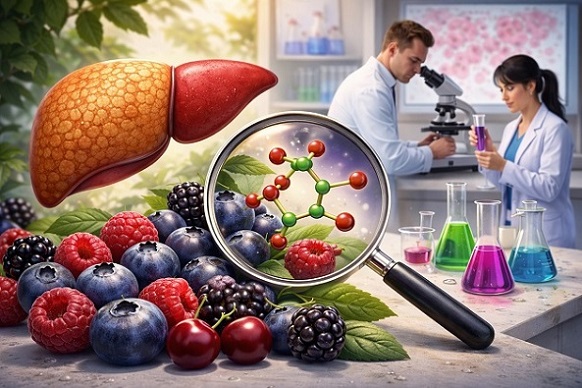
Medical News: Metabolic associated fatty liver disease, commonly known as MAFLD, is rapidly becoming one of the most common liver disorders worldwide, driven largely by high fat diets, obesity, and insulin resistance. While there are currently no approved drugs specifically for MAFLD, new research suggests that a natural compound produced when the body breaks down berry pigments may offer meaningful protection.
 A berry derived metabolite dramatically reduces liver fat inflammation & oxidative damage in new MAFLD research
This
Medical News report focuses on a new study examining phloroglucinaldehyde, or PGA, a small bioactive molecule formed after the digestion of anthocyanins. Anthocyanins are the natural pigments that give berries their deep red, blue, and purple colors. Scientists have long known that these pigments are healthy, but their poor absorption in the body has limited their therapeutic use. PGA, however, appears to be more easily absorbed and biologically active.
Who Conducted The Research
The research was conducted by scientists from the Department of Animal Nutrition and Feed Science at Yichun University, the Hunan Collaborative Innovation Center for Utilization of Botanical Functional Ingredients at Hunan Agricultural University, and the State Key Laboratory of Animal Nutrition at the Chinese Academy of Agricultural Sciences in Beijing.
How The Study Was Performed
Researchers used both human liver cells grown in the laboratory and live mouse models fed a high fat diet designed to trigger MAFLD. Some mice received small amounts of PGA added to their diet for twelve weeks, while others did not. The scientists closely monitored body weight, fat buildup in the liver, blood sugar control, liver enzymes, inflammation levels, and oxidative stress markers.
Key Findings Explained Simply
The results were striking. Mice receiving PGA gained less weight and accumulated significantly less fat in their livers, even though they consumed similar calories. Blood tests showed lower triglycerides, cholesterol, and liver enzymes, all signs of improved liver health. PGA also reduced insulin resistance, an important driver of fatty liver disease.
At the cellular level, PGA reduced harmful fat droplets inside liver cells. Advanced lipid analysis showed that PGA lowered 46 specific fat molecules linked to liver damage, many of which contain long and very long chain fatty acids known to promote inflammation and oxidative stress.
Powerful Effects on Inflammation and Oxidative Stress
The study also revealed that PGA boosted the liver’s natural antioxidant defenses by increasing superoxide dismutase while lowering malondialdehyde, a marker of fat oxidation damage. At the same time, PGA reduced inflammatory substances such as interleukin 6, tumor necrosis factor, MCP 1, and endotoxins that worsen liver injury.
Why These Findings Matter
These findings suggest that P
GA does more than just reduce fat buildup. It appears to interrupt a dangerous cycle in which excess fat triggers oxidative stress and inflammation, which then causes further liver damage. By breaking this cycle, PGA may slow or prevent disease progression.
Conclusion
In conclusion, this study provides strong evidence that phloroglucinaldehyde, a natural metabolite derived from berry anthocyanins, can significantly reduce fatty liver changes, inflammation, and oxidative stress in diet induced MAFLD. The findings support the idea that the health benefits of berries may come not only from the pigments themselves, but from their metabolites, opening the door to new functional foods and nutraceutical approaches for liver health.
The study findings were published in the peer reviewed journal: Foods
https://www.mdpi.com/2304-8158/15/3/437
For the latest on Herbs and Phytochemicals, keep on logging to Thailand
Medical News.
Read Also:
https://www.thailandmedical.news/articles/herbs-and-phytochemicals




 Share
Share
 Tweet
Tweet
 Share
Share