Nikhil Prasad Fact checked by:Thailand Medical News Team May 27, 2026 3 months, 6 days, 14 hours ago
Medical News: Researchers from Tao-Yuan General Hospital under Taiwan’s Ministry of Health and Welfare, En Chu Kon Hospital, Shin Kong Wu Ho-Su Memorial Hospital, National Applied Research Laboratories’ Institute of Taiwan Instrument Research, National Taipei University of Technology, Taipei Veteran General Hospital’s Yuan-Shan Branch, and National Defense Medical Center in Taiwan have discovered that a plant-derived compound called loganin may help protect the brain from Parkinson’s-like damage in laboratory rats.
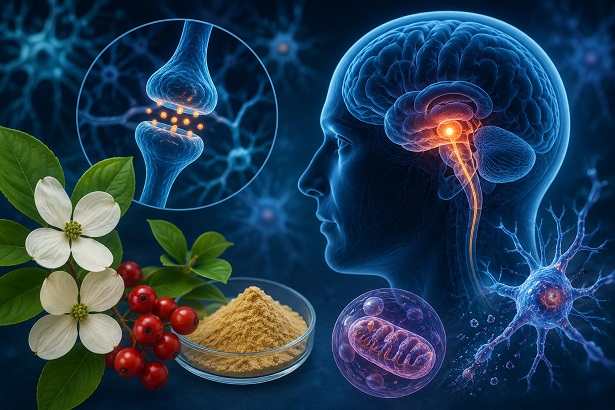 Natural plant compound loganin protected rat brains from Parkinson’s-like damage by reducing inflammation,
oxidative stress, and dopamine loss
Plant Compound Targets Multiple Brain Damage Pathways
Parkinson’s disease is a progressive neurological disorder that slowly destroys dopamine-producing brain cells. This loss of dopamine causes tremors, stiffness, slow movement, balance problems, and eventually severe disability. Current treatments mainly help reduce symptoms but cannot stop the disease itself.
The Taiwanese research team investigated loganin, a phytochemical compound extracted from the medicinal plant Cornus officinalis, which has long been used in traditional medicine. Scientists already knew that loganin possessed antioxidant and anti-inflammatory properties, but this new study explored whether it could protect the brain against severe Parkinson’s-like injury.
To test this, researchers used rotenone, a toxic pesticide known to trigger brain damage similar to Parkinson’s disease. Rats injected with rotenone developed movement problems, brain inflammation, oxidative stress, and dopamine loss similar to what is seen in human patients.
The results were surprisingly strong.
Dramatic Improvements in Movement and Strength
The rats exposed to rotenone struggled with walking, coordination, grip strength, and balance. However, rats treated daily with loganin for 21 days showed major improvements.
Animals receiving the higher doses of loganin moved more freely, crossed balance beams faster, slipped less often, and maintained stronger muscle grip. Their overall activity levels improved significantly compared to untreated rats.
Researchers noted that the benefits became more obvious as the dosage increased, especially at 10 mg/kg and 30 mg/kg doses.
Importantly, the compound did not produce harmful effects in healthy animals, suggesting a favorable safety profile during the experiment.
Powerful Protection Against Brain Cell Stress
One of the biggest findings involved oxidative stress, a destructive process often described as “rusting” inside cells. In Parkinson’s disease, excessive oxidative stress damages neurons and accelerates brain degeneration.
The study found that rotenone sharply increased harmful oxidative molecules while weakening the brain’s natural antioxidant defenses. Loganin reversed much of this damage.
Levels of
protective antioxidants such as glutathione, superoxide dismutase, and catalase increased substantially in treated rats. At the same time, harmful markers linked to oxidative injury and lipid destruction fell dramatically.
This
Medical News report notes that the findings suggest loganin may help restore the brain’s own defense systems instead of simply masking symptoms.
Mitochondria Also Protected
Another critical discovery involved mitochondria, often called the “power plants” of cells. Parkinson’s disease is strongly linked to mitochondrial failure, which deprives neurons of energy and eventually leads to cell death.
The rotenone toxin severely damaged mitochondrial activity in the rats. However, loganin restored several important mitochondrial functions, including energy production and membrane stability.
Researchers observed improvements in multiple mitochondrial enzyme complexes that are essential for healthy brain activity. These protective effects suggest that loganin may help preserve neuron survival under toxic stress conditions.
Inflammation and Cell Death Were Reduced
The study also found that loganin lowered inflammatory chemicals in the brain, including TNF-alpha, IL-1 beta, and IL-6. These inflammatory substances are heavily associated with ongoing nerve cell destruction in Parkinson’s disease.
At the same time, levels of caspase-3, a major marker of programmed cell death, were significantly reduced in treated rats.
The researchers additionally discovered that loganin helped normalize dopamine and serotonin levels in the brain. Since dopamine depletion is one of the defining features of Parkinson’s disease, this restoration may explain the improvements in movement and coordination seen in the animals.
Conclusions
The researchers concluded that loganin appears to act through several protective mechanisms simultaneously, including reducing oxidative stress, protecting mitochondria, suppressing inflammation, limiting neuronal death, and stabilizing important brain chemicals. Such multi-target activity is particularly important because Parkinson’s disease involves many damaging biological pathways occurring at the same time. Although the findings are highly encouraging, the scientists cautioned that the study was performed only in rats and more research, including human clinical trials, is still needed before loganin can be considered a real treatment option for Parkinson’s disease patients.
The study findings were published in the peer reviewed journal: Biomedicines.
https://www.mdpi.com/2227-9059/14/6/1195
For the latest on Herbs and Phytochemicals, keep on logging to Thailand
Medical News.
Read Also:
https://www.thailandmedical.news/articles/herbs-and-phytochemicals
https://www.thailandmedical.news/articles/alzheimer,-dementia-




 Share
Share
 Tweet
Tweet
 Share
Share

































