Nikhil Prasad Fact checked by:Thailand Medical News Team Jul 12, 2026 1 month, 3 weeks, 4 hours, 53 minutes ago
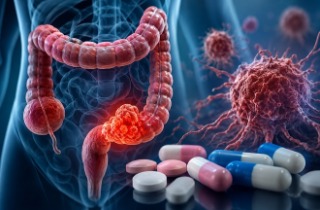
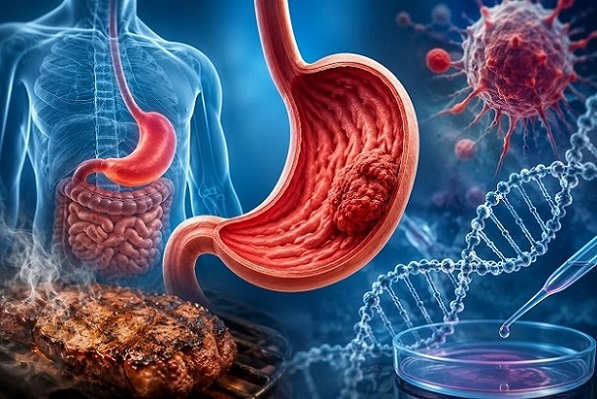
Medical News: Researchers have uncovered a surprising connection between a common food contaminant and a possible new treatment strategy for gastric cancer, offering fresh hope for improving the fight against one of the world's deadliest cancers.
 Scientists identify a food contaminant-linked genetic pathway that could lead to a promising new treatment
strategy for gastric cancer
The research was conducted by scientists from the College of Traditional Chinese Medicine and the Fujian Key Laboratory of TCM Health Status Identification at Fujian University of Traditional Chinese Medicine, China, together with researchers from the College of Physics and Information Engineering at Fuzhou University, China.
A Dangerous Chemical Hidden in Everyday Foods
The study focused on benzo[a]pyrene (BaP), a cancer-causing chemical produced when foods are cooked at very high temperatures, especially grilled, barbecued, fried, or smoked foods. Since the stomach is the first organ exposed after these foods are eaten, researchers wanted to understand exactly how BaP contributes to gastric cancer and whether its harmful effects could reveal new treatment opportunities.
Using advanced multi-omics analysis, machine learning, molecular simulations, and laboratory experiments, the team identified three genes strongly linked to gastric cancer: KCNE2, SULF1, and TIMP1. KCNE2 appeared to protect against cancer, while SULF1 and TIMP1 increased cancer risk and were associated with poorer patient survival.
Artificial Intelligence Helps Identify Key Targets
The researchers combined several machine learning methods to narrow thousands of genes down to the three most important ones. They then built a prediction model that distinguished gastric cancer from normal tissue with extremely high accuracy.
Further analysis showed KCNE2 was mainly active in healthy stomach cells but was almost completely switched off in cancer cells. In contrast, SULF1 and TIMP1 became highly active in cancer tissue and surrounding support cells, helping tumors grow, spread, and remodel their environment.
This
Medical News report highlights how computer-based biological analysis can rapidly uncover hidden disease mechanisms that traditional approaches may overlook.
Existing Drug Emerges as a Strong Candidate
One of the study's biggest discoveries was identifying 5-azacytidine, an existing DNA methylation inhibitor already approved for certain blood cancers, as a promising candidate for gastric cancer treatment.
Computer simulations suggested BaP can interact with DNA methylation enzymes called DNMT1 and DNMT3A, disrupting normal gene regulation. Laboratory experiments confirmed that 5-azacytidine selectively slowed the growth of gastric cancer cells while causing much less damage to normal stomach cells. The drug also reduced DNMT3A activity and restored expression of the protective KCNE2 gene, suggesting it may reverse some of th
e harmful molecular changes caused by BaP exposure.
A New Direction for Gastric Cancer Research
The findings suggest that everyday exposure to BaP may trigger stomach cancer through epigenetic changes that silence protective genes while activating cancer-promoting ones. They also indicate that drugs already available for other diseases could potentially be repurposed to interrupt these harmful pathways, potentially accelerating future clinical development while reducing the time and cost required for entirely new drug discovery.
The study findings were published in the peer reviewed journal: Pharmaceuticals.
https://www.mdpi.com/1424-8247/19/7/1060
For the latest on gastric cancer, keep on logging to Thailand
Medical News.
Read Also:
https://www.thailandmedical.news/articles/cancer




 Share
Share
 Tweet
Tweet
 Share
Share