Nikhil Prasad Fact checked by:Thailand Medical News Team Jan 31, 2026 6 months, 1 week, 1 day, 4 hours, 59 minutes ago
Medical News: Researchers from the Key Laboratory of Animal Production Product Quality and Security at Jilin Agricultural University in Changchun-China together with the Key Laboratory of Utilization and Protection of Beef Cattle Germplasm Resources and the Jilin Provincial International Joint Research Center of Animal Breeding and Reproduction Technology have uncovered promising new evidence showing how natural compounds from ginseng may protect ovarian health under stress.
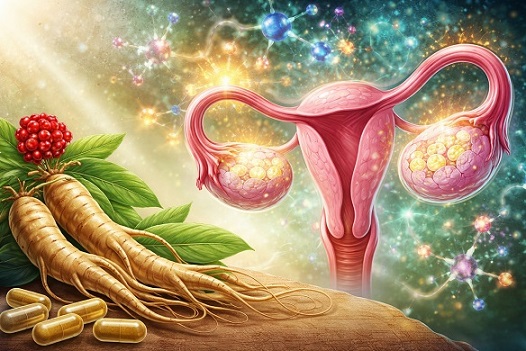 Natural ginseng compounds help shield ovarian cells from stress damage and restore hormone balance
Ovarian health depends heavily on specialized support cells called granulosa cells. These cells help eggs grow properly and are essential for producing estrogen, a key female hormone. When these cells are damaged, fertility can decline and ovarian disorders may develop. One major cause of such damage is a condition known as endoplasmic reticulum stress, which occurs when cells are overwhelmed and unable to function normally.
Why Ovarian Cell Stress Matters
During normal ovarian function, most developing follicles do not survive to release an egg. However, excessive stress inside ovarian cells can accelerate this loss. When stress becomes severe, granulosa cells may undergo a destructive process known as necroptosis, leading to inflammation and tissue damage. Over time, this can impair hormone production and fertility.
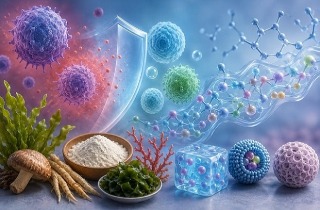
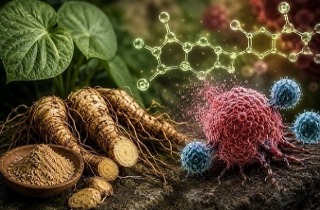
The research team focused on ginseng polysaccharides, natural sugar-based compounds extracted from the ginseng plant. These compounds have long been associated with anti-inflammatory and protective effects, but their role in ovarian health was not fully understood.
How The Study Was Conducted
Scientists first exposed bovine ovarian granulosa cells to a chemical that induces cellular stress. They then treated the cells with carefully measured doses of ginseng polysaccharides. The team also carried out experiments in mice to confirm whether the protective effects could be seen in living organisms.
Advanced laboratory techniques were used to examine cell survival, hormone production, and the activation of internal cell signaling pathways. Particular attention was given to a pathway known as PI3K/Akt, which helps cells survive and recover from damage.
Key Findings Explained Simply
The results were striking. Ginseng polysaccharides significantly reduced stress related damage in ovarian cells. They blocked the harmful necroptosis process and helped restore normal cell growth. Most importantly, estrogen production rebounded after treatment, indicating that ovarian function was preserved.
The study showed that these benefits depended on activation of the PI3K/Akt pathway. When this pathway was chemically blocked, the protective effects of ginseng polysaccharides disappeared. This confirmed that the pathway plays a central role in helping ovarian cells recover.
Animal experiments supported the laboratory findings. Mice given ginseng polysaccharides showed healthier ovarian tissue, lower stress markers, improved cell growth, and restored estrogen levels compared to untreated stressed animals. This
//www.thailandmedical.news/">Medical News report highlights how natural compounds can influence complex biological systems in meaningful ways.
Why These Findings Are Important
This research suggests that ginseng polysaccharides could one day form the basis of natural strategies to protect ovarian health. By reducing stress inside ovarian cells, preventing destructive cell death, and restoring hormone balance, these compounds may help address fertility problems linked to cellular stress.
Study Conclusion
In conclusion, the study demonstrates that ginseng polysaccharides offer strong protection to ovarian cells by reducing internal stress, preventing inflammatory cell death, restoring normal cell growth, and improving estrogen production. These combined effects point to a powerful natural mechanism that may help safeguard ovarian function and reproductive health when cells are under severe biological strain.
The study findings were published in the peer reviewed journal: Cells
https://www.mdpi.com/2073-4409/15/2/172
For the latest on Herbs and Phytochemicals, keep on logging to Thailand
Medical News.
Read Also:
https://www.thailandmedical.news/articles/herbs-and-phytochemicals




 Share
Share
 Tweet
Tweet
 Share
Share