Thailand’s Vimut Hospital Is Revolutionizing Women’s Healthcare by Its New Medical Initiatives
Nikhil Prasad Fact checked by:Thailand Medical News Team Feb 26, 2026 7 months, 5 days, 19 hours, 22 minutes ago
Thailand Medical: In the evolving landscape of Southeast Asian healthcare, Vimut Hospital is positioning itself at the forefront of a transformative movement in women’s medicine. With the launch of its Health for Her campaign, the Bangkok-based private hospital is redefining how female health is understood, delivered, and integrated into national development strategies. The initiative reflects a broader recognition that women’s health is not simply a personal matter but a foundational pillar of economic resilience and social stability.
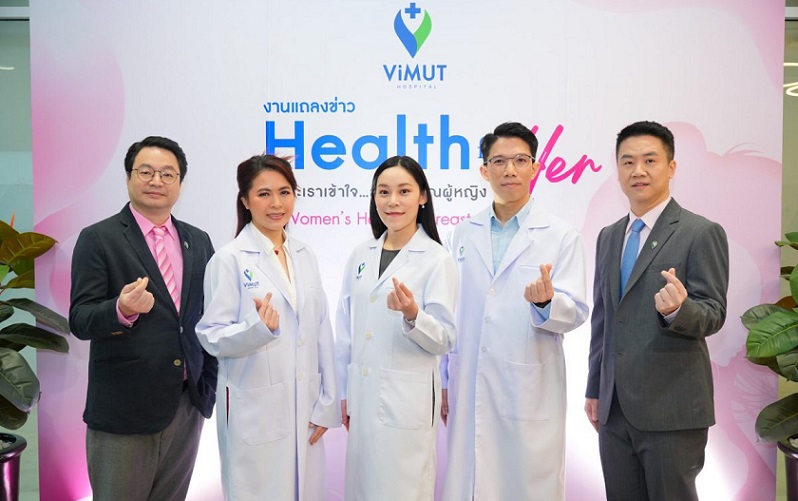 Innovative scarless surgery and preventive care are reshaping women’s health in Thailand
At a time when Thai women are assuming increasingly influential roles as executives, entrepreneurs, investors, and decision-makers, the hospital argues that healthcare systems must evolve to match this new reality. Rather than focusing only on episodic treatment, the new approach emphasizes lifelong preventive care, early screening, minimally invasive interventions, and rapid recovery pathways that allow women to continue their professional and personal responsibilities uninterrupted.
Womenomics And the Health Economic Link
Recent international data underscore the scale of women’s economic influence in Thailand. In 2024, Thailand ranked third globally for the proportion of women holding CEO positions, reaching 42 percent. Additionally, the Global Entrepreneurship Monitor 2024-2025 report found that Thailand is the only country among 51 surveyed where women own more established businesses than men, with a gender ratio of 1.04.
Simultaneously, Thailand’s women’s health market is expanding at an average annual growth rate of 7.2 percent and is projected to reach approximately 5.8 billion baht by 2030. These figures reveal a dual reality. While women are powering economic expansion, their health needs remain underprioritized. Many women delay medical consultations until symptoms become severe. This
Thailand Medical News report underscores that early-stage gynecological and breast conditions often progress silently, without dramatic warning signs. Fear of examinations, concern over treatment disruption, and prioritization of family and work obligations frequently postpone timely care.
Delayed detection of gynecological and breast conditions continues to undermine women’s productivity and long-term wellbeing. Many diseases progress silently, with mild or painless early symptoms that fail to trigger immediate medical attention. Work pressures, caregiving responsibilities, and fear of examinations further contribute to postponed checkups.
The Silent Burden of Common Female Conditions
Clinical data gathered between 2022 and 2025 reveal five major disease groups commonly affecting women:
-
Leiomyoma, commonly known as uterine fibroids, is prevalent among women of reproductive age. Though benign, these hormone-driven tumors can cause heavy menstrual bleeding lasting more than
seven days, large clots, pelvic pressure, fatigue from anemia, and in advanced cases, compression of nearby organs such as the bladder and intestines. Treatment ranges from monitoring through ultrasound to medication and surgery, depending on size and symptom severity.
-
Endometriosis remains another significant concern. In this condition, endometrial tissue grows outside the uterus, triggering chronic inflammation, adhesions, and cyst formation. Symptoms often include worsening menstrual pain, persistent pelvic discomfort, and pain during intercourse. In some cases, infertility becomes the first noticeable sign, complicating intervention.
-
Abnormal uterine or vaginal bleeding frequently reflects hormonal imbalance or structural abnormalities. Bleeding outside regular cycles, postcoital spotting, irregular frequency, or any bleeding after menopause demands immediate evaluation to rule out serious pathology.
-
Breast health conditions also feature prominently. Unspecified breast lumps discovered during self-examination may be movable or fixed, soft or hard. Warning signs include rapid growth, skin dimpling resembling orange peel texture, nipple discharge containing blood, swelling, redness, or visible deformity. Regular monthly self-checks combined with mammography or ultrasound screening are essential.
-
Benign breast neoplasms, though noncancerous, require monitoring. Often influenced by hormonal changes, these lumps may enlarge or become tender before menstruation. While generally not life-threatening, neglect can lead to complications or anxiety that disrupts quality of life.
A Technological Shift Toward Minimally Invasive Care
Central to the hospital’s strategy is rapid adoption of advanced surgical technologies designed to minimize physical trauma and shorten recovery time.
Minimally Invasive Surgery allows complex gynecological procedures through small incisions, reducing blood loss and postoperative discomfort. Patients typically recover faster and return to work sooner than with traditional open surgery.
V-NOTES, a laparoscopic procedure performed through the vaginal route, eliminates visible abdominal scars entirely. By accessing surgical sites internally, this technique reduces cosmetic concerns while accelerating healing.
Single-Port Laparoscopy further refines surgical precision by using a single small entry point, minimizing tissue damage and promoting faster rehabilitation. For working professionals balancing multiple roles, these innovations significantly reduce downtime and psychological stress.
The HER Framework for Comprehensive Support
The hospital’s HER strategy structures care around three core principles.
Health encompasses gynecology across all life stages, breast screening, hormonal evaluation, dermatology, aesthetic services, and hair care, all delivered under one coordinated platform.
Expertise integrates specialized physicians with cutting-edge diagnostic and surgical tools to enhance precision and reduce recovery periods.
Respect ensures patient privacy, emotional sensitivity, and contextual understanding. By creating a safe communicative environment, the hospital aims to dismantle fear and encourage earlier screening.
Affordable screening packages beginning at 1,900 baht are designed to increase accessibility. Additional programs focus on hormone balance, dermatology, body contouring, and confidence-building services tailored to women of varying ages and life stages.
Redefining Womens Healthcare for A Modern Era
The broader message extends beyond hospital walls. Linking women’s health to national competitiveness reframes preventive medicine as an economic strategy. When female professionals are sidelined by late-stage diagnoses or prolonged recovery, organizations and families feel the ripple effects.
Proactive screening, respectful care, and minimally invasive technology collectively reduce advanced disease burdens and long-term treatment costs. More importantly, they preserve leadership continuity, workforce stability, and personal confidence.
Sustained systemic change is essential. Encouraging early detection, normalizing open discussion of gynecological health, investing in technology, and ensuring affordability can transform health outcomes for millions of women. By aligning medical innovation with socioeconomic trends, Thailand can strengthen both public health and economic resilience. The long-term societal benefits include reduced mortality, improved quality of life, enhanced productivity, and generational stability that reinforces sustainable national growth.
For more details on Vimut Hospital, visit:
https://www.vimut.com/home
For the latest on Vimut Hospital, keep on logging to
Thailand Medical News.
Read Also:
https://www.thailandmedical.news/articles/hospital-news
https://www.thailandmedical.news/articles/thailand-medical




 Share
Share
 Tweet
Tweet
 Share
Share

































