Nikhil Prasad Fact checked by:Thailand Medical News Team Mar 28, 2026 5 months, 5 days, 13 hours, 19 minutes ago
Medical News: A widely used compound is now drawing renewed scientific attention for its potential to protect and repair the brain across a range of serious neurological conditions. N-acetylcysteine, commonly known as NAC, has traditionally been used as a treatment for acetaminophen overdose and as a mucolytic agent, but recent clinical investigations suggest it may play a far broader role in brain health. Researchers are increasingly focusing on its ability to counter oxidative stress, a key factor involved in many neurological diseases.
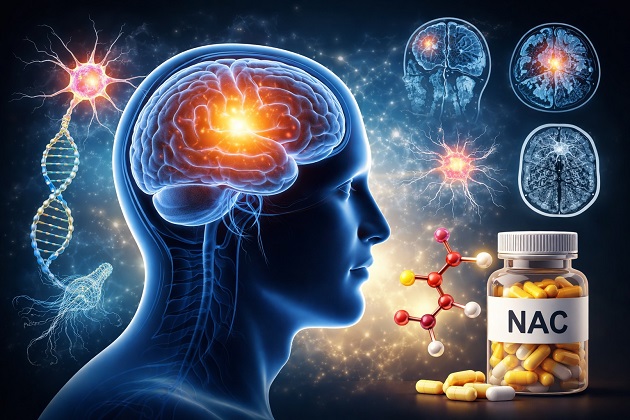 Scientists explore how NAC may protect the brain and improve outcomes across multiple neurological conditions
This
Medical News report highlights findings from researchers at the Department of Physiology and the Department of Neuroscience, Iuliu Hațieganu University of Medicine and Pharmacy, Cluj-Napoca, Romania, who conducted a large systematic review examining NAC across seven neurological disorders. Their work analyzed clinical studies published between 1995 and 2025, providing one of the most comprehensive overviews to date of NAC’s therapeutic potential in the brain.
Understanding How NAC Works in the Brain
NAC acts primarily by boosting levels of glutathione, a powerful antioxidant that protects cells from damage caused by reactive oxygen species. These harmful molecules accumulate during disease and injury, damaging proteins, DNA, and cell membranes. The brain is especially vulnerable because of its high oxygen use and relatively low antioxidant defenses.
Beyond its antioxidant effects, NAC also influences several important biological pathways. It activates protective genes through the Nrf2 pathway, reduces inflammation by suppressing NF-kB signaling, and helps prevent programmed cell death by inhibiting enzymes like caspase-3. These combined actions make NAC a unique compound that targets multiple disease mechanisms at once rather than focusing on a single pathway.
Breakthrough Findings in Traumatic Brain Injury
Among all the conditions studied, traumatic brain injury showed some of the strongest evidence for NAC’s effectiveness. Clinical trials demonstrated that early administration—particularly within the first 24 hours—dramatically improved recovery outcomes. In one study, up to 86 percent of patients achieved complete symptom resolution within a week when treated promptly.
Patients reported improvements in dizziness, memory problems, sleep disturbances, and concentration difficulties. In more severe cases, NAC was associated with better neurological scores and shorter stays in intensive care. Biomarker analysis revealed significant reductions in inflammatory and injury-related markers such as interleukin-6, malondialdehyde, neuron-specific enolase, and S100B protein, suggesting that NAC directly reduces brain damage at the cellular level.
Promising Effects in Parkinson’s Disease
Parkinson’s disease research also produced encouraging results. Several studies showed that NA
C improved motor symptoms and increased dopamine transporter activity in the brain, a key indicator of neuronal function. Imaging studies using DaTscan technology revealed measurable increases in dopamine activity in regions such as the caudate nucleus and putamen.
In addition, intravenous NAC significantly increased brain glutathione levels by as much as 55 percent, confirming that the compound can directly enhance antioxidant defenses in the brain. Oral NAC, while beneficial for blood antioxidant levels, appeared less effective at increasing brain glutathione, likely due to limited absorption and transport across the blood–brain barrier.
Alzheimer’s Disease Shows Mixed but Encouraging Trends
In Alzheimer’s disease, the results were more nuanced. NAC alone showed limited direct benefits, but when included as part of a broader nutraceutical formulation, it appeared to slow cognitive decline and stabilize memory in some patients.
Participants maintained cognitive performance over periods of up to 12 months, which contrasts with the expected gradual deterioration typically seen in Alzheimer’s. Improvements were also observed in behavioral symptoms such as irritability and agitation. However, because NAC was often combined with other compounds, researchers caution that its individual contribution remains difficult to isolate.
Insights from Multiple Sclerosis and Other Disorders
For multiple sclerosis, NAC showed potential benefits in reducing anxiety and improving certain brain metabolic functions, as seen in advanced imaging studies. Some participants also reported improvements in attention and cognitive clarity. However, results for fatigue—a major symptom of the disease—were inconsistent, with strong placebo effects observed in some trials.
In amyotrophic lateral sclerosis, NAC did not significantly improve survival or slow disease progression, although it was found to be safe and well tolerated. Meanwhile, a single study in migraine patients suggested that NAC combined with vitamins C and E reduced headache frequency, severity, and medication use.
Notably, no qualifying clinical studies were found for epilepsy, highlighting a major gap in current research despite strong theoretical reasons to explore NAC in this condition.
Safety Profile and Treatment Considerations
One of NAC’s strongest advantages is its safety profile. Across all studies reviewed, the compound was generally well tolerated, even at high doses. Reported side effects were mild and included symptoms such as abdominal discomfort and headache.
However, researchers identified an important pattern regarding how NAC is administered. Intravenous or combined intravenous and oral treatment consistently produced stronger and more measurable effects than oral supplementation alone. This suggests that delivery method plays a critical role in determining clinical outcomes and should be carefully considered in future studies.
Conclusion
The accumulated evidence positions NAC as a highly promising but still underdeveloped therapeutic option in neurology. Its ability to target oxidative stress, inflammation, and cell death simultaneously gives it a unique advantage over many conventional treatments that focus on a single mechanism. The strongest support currently exists for its use in traumatic brain injury and Parkinson’s disease, where both clinical improvements and biological effects have been consistently observed.
However, the overall quality of evidence remains limited by small study sizes, inconsistent methodologies, and a high risk of bias in many trials. While encouraging trends are emerging in Alzheimer’s disease and multiple sclerosis, these findings require further validation through large, well-designed randomized controlled trials. Future research must also address critical questions regarding optimal dosing, treatment duration, and the most effective route of administration.
Despite these limitations, NAC stands out as a versatile and accessible compound with the potential to reshape how neurological disorders are treated. Its multi-targeted mechanism aligns with the complex nature of brain diseases, offering hope for more effective and comprehensive therapeutic strategies in the future.
The study findings were published in the peer reviewed International Journal of Molecular Sciences.
https://www.mdpi.com/1422-0067/27/7/3076
For the latest on treating brain disorders, keep on logging to Thailand
Medical News.
Read Also:
https://www.thailandmedical.news/articles/supplements
https://www.thailandmedical.news/articles/herbs-and-phytochemicals




 Share
Share
 Tweet
Tweet
 Share
Share

































