Nikhil Prasad Fact checked by:Thailand Medical News Team Feb 17, 2026 6 months, 1 week, 6 days, 16 hours, 44 minutes ago
Medical News: Asthma is a chronic lung disease affecting more than 300 million people worldwide, causing breathing difficulties, coughing, and inflammation that can worsen over time. Despite modern medications such as inhalers and biologic drugs, many patients continue to struggle with uncontrolled symptoms. Now, researchers are exploring phytochemical compounds found in berries and colorful fruits as possible supportive treatments that could reduce inflammation and protect lung function. A new scientific review suggests that anthocyanins—powerful plant compounds responsible for red, blue, and purple colors—may play a key role in improving asthma outcomes.
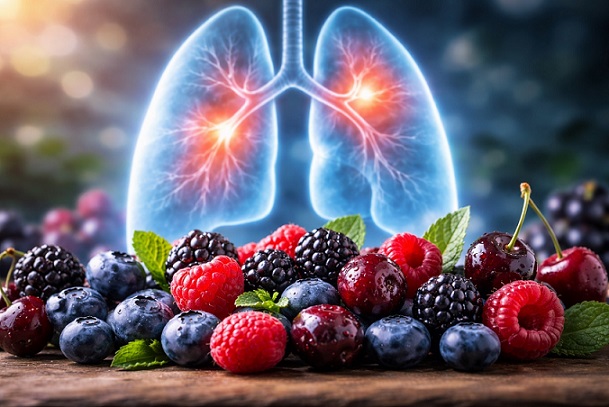 Natural berry compounds called anthocyanins may reduce inflammation and protect lungs in asthma patients
Asthma Remains a Serious and Complex Disease
Natural berry compounds called anthocyanins may reduce inflammation and protect lungs in asthma patients
Asthma Remains a Serious and Complex Disease
The study was conducted by researchers from the School of Pharmacy and Medical Sciences and the School of Health Sciences and Social Work at Griffith University, along with experts from the Institute for Biomedicine and Glycomics in Australia. This
Medical News report highlights that asthma is not just a simple breathing problem—it involves chronic inflammation and structural damage to the airways, known as airway remodeling. This remodeling makes breathing increasingly difficult and can reduce the effectiveness of existing treatments.
One major factor involved in worsening asthma is a molecule called plasminogen activator inhibitor-1 (PAI-1). High levels of this molecule promote inflammation, tissue scarring, and airway narrowing. Researchers believe that controlling this pathway could slow disease progression and improve patient outcomes.
What Are Anthocyanins and Where They Come From
Anthocyanins are phytochemicals found in foods such as blueberries, blackberries, purple grapes, black rice, and red cabbage. These compounds belong to a group called flavonoids, known for their antioxidant and anti-inflammatory properties. Antioxidants help neutralize harmful molecules called free radicals, which damage cells and worsen inflammation.
Studies show anthocyanins interact with the body in multiple ways. They support healthy gut bacteria, reduce oxidative stress, and regulate immune responses. Even though only small amounts are absorbed directly into the bloodstream, their metabolic byproducts also contribute to powerful biological effects.
How These Compounds Protect the Lungs
Laboratory and animal studies show that anthocyanins reduce key inflammatory chemicals linked to asthma, including IL-6, TNF-alpha, and IL-1 beta. These molecules are responsible for triggering swelling, mucus production, and airway tightening. Anthocyanins were also found to suppress immune signals such as NF-kappa B, which plays a major role in chronic inflammation.
In animal models, anthocyanin treatment reduced mucus buildup, inflammatory cell infiltration, airway thickening, and tissue fibrosis. These effects suggest the compounds can slow airway remodeling, which is a major cause of disease p
rogression.
Evidence From Human Studies Shows Encouraging Results
Human clinical trials and population studies have also shown promising benefits. In one clinical trial, patients who consumed anthocyanin-rich extracts experienced reduced coughing, wheezing, and shortness of breath, along with improved lung function. Large population studies found that people who consumed higher levels of anthocyanins had lower asthma rates and better breathing capacity.
However, researchers caution that more direct human clinical trials are still needed to confirm these benefits fully and determine optimal doses.
Why This Discovery Matters for Asthma Patients
The findings suggest that anthocyanins may help asthma patients by reducing inflammation, protecting airway structure, and improving breathing function. Unlike some medications, anthocyanins are naturally present in common foods and are generally considered safe.
Importantly, anthocyanins may work as supportive therapy rather than replacing existing treatments. Their ability to target inflammation and oxidative stress could complement conventional therapies and improve long-term outcomes.
Conclusion
This research highlights the strong potential of anthocyanins as supportive agents in asthma management. By reducing inflammation, protecting airway structure, and improving immune balance, these natural compounds may help slow disease progression and improve quality of life. While more clinical trials are needed, the findings open the door to safer, nutrition-based strategies that could transform asthma care in the future and offer hope to millions suffering from chronic respiratory disease.
The study findings were published in the peer reviewed journal: MDPI Pharmaceuticals.
https://www.mdpi.com/1424-8247/19/2/323
For the latest on Herbs and Phytochemicals, keep on logging to Thailand
Medical News.
Read Also:
https://www.thailandmedical.news/articles/herbs-and-phytochemicals




 Share
Share
 Tweet
Tweet
 Share
Share