Nikhil Prasad Fact checked by:Thailand Medical News Team Mar 09, 2026 6 months, 3 weeks, 6 days, 8 hours, 53 minutes ago
Medical News:
Understanding a Silent Process That Damages Organs
Fibrosis is a medical condition that quietly damages vital organs by causing excessive scar tissue to form inside them. This scarring slowly disrupts how organs function and can eventually lead to organ failure. Scientists are now gaining a deeper understanding of how fibrosis develops and spreads across the body, offering new hope for treatments that may one day stop or even reverse the damage.
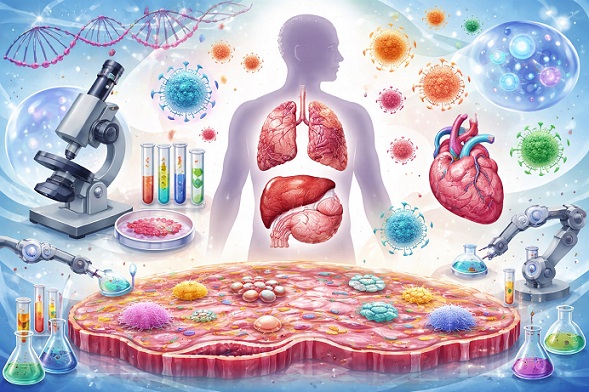 Scientists uncover how organ fibrosis forms and reveal new technologies that could lead to future treatments
to stop deadly tissue scarring.
Researchers from the Department of Pharmacy at the Institute of Metabolic Diseases and Pharmacotherapy, West China Hospital, Sichuan University in Chengdu; the National Engineering Technology Research Center for Miao Medicine and the Guizhou Engineering Technology Research Center for Processing and Preparation of Traditional Chinese Medicine and Ethnic Medicine at the College of Pharmaceutical Sciences, Guizhou University of Traditional Chinese Medicine in Guiyang; the State Key Laboratory of Biotherapy at West China Hospital, Sichuan University in Chengdu; the West China School of Pharmacy at Sichuan University in Chengdu; and the Center of Gerontology and Geriatrics at West China Hospital, Sichuan University in Chengdu conducted a comprehensive scientific review exploring how fibrosis develops and how new technologies could help treat it.
How Fibrosis Gradually Damages the Body
Fibrosis occurs when the body’s normal healing process goes wrong. After an injury, tissues naturally produce collagen and other structural proteins to repair damage. However, when injuries are severe or repeated over time, the repair process becomes uncontrolled. The body begins producing excessive amounts of extracellular matrix materials such as collagen and fibronectin. Instead of healing the tissue, this buildup creates thick scar tissue that disrupts the structure and function of organs.
Fibrosis can affect many organs including the lungs, heart, liver, and kidneys. Diseases linked to fibrosis include chronic kidney disease, heart failure after heart attacks, liver cirrhosis, and idiopathic pulmonary fibrosis. Globally, conditions related to fibrosis are believed to affect nearly a quarter of the population.
Unfortunately, current treatments are limited. Only a few medications exist that can slow fibrosis progression, and most cannot reverse the scarring once it has formed.
New Insights into the Cells Behind Fibrosis
The research covered in this Medical News report highlights that fibrosis is far more complex than scientists previously believed. While fibroblasts and myofibroblasts are known to produce the scar tissue, other cell types also play major roles. Epithelial cells, endothelial cells, immune cells, and bone marrow-derived cells can all contribute to the fibrotic process.
The interaction between these cells forms what scientists call a “fibrogenic niche.” Within this environment, immune signals, metabolic changes, genetic factors, and molecular messengers all influence how fibrosis develops. When communication between these cells beco
mes abnormal, the body shifts from healthy tissue repair toward permanent scarring.
Researchers also discovered that multiple biological events drive this transformation. These include DNA damage, cellular aging, metabolic changes, inflammation, and a process known as epithelial-to-mesenchymal transition in which cells change identity and begin producing fibrotic tissue.
Technology Opening New Doors for Treatments
Modern scientific technologies are rapidly transforming fibrosis research. Multi-omics tools such as genomic sequencing, proteomics, and metabolomics now allow scientists to study thousands of genes, proteins, and molecules simultaneously.
Single-cell sequencing can identify unique cell populations involved in fibrosis that were previously invisible. Spatial transcriptomics reveals how different cells interact within damaged tissue. These technologies are helping researchers pinpoint the exact signaling pathways that drive fibrosis in different organs.
Artificial intelligence is also beginning to accelerate drug discovery. By analyzing massive biological datasets, AI systems can identify promising drug targets and even design new molecules capable of blocking fibrotic pathways.
Early experimental therapies are already being explored, including stem cell treatments, immune-based therapies such as CAR-T cells, and drugs that target specific molecular signals involved in scar formation.
A New Era in Fighting Fibrotic Diseases
The growing understanding of fibrosis is changing how scientists approach these devastating diseases. Instead of viewing fibrosis as a simple buildup of scar tissue, researchers now see it as a complex network of cellular interactions and molecular signals. This deeper insight is guiding the search for more precise therapies that may one day stop fibrosis before organs become permanently damaged.
In conclusion, the study highlights that fibrosis is a complex and multi-cellular disease process involving numerous biological pathways and cell interactions. By combining advanced technologies such as multi-omics analysis, spatial biology, and artificial intelligence, researchers are uncovering new targets for therapy. These breakthroughs could eventually lead to treatments capable not only of slowing fibrosis but potentially reversing it and restoring organ function in millions of patients worldwide.
The study findings were published in the peer reviewed journal: Signal Transduction and Targeted Therapy.
https://www.nature.com/articles/s41392-025-02532-0
For the latest on Fibrosis, keep on logging to Thailand
Medical News.
Read Also:
https://www.thailandmedical.news/articles/coronavirus




 Share
Share
 Tweet
Tweet
 Share
Share