About 7 Percent of Individuals Exposed to COVID-19 Will Develop Irritable Bowel Syndrome!
Nikhil Prasad Fact checked by:Thailand Medical News Team Jan 26, 2026 8 months, 1 week, 1 day, 22 hours, 14 minutes ago
Medical News: A growing body of scientific evidence is revealing that COVID-19 does not always end when the virus clears. For many people, lingering health effects continue to surface, and one of the most overlooked yet impactful outcomes involves the gut. This
Medical News report highlights new findings showing that a significant proportion of COVID-19 survivors later develop irritable bowel syndrome, or IBS, a condition that can seriously affect daily life.
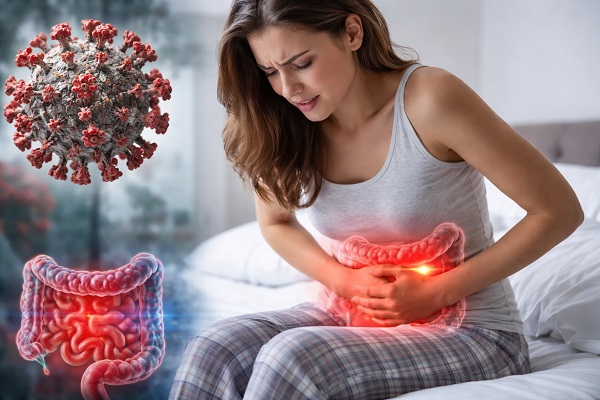 COVID-19 is increasingly linked to long-term gut disorders, with millions at risk of developing IBS after infection.
Understanding Post-COVID IBS in Simple Terms
COVID-19 is increasingly linked to long-term gut disorders, with millions at risk of developing IBS after infection.
Understanding Post-COVID IBS in Simple Terms
IBS is a long-term digestive condition marked by symptoms such as abdominal pain, bloating, diarrhea, constipation, or a mix of both. It does not cause visible damage to the gut but disrupts how the gut and brain communicate. Researchers now recognize that infections, including COVID-19, can trigger IBS even in people with no prior digestive issues.
Researchers and Institutions Involved
The review was conducted by experts from Apollo Multi-specialty Hospitals in Kolkata, India, and the University of Nevada in the United States, bringing together international clinical and research perspectives on post-COVID digestive health.
Key Findings That Matter to the Public
After analyzing available data, researchers found that about 7.2 percent of people who had COVID-19 later developed IBS. This risk was roughly 2.6 times higher than in people who were never infected. Large population surveys in the United States also revealed a noticeable rise in IBS cases during the pandemic, especially the mixed type involving both diarrhea and constipation. Importantly, this increase was not seen with most other gut disorders, pointing to a specific COVID-related effect.
Why COVID-19 Affects the Gut
Scientists believe several factors work together. The virus can directly affect gut cells through ACE2 receptors, disrupt helpful gut bacteria, weaken the gut barrier, and cause low-grade inflammation. Changes in serotonin, a chemical important for gut movement, and ongoing stress, anxiety, or depression further disturb the gut–brain connection. Breathing difficulties and low mood after COVID-19 were also found to increase IBS risk.
Clinical Implications and What Comes Next
At present, there are no dedicated clinical trials for treating post-COVID IBS. However, since most cases resemble diarrhea-predominant or mixed IBS, existing IBS treatments may help. The findings strongly support a personalized, multidisciplinary approach to care that addresses both physical and psychological factors.
In conclusion, this research makes it clear that post-COVID IBS is a real and measurable condition affecting millions worldwide, demanding greater awareness, early diagnosis, and long-term follow-up to reduce suffering and improve quality of life.
The study
findings were published in the peer reviewed journal: Neurogastroenterology & Motility.
https://onlinelibrary.wiley.com/doi/10.1111/nmo.70250
For the latest COVID-19 news, keep on logging to Thailand
Medical News.
Read Also:
https://www.thailandmedical.news/articles/coronavirus
https://www.thailandmedical.news/articles/long-covid




 Share
Share
 Tweet
Tweet
 Share
Share

































