Nikhil Prasad Fact checked by:Thailand Medical News Team Aug 19, 2025 1 year, 2 weeks, 22 hours, 28 minutes ago
Medical News: Scientists Discover the Viral Trick Behind COVID-19 Protein Production
A team of researchers in South Korea has uncovered a previously overlooked trick used by SARS-CoV-2—the virus responsible for COVID-19—to hijack human cells and boost its own survival. The research, led by scientists from the Center for RNA Research and School of Biological Sciences at Seoul National University, Institute for Basic Science, Gachon University, and the Lee Gil Ya Cancer and Diabetes Institute, sheds new light on how the virus manages to rapidly reproduce inside the human body.
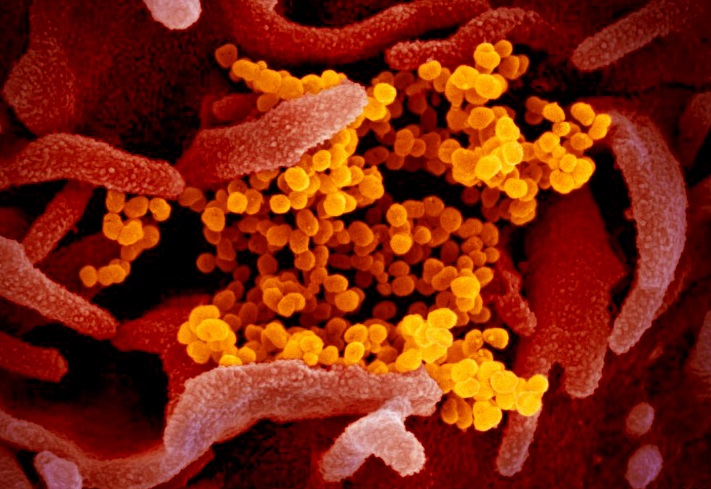 New Study Uncovers How a Little-Known SARS-CoV-2 Protein Hijacks Human Cells
SARS-CoV-2 is made up of several nonstructural proteins (Nsps) that help the virus take control of the host cell’s internal machinery. One of these proteins, called Nsp2, was previously the least understood among the group. But this
Medical News report reveals that Nsp2 plays a critical role in the early stages of infection by teaming up with a human protein called GIGYF2 to ramp up viral protein production.
The Role of Nsp2 and GIGYF2 in Viral Replication
In their experiments, the researchers removed the gene that makes Nsp2 from the virus and found that viral RNA production dropped dramatically within the first 4 hours after infection. This confirmed that Nsp2 is vital for helping the virus replicate quickly. The scientists then discovered that Nsp2 works by bringing GIGYF2 close to the virus’s replication centers—areas inside the cell called double-membrane vesicles (DMVs). GIGYF2 is a host protein involved in regulating translation, the process that turns RNA into proteins.
When GIGYF2 was absent, the virus struggled to replicate—just like it did when Nsp2 was removed. Additional experiments showed that Nsp2 physically interacts with GIGYF2, pulling it toward viral RNA hotspots where proteins like the viral membrane (M) and Orf6 are made. Without GIGYF2, levels of these proteins dropped, even though the viral RNA remained unchanged. This suggests that GIGYF2 specifically helps the virus translate its RNA into protein more efficiently.
Why This Discovery Matters
The study provides strong evidence that SARS-CoV-2 uses Nsp2 to manipulate host cell machinery early in infection by redirecting GIGYF2 to viral replication sites. This interaction boosts the virus's ability to produce critical proteins quickly, giving it a head start before the immune system can react. Understanding this mechanism could open the door to new therapeutic targets that block the interaction between Nsp2 and GIGYF2, potentially slowing down viral replication in future COVID-19 outbreaks or variants.
The study findings were published in the peer reviewed journal: Nucleic Acids Research
https://academic.oup.com/nar/article/53/14/gkaf674/8211931
For the latest COVID-19 News, keep on logging to Thailand
an style="font-size:16px">Medical News.
Read Also:
https://www.thailandmedical.news/news/breaking-hypothesis-that-majority-exposed-to-sars-cov-2-will-have-shortened-lifespans-validated-by-study-showing-nsp2-impairs-human-4ehp-gigyf2-comple
https://www.thailandmedical.news/news/covid-19-increases-risk-of-hpv-linked-cancers
https://www.thailandmedical.news/news/covid-19-triggers-kidney-stone-formation-through-hidden-biological-damage




 Share
Share
 Tweet
Tweet
 Share
Share

































