Nikhil Prasad Fact checked by:Thailand Medical News Team Aug 12, 2026 1 month, 3 weeks, 1 day, 19 hours, 34 minutes ago
A randomized clinical trial from Taiwan has found that beta-glucan supplementation may help patients with advanced cancers maintain more stable immune function while undergoing chemotherapy. The findings are particularly interesting because chemotherapy can damage rapidly dividing cancer cells but can also suppress bone marrow and weaken important immune defenses.
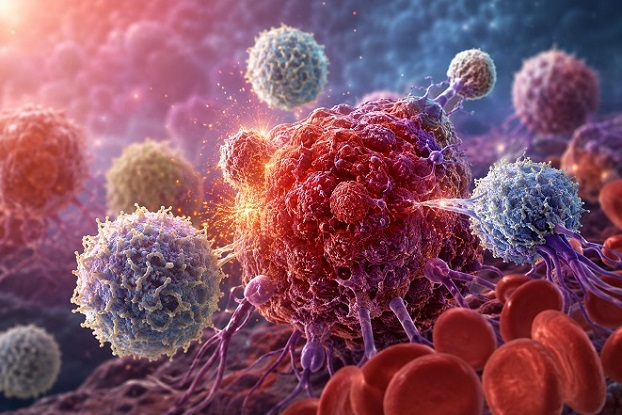 Beta-glucan supplementation may help stabilize immune defenses and blood-cell recovery in patients undergoing
chemotherapy
The researchers were from Meiho University; Ping-Tung Veterans General Hospital; National Sun Yat-Sen University; E-DA Cancer Hospital; and Tajen University, Taiwan.
Researchers Tested Two Beta-Glucan Formulations
The prospective phase II trial initially randomized 99 adults with stage IV solid tumors. Following withdrawals, the analysis included 32 patients receiving beta-glucan powder, 30 receiving beta-glucan capsules and 34 receiving standard care.
The powder contained soluble yeast-derived beta-1,3/1,6-glucan together with L-glutamine and bioactive protein from bovine colostrum, while the capsules contained beta-glucan and L-glutamine.
Importantly, this was not a study showing that beta-glucan can replace chemotherapy. Instead, researchers investigated whether supplementation could help protect blood-cell recovery and maintain a more balanced immune system during treatment.
Better Disease Control and Faster Blood Cell Recovery
One of the most striking findings involved disease control. The proportion of patients achieving complete response, partial response or stable disease was 81.25 percent in the powder group, 66.66 percent in the capsule group and 52.94 percent among controls, with the difference reaching statistical significance.
Patients receiving beta-glucan also experienced significantly better recovery of white blood cells and neutrophils after approximately three to four weeks. Neutrophils are immune cells that provide an important defense against infection, and chemotherapy-related reductions can sometimes force doctors to delay or modify treatment.
Infections occurred in 25 percent of the powder group, 33.33 percent of the capsule group and 47 percent of controls, although this difference was not statistically significant.
Immune System Appeared More Stable
Another important finding in this Thailand
Medical News report involved the neutrophil-to-lymphocyte ratio, or NLR, a blood marker associated with inflammation and cancer prognosis. After roughly six to eight weeks, NLR declined in beta-glucan recipients and subsequently became more stable.
Detailed immune profiling also suggested that beta-glucan was doing more than simply changing total white-blood-cell numbers. Helper and cancer-killing T-cell populations remained more stable, while patients without supplementation showed greater declines or fluctuations.
Natural killer cells, NKT cells and several CD158/KIR immune-cell populations similarly displayed greater stabil
ity during repeated chemotherapy. Researchers also observed more stable PD-1-related immune-cell patterns among supplemented patients. These findings suggest beta-glucan may reduce some of the immune remodeling caused by repeated chemotherapy.
Laboratory experiments provided another clue: prolonged beta-glucan exposure modestly reduced the growth and metabolic activity of Jurkat leukemia-derived T cells, particularly at higher concentrations.
No Proven Survival Advantage
The findings require caution. Beta-glucan supplementation did not produce a statistically significant improvement in overall survival. The trial was conducted at one center, involved a relatively small number of patients with many different cancers, and some participants died before later immune measurements could be completed. The formulations also contained additional nutritional ingredients, making it impossible to attribute every observed effect solely to beta-glucan.
Conclusions
Overall, the study suggests that beta-glucan supplementation could become a useful supportive nutritional strategy during chemotherapy by accelerating neutrophil recovery, stabilizing inflammatory and immune markers, preserving important T-cell and natural-killer-cell populations and potentially improving disease control. Larger multicenter trials are now needed to determine whether these biological benefits ultimately translate into meaningful improvements in survival, complications and quality of life.
The study findings were published in the peer reviewed International Journal of Molecular Sciences.
https://www.mdpi.com/1422-0067/27/16/7189
Read Also:
https://www.thailandmedical.news/articles/cancer
https://www.thailandmedical.news/articles/supplements




 Share
Share
 Tweet
Tweet
 Share
Share

































