Microbiome Alterations in the Gut and Urinary Tract Linked to Bladder Cancer Development and Treatment Outcomes
Nikhil Prasad Fact checked by:Thailand Medical News Team Apr 19, 2026 5 months, 2 weeks, 1 day, 5 hours, 24 minutes ago
Medical News: New research is shedding light on a critical yet often overlooked factor in bladder cancer: the role of microorganisms living in the human body. Scientists are now finding that the communities of bacteria in both the gut and urinary tract—collectively known as the microbiome—may significantly influence how bladder cancer develops, progresses, and responds to treatment.
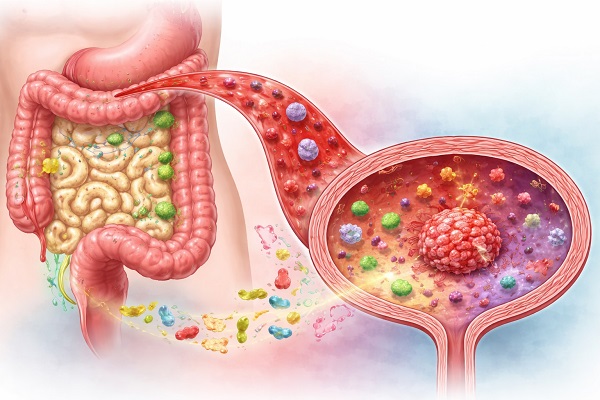 Microbial imbalances in the body may influence bladder cancer risk, progression, and therapy success
A Paradigm Shift in Understanding the Bladder
Microbial imbalances in the body may influence bladder cancer risk, progression, and therapy success
A Paradigm Shift in Understanding the Bladder
For decades, the bladder was believed to be sterile. However, researchers from the School of Medicine at Universidad Nacional Autónoma de México, the Icahn School of Medicine at Mount Sinai in New York, the Metropolitan University of Santos in Brazil, and the Indiana Regional Medical Center in Pennsylvania have confirmed that the bladder contains its own microbiome.
This microbial community includes a range of bacteria that interact with the immune system. In healthy individuals, these microbes help maintain balance, but disturbances in this ecosystem—known as dysbiosis—can contribute to disease processes, including cancer.
Microbial Imbalance and Cancer Risk
The study found that bladder cancer is associated with a clear shift in microbial composition. Beneficial bacteria such as Lactobacillus, Bifidobacterium, and Ruminococcus are often reduced, while potentially harmful bacteria like Fusobacterium, Acinetobacter, and Prevotella become more abundant.
This imbalance promotes chronic inflammation, weakens immune surveillance, and may even lead to direct DNA damage through bacterial toxins. These processes create conditions that allow cancer cells to grow and evade the body's natural defenses.
In addition, microbial metabolites—particularly short-chain fatty acids—play a vital role in regulating immune responses. A reduction in these protective compounds further contributes to a tumor-friendly environment.
The Gut–Bladder Axis Explained
A major highlight of the research is the concept of the “gut–bladder axis.” This refers to the biological connection between gut microbes and bladder health.
When the gut microbiome becomes disrupted due to factors such as diet, aging, infections, or environmental exposures, it can trigger systemic inflammation. This inflammation can spread through the bloodstream and influence the bladder’s microenvironment, potentially promoting cancer development.
This
Medical News report underscores that this connection may explain why lifestyle factors—such as smoking and occupational exposure to chemicals—are strongly linked to bladder cancer risk.
Influence on Treatment Response
&
lt;br />
The microbiome also appears to affect how patients respond to treatment. The study highlights that individuals with a more balanced microbial profile tend to respond better to therapies such as Bacillus Calmette–Guérin (BCG) immunotherapy and immune checkpoint inhibitors.
Conversely, dysbiosis is associated with poorer treatment outcomes and a higher likelihood of cancer recurrence. Some bacteria may interfere with drug effectiveness, while others enhance immune responses that help eliminate cancer cells.
These findings suggest that modifying the microbiome could become a key strategy in improving cancer treatment outcomes.
Role of Environmental and Biological Factors
The composition of the microbiome is influenced by several external and internal factors. Smoking, for instance, has been shown to alter bacterial populations in ways that may increase cancer risk. Occupational exposure to harmful chemicals, as well as diet, age, sex, and geographic location, also play important roles.
Despite these insights, the study notes that most existing research has been conducted in limited populations, highlighting the need for broader, more diverse investigations.
Conclusion
This research highlights the microbiome as a crucial component in bladder cancer biology. Rather than being a passive bystander, microbial imbalance appears to actively contribute to cancer development, progression, and treatment response.
The interplay between gut and urinary microbiomes introduces a new dimension to understanding this disease. While further studies are needed to establish direct causation, these findings open the door to innovative approaches such as microbiome-based diagnostics and therapies. Targeting microbial balance may soon become an integral part of personalized cancer care, offering hope for improved prevention, more effective treatments, and reduced recurrence rates.
The study findings were published in the peer reviewed journal: Uro.
https://www.mdpi.com/2673-4397/6/2/10
For the latest on bladder cancer, keep on logging to Thailand
Medical News.
Read Also:
https://www.thailandmedical.news/articles/cancer




 Share
Share
 Tweet
Tweet
 Share
Share

































