Nikhil Prasad Fact checked by:Thailand Medical News Team Feb 03, 2026 6 months, 3 weeks, 6 days, 10 hours, 6 minutes ago
Medical News: Eye Drops Under Scientific Scrutiny
A commonly used chemical found in some over-the-counter eye drops is now raising fresh concerns after scientists discovered it may affect liver cells and behave like PFAS chemicals inside the body. Researchers from Örebro University in Sweden carried out the study after questions were raised about the long-term safety of eye drop ingredients that were previously believed to be biologically inactive.
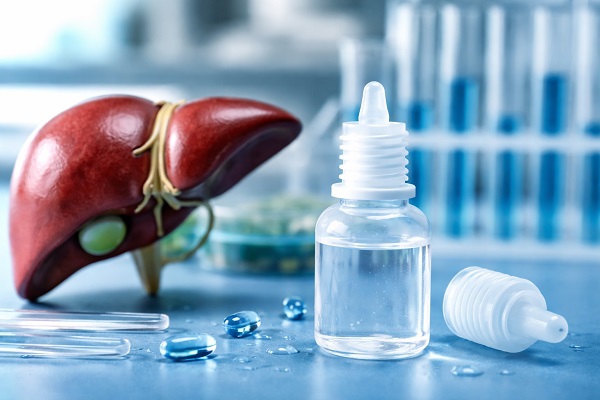 Laboratory research reveals that a common eye drop ingredient may quietly alter liver metabolism over time
The compound examined is called perfluorohexyloctane, also known as F6H8. It is used in eye drops for dry eye disease and is valued for its stability and lubrication properties. However, its chemical structure closely resembles that of PFAS, a group of substances often referred to as “forever chemicals” because of their persistence in the body and environment.
How Eye Drops Can Reach the Liver
Although eye drops are applied directly to the eye, small amounts can still enter the bloodstream, especially when used repeatedly over long periods. Previous research has shown that similar fluorinated compounds can slowly build up in the liver, an organ responsible for processing foreign substances.
To explore this risk, scientists exposed human liver cells to low levels of F6H8 in laboratory conditions designed to mimic long-term use rather than short-term high exposure. According to researcher Andi Alijagic from Örebro University, the goal was to observe subtle metabolic changes that could develop over time.
Unexpected Changes in Liver Cell Metabolism
The findings revealed widespread changes in liver cell metabolism, including disruptions in how cells process fats, amino acids, and energy. Most notably, researchers found evidence that F6H8 does not remain unchanged in the body. Instead, it can be partially transformed into a PFAS-like substance known as perfluorohexyloctanoic acid.
This discovery challenges earlier assumptions that F6H8 is biologically inert. Professor Tuulia Hyötyläinen, lead author of the study, emphasized that understanding how such chemicals behave inside the body is essential for protecting long-term human health. Professor Matej Orešič added that the observed metabolic patterns deserve further investigation, particularly in living organisms.
Why These Findings Matter Beyond Eye Care
The study adds to growing concerns about fluorinated chemicals used not only in medical products but also in everyday hygiene items. Some related substances have already been banned in ski waxes due to environmental and health risks, yet remain permitted in eye drops. This
Medical News report highlights a regulatory gap that scientists believe warrants closer attention.
While the researchers stress that their findings do not prove direct harm to humans, they do indicate that repeated exposure could have biological effect
s that accumulate silently over time.
Study Limitations and Future Directions
The experiments were conducted in human liver cells rather than in people or animals, meaning the results cannot be directly translated into real-world health outcomes. However, the data strongly suggest that long-term exposure and chemical transformation should be carefully evaluated in future studies.
Conclusion
In conclusion, this study provides important early evidence that a chemical widely used in eye drops may not be as harmless as once believed. By showing metabolic disruption and PFAS-like transformation in liver cells, the research underscores the need for long-term safety studies, improved regulation, and greater transparency when evaluating chemicals intended for repeated medical use.
The study findings were published in the peer reviewed journal: Environment International
https://www.sciencedirect.com/science/article/pii/S016041202600070X
For the latest on safety of eye drops, keep on logging to Thailand
Medical News.




 Share
Share
 Tweet
Tweet
 Share
Share

































