HLA-B Class I Alleles Linked to Neurological Complications in Pediatric COVID-19
Nikhil Prasad Fact checked by:Thailand Medical News Team Jul 28, 2026 2 months, 6 days, 19 hours, 17 minutes ago
Medical News: Scientists Explore Genetic Clues Behind Brain Complications in Children
A new study has uncovered important insights into why some children infected with COVID-19 develop neurological complications while others experience only mild illness. Researchers from the Pediatrics Department and Clinical Pathology Department at the Faculty of Medicine, Ain Shams University in Cairo, Egypt, investigated whether specific immune-related genes could influence these outcomes.
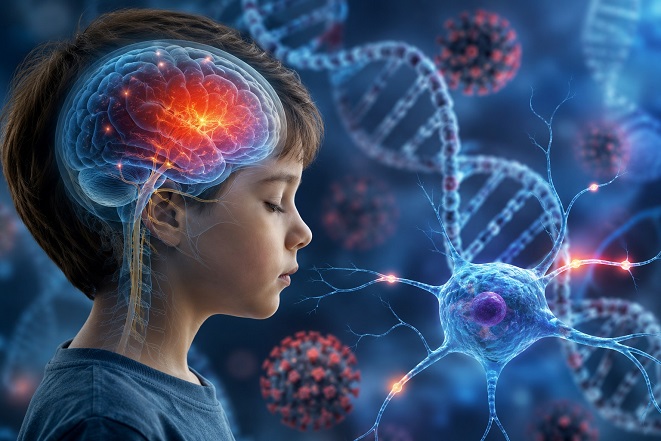 Study finds possible genetic link between immune genes and COVID-19-related brain complications in children
Although most pediatric COVID-19 cases are mild, a subset of children develop serious neurological symptoms such as seizures, confusion, and stroke-like conditions. Understanding the reasons behind these complications has become a growing priority for clinicians.
Study Design and Patient Analysis
The research team conducted a retrospective observational study over one year, analyzing children aged one month to 16 years with confirmed SARS-CoV-2 infection. The study included 47 pediatric COVID-19 patients, divided into two groups—those with neurological complications and those without—as well as a control group of 120 healthy children.
The focus was on HLA-B class I alleles, a group of genes that play a critical role in regulating immune responses. These genes help the body recognize viral particles and activate immune defenses, particularly through T-cell responses.
Key Genetic Findings
The study found that the HLA-B53 allele showed a higher occurrence among children who developed neurological complications. Children carrying this allele demonstrated increased odds of neurological involvement compared to those without such symptoms.
However, the researchers emphasized that this association is exploratory and not statistically definitive. The relatively small sample size and lack of adjustment for multiple comparisons mean the findings should be interpreted cautiously.
Other alleles showed weaker trends. HLA-B45 demonstrated a possible association with increased risk, while HLA-B52 appeared less frequent among children with neurological complications. Meanwhile, HLA-B49 was the most commonly observed allele in affected children but did not show a statistically significant link.
Differences in Inflammatory Response
One of the more surprising findings was related to inflammation. Children without neurological complications showed significantly higher levels of inflammatory markers such as C-reactive protein, ferritin, and D-dimer compared to those with neurological symptoms.
This suggests that neurological complications in pediatric COVID-19 may not be driven by the typical widespread inflammatory response seen in severe infections. Instead, these complications may arise from more localized immune activity within the central nervous system.
This
Medical News
span> report highlights how these findings challenge conventional assumptions about the relationship between inflammation and disease severity in COVID-19.
Spectrum of Neurological Symptoms
The study documented a wide range of neurological manifestations among affected children. The most common symptoms included altered consciousness and headaches, followed by seizures and motor deficits.
More severe conditions included encephalitis, Guillain-Barré syndrome, and transverse myelitis. Brain imaging revealed abnormalities in over half of the cases, including evidence of inflammation, demyelination, and vascular injury.
These findings illustrate the diverse ways in which SARS-CoV-2 can impact the nervous system in children.
Clinical Implications and Future Research
The identification of a potential genetic association offers a new direction for understanding and managing pediatric COVID-19 complications. If confirmed in larger studies, genetic screening could help identify children at higher risk and guide closer neurological monitoring.
However, researchers stress that further large-scale, multi-center studies are necessary to validate these findings and determine their clinical significance.
Conclusion
This study provides early evidence suggesting that HLA-B class I alleles, particularly HLA-B53, may contribute to the risk of neurological complications in children with COVID-19. While the findings are exploratory and require further validation, they highlight the complex role of host genetics in shaping disease outcomes and underscore the need for continued research to better understand and manage neurological involvement in pediatric SARS-CoV-2 infections.
The study findings were published in the peer reviewed journal: BMC Pediatrics.
https://link.springer.com/article/10.1186/s12887-026-07370-9
For the latest COVID-19 news, keep on logging to Thailand
Medical News.
Read Also:
https://www.thailandmedical.news/articles/coronavirus
https://www.thailandmedical.news/articles/long-covid




 Share
Share
 Tweet
Tweet
 Share
Share

































