Nikhil Prasad Fact checked by:Thailand Medical News Team Jun 22, 2026 3 months, 1 week, 4 days, 18 hours, 53 minutes ago
Medical News: A new study has found that zinc sulfate may offer remarkable protection against one of the most dangerous complications of type 2 diabetes—damage to the heart muscle. Researchers discovered that zinc supplementation significantly improved heart function, reduced harmful oxidative stress, and protected heart tissue from scarring and cell death in aged female diabetic rats.
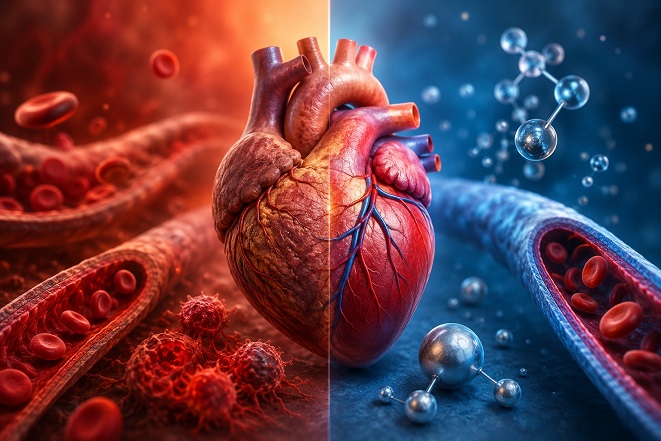 Zinc supplementation restored heart function and reduced tissue damage in aged diabetic rats, offering new hope for diabetic heart disease treatment.
The research was conducted by scientists from the Department of Biophysics and Department of Physiology at Ondokuz Mayis University, the Department of Histology and Embryology at Ondokuz Mayis University, the Department of Physiology at Samsun University, the Department of Medical Biology at KTO Karatay University, and the Department of Biophysics at Necmettin Erbakan University, all in Türkiye.
Understanding Diabetic Heart Disease
Diabetic cardiomyopathy is a condition in which diabetes damages the heart muscle even when there is no blockage in the coronary arteries or high blood pressure. Over time, elevated blood sugar levels trigger excessive production of harmful molecules known as reactive oxygen species. These molecules attack heart cells, disrupt calcium balance, impair contraction and relaxation of the heart, and eventually lead to heart failure.
Aging further increases the risk because older hearts already experience reduced cellular repair capacity and greater oxidative stress.
To investigate whether zinc could counter these effects, researchers used 18-month-old female rats, which roughly represent elderly females in human terms. Diabetes was induced through a high-fat diet combined with low-dose streptozotocin, a commonly used method that closely mimics human type 2 diabetes.
Zinc Dramatically Improved Heart Performance
The diabetic rats developed severe heart dysfunction. Their heart muscles generated much weaker contractions and showed significant reductions in both contraction and relaxation speeds.
After six weeks of zinc sulfate treatment, however, heart performance improved substantially. The treated animals demonstrated stronger contractions, better relaxation, and greater overall mechanical efficiency. The benefits became even more obvious when the hearts were subjected to increasing workloads, suggesting that zinc helped the heart cope with stress much more effectively.
Researchers found that zinc-treated diabetic rats also experienced a major reduction in blood glucose levels compared to untreated diabetic animals.
Fighting Oxidative Stress at the Cellular Level
One of the most striking findings involved oxidative stress markers.
Diabetic animals showed dramatically elevated levels of malondialdehyde (MDA), a marker of cellular damage caused by oxidation. At the same time, levels of glutathione (GSH), one of the body's most important natural antioxidants, were severely depleted.
Zinc treatment reversed both abnormalities. MDA levels fell significantly whi
le GSH levels rose, indicating that zinc restored the heart's antioxidant defenses and reduced ongoing cellular injury.
This
Medical News report highlights that oxidative stress is increasingly recognized as a central driver of diabetic heart disease, making these findings particularly important.
Key Protective Genes Restored
The study also revealed that zinc reactivated several critical genes involved in heart health.
Among them was SIRT1, often described as a longevity-related protein because of its role in protecting cells from aging and stress. Diabetes sharply reduced SIRT1 activity, but zinc treatment restored much of its expression.
The researchers also observed recovery of GLUT4, a protein responsible for transporting glucose into cells. Improved GLUT4 activity could help explain the better blood sugar control seen in zinc-treated animals.
Several proteins involved in calcium handling—including SERCA2a, RyR2, and Cav1.2—were also restored. These proteins are essential for coordinating the rhythmic contraction and relaxation of heart muscle cells. Their recovery suggests that zinc helped normalize the heart's electrical and mechanical functions.
Less Scarring and Cell Death
Microscopic examination of heart tissue revealed widespread fibrosis, inflammation, and structural damage in untreated diabetic animals. Excess collagen accumulation and increased activity of apoptosis-related markers indicated that heart cells were dying and being replaced with scar tissue.
In contrast, zinc-treated diabetic rats showed much better preservation of heart structure. Fibrosis was reduced, collagen accumulation declined, and markers of cell death were significantly suppressed.
Interestingly, researchers noted that zinc supplementation in otherwise healthy animals produced mild stress responses and early fibrotic changes, suggesting that excessive supplementation may not be beneficial in individuals without underlying disease.
Conclusions
The findings suggest that zinc sulfate may be a powerful therapeutic tool against diabetic cardiomyopathy, particularly in aging populations. By reducing oxidative stress, restoring antioxidant defenses, improving glucose metabolism, protecting calcium-regulating proteins, and limiting fibrosis and cell death, zinc was able to substantially reverse many of the damaging effects of diabetes on the heart. While additional studies in humans are needed before clinical recommendations can be made, the results provide compelling evidence that zinc-based interventions could one day become part of future strategies for preventing or treating diabetic heart disease.
The study findings were published in the peer reviewed journal: Nutrients.
https://www.mdpi.com/2072-6643/18/12/2005
For the latest research on zinc supplementation, keep on logging to Thailand
Medical News.
Read Also:
https://www.thailandmedical.news/articles/supplements




 Share
Share
 Tweet
Tweet
 Share
Share