Nikhil Prasad Fact checked by:Thailand Medical News Team Aug 21, 2026 49 minutes ago
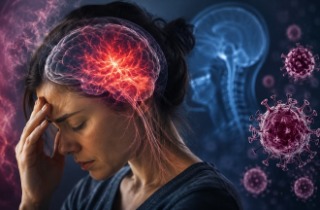
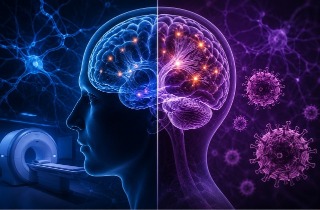
A form of magnetic brain stimulation used to treat major depression may be considerably less effective in people whose depression developed alongside Long COVID, according to a new study comparing treatment outcomes in carefully matched patients.
 Long COVID-related depression showed substantially lower improvement and remission following magnetic brain stimulation than conventional major depression.
The findings suggest that while people with Long COVID-related depression can improve with treatment, achieving full remission may be substantially more difficult than for people with conventional major depressive disorder.
Comparing Two Types of Depression
The study examined real-world clinical records from two specialized transcranial magnetic stimulation clinics in the Tokyo metropolitan area between May 2022 and April 2026.
Researchers compared 44 medication-free patients with Long COVID-associated major depression with 88 patients who had primary major depressive disorder. The groups were matched for age, sex, and initial depression severity to make the comparison more meaningful.
The Long COVID patients had laboratory-confirmed COVID-19 followed by symptoms lasting at least three months, including fatigue, “brain fog,” and newly developed depression. Their Long COVID symptoms had lasted from approximately three months to 2.5 years.
Research institutions: International University of Health and Welfare, Mita Hospital; Tokyo Yokohama TMS Clinic; and Shinjuku-Yoyogi Mental Lab Clinic, Japan.
How the Brain Treatment Worked
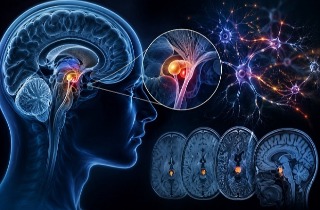
All participants received intermittent theta burst stimulation, or iTBS, a faster form of repetitive transcranial magnetic stimulation. The noninvasive treatment uses magnetic pulses directed at a brain region involved in mood regulation.
Patients generally received 20 to 30 sessions, two or three times weekly. Each session delivered 1,200 magnetic pulses over approximately six minutes.
In this Thailand
Medical News report, the most striking finding was not simply whether patients improved, but how much improvement they experienced and whether their depression eventually reached remission.
Long COVID Group Showed Smaller Improvements
On one widely used depression scale, patients with Long COVID improved by an average of 38.4%, compared with 61.5% among patients with primary depression. On another standard depression scale, improvement averaged 36.7% versus 58.4%.
After statistical adjustments, Long COVID was associated with approximately 23 percentage points less improvement on the first scale and nearly 22 percentage points less improvement on the second. Multiple statistical approaches produced similar results, strengthening the observed association.
There was another important difference. About 31.8% of Long COVID patients achieved at least a 50% reduction in symptoms, compared with 46.6% of primary depression patients, although this difference was not statistica
lly significant.
Full remission showed a much larger gap. Only 27.3% of Long COVID patients reached remission, compared with 61.4% of patients with primary depression.
The analysis indicated that the likelihood of remission was approximately 71% lower in the Long COVID group.
Conclusions
The results suggest Long COVID-associated depression may represent a more difficult-to-treat clinical condition in which magnetic brain stimulation can still provide improvement, but complete recovery appears considerably less likely. However, because this was an observational retrospective study, it cannot prove that Long COVID itself caused the weaker treatment response. Larger controlled trials are needed.
The study findings were published in the peer reviewed journal: Biomedicines.
https://www.mdpi.com/2227-9059/14/8/1872
Read Also:
https://www.thailandmedical.news/articles/long-covid
https://www.thailandmedical.news/articles/coronavirus




 Share
Share
 Tweet
Tweet
 Share
Share