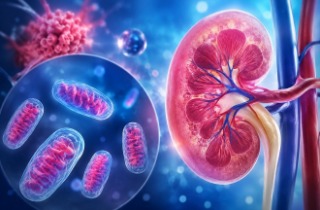
Nikhil Prasad Fact checked by:Thailand Medical News Team May 25, 2026 3 months, 1 week, 1 day, 12 hours, 37 minutes ago
Medical News: A natural compound found in Astragalus root, a traditional Chinese medicinal herb, is showing promising potential in slowing diabetic kidney disease, according to a new scientific study by researchers from Xinjiang Second Medical College, the Science and Innovation Center of Xinjiang Second Medical College, the School of Basic Medical Sciences at Xinjiang Second Medical College in China, and the Shaanxi Collaborative Innovation Center of Chinese Medicine Resources Industrialization at Shaanxi University of Chinese Medicine.
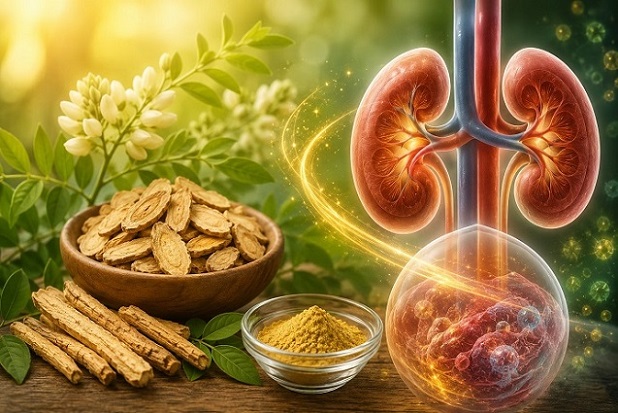 Scientists discover that kaempferol from Astragalus root may help protect diabetic kidneys by reducing inflammation
and scarring
Diabetic nephropathy, also known as diabetic kidney disease, is one of the most dangerous complications of diabetes. It damages the kidneys slowly over time and can eventually lead to kidney failure requiring dialysis or transplantation. Scientists estimate that nearly 40 percent of people with diabetes may eventually develop the condition.
In the new study, researchers investigated how Astragalus root may help protect the kidneys. Their findings revealed that kaempferol, a naturally occurring plant compound found in Astragalus root, appears capable of reducing inflammation, oxidative stress, and kidney scarring linked to diabetic nephropathy.
Why Diabetic Kidney Disease Is So Dangerous
When blood sugar levels remain high for long periods, harmful substances known as advanced glycation end products, or AGEs, accumulate in the body. These substances trigger damaging inflammatory reactions and oxidative stress that slowly destroy delicate kidney tissues.
Over time, the kidneys become scarred and less effective at filtering waste products from the blood. Patients may experience protein leakage in urine, swelling, fatigue, and eventually complete kidney failure.
Current treatments such as ACE inhibitors, ARBs, and SGLT2 inhibitors can slow disease progression, but they do not completely stop kidney damage. Researchers are therefore searching for safer and more effective therapies that target multiple disease pathways simultaneously.
Kaempferol Emerges as the Key Protective Compound
The research team used advanced bioinformatics, molecular docking, molecular dynamics simulations, and laboratory cell experiments to identify the most important active ingredients in Astragalus root.
Among several compounds examined, kaempferol stood out as the most powerful. The compound demonstrated strong binding ability to several proteins heavily involved in diabetic kidney disease, including CASP3, VEGFA, CTNNB1, MYC, and PRKCB.
Computer simulations further showed that kaempferol formed stable interactions with these proteins over long periods, suggesting it may effectively block harmful disease processes.
This
Medical News report highlights that the researchers did not stop at computer predictions alone. They also tested kaempferol directly on human kidney cells exposed to diabetic
-like conditions in the laboratory.
Major Reductions in Oxidative Stress and Inflammation
The laboratory experiments produced impressive results. Kidney cells treated with kaempferol showed major reductions in harmful oxidative stress markers such as reactive oxygen species (ROS) and malondialdehyde (MDA). At the same time, protective antioxidant molecules including SOD and GSH increased significantly.
The researchers also discovered that kaempferol sharply reduced inflammatory chemicals including TNF-α, IL-6, and IL-1β. These inflammatory molecules are known to worsen kidney injury in diabetic patients.
Importantly, kaempferol also lowered levels of fibrosis-related proteins such as α-SMA, Collagen I, and Collagen IV. These proteins are associated with kidney scarring and long-term loss of kidney function.
Blocking a Dangerous Disease Pathway
One of the study’s most important findings involved the AGE-RAGE-PKCβ-TGF-β1 signaling pathway, considered one of the main drivers of diabetic kidney damage.
Researchers found that kaempferol effectively suppressed the activity of this pathway. The compound reduced the expression of RAGE, PKCβII, TGF-β1, and AGEs themselves, all of which play major roles in inflammation, fibrosis, and kidney tissue destruction.
Microscopic imaging further confirmed that kaempferol reduced RAGE activity inside kidney cells, suggesting the compound directly interrupts one of the most harmful biochemical chains involved in diabetic nephropathy.
Conclusions
The findings suggest that kaempferol from Astragalus root may eventually become an important natural therapy for diabetic kidney disease. Its ability to simultaneously reduce oxidative stress, inflammation, fibrosis, and harmful signaling pathways makes it especially promising compared to treatments that only target one mechanism at a time. Although the results are currently limited to laboratory and computational studies, the research provides strong scientific evidence supporting further animal and human clinical trials. If future studies confirm these benefits in patients, kaempferol could emerge as a safer and more affordable complementary treatment option for millions of diabetics facing kidney complications worldwide.
The study findings were published in the peer reviewed International Journal of Molecular Sciences.
https://www.mdpi.com/1422-0067/27/10/4641
For the latest on herbs and phytochemicals, keep on logging to Thailand
Medical News.
Read Also:
https://www.thailandmedical.news/articles/diabetes
https://www.thailandmedical.news/articles/herbs-and-phytochemicals




 Share
Share
 Tweet
Tweet
 Share
Share