US-UK Drug Deal Could Trigger Excess Deaths Across England as NHS Faces Massive Funding Crisis
Nikhil Prasad Fact checked by:Thailand Medical News Team Jul 05, 2026 1 month, 2 weeks, 23 hours, 22 minutes ago
Medical News: BMJ Analysis Warns Trade Agreement Could Force NHS to Divert Billions from Frontline Care While Fueling Hundreds of Thousands of Preventable Deaths
A controversial UK-US pharmaceutical trade agreement is facing intense scrutiny after a new analysis published in the British Medical Journal (BMJ) warned that the deal could force England's National Health Service (NHS) to divert almost £45 billion away from essential healthcare services over the next decade. According to the researchers, the resulting reduction in healthcare spending could contribute to more than 229,000 excess deaths by 2036, with the figure rising to nearly 291,000 if wider impacts on adult social care are also taken into account.
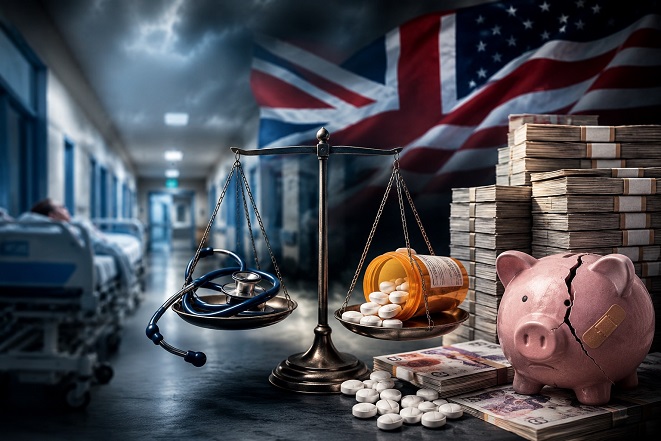 BMJ analysis warns UK-US medicines deal could redirect billions from NHS services and contribute to hundreds of
thousands of excess deaths by 2036
The findings have reignited fierce debate over whether the agreement, negotiated to shield British pharmaceutical exports from potential US tariffs while improving access to innovative medicines, may ultimately inflict greater harm on public health than the benefits it promises. Critics argue that soaring drug costs could overwhelm NHS finances and force painful cuts to frontline healthcare services that millions of patients rely upon.
This
Medical News report examines the study findings and the growing political and healthcare backlash surrounding the agreement.
Trade Deal Designed to Avoid US Tariffs
The agreement, finalized last December between the United Kingdom and the United States, was promoted by ministers as a landmark partnership intended to protect British pharmaceutical manufacturers from tariffs that US President Donald Trump had threatened to impose on imported medicines. Some tariffs were expected to reach as high as 100 percent, potentially placing enormous pressure on Britain's pharmaceutical export industry.
Government officials also argued that the agreement would improve patient access to innovative therapies by reforming medicine pricing, allowing more life-changing drugs to become available through the NHS while encouraging pharmaceutical companies to develop, launch and manufacture new medicines in Britain.
However, the agreement requires the UK to pay approximately 25 percent more for newly introduced medicines over the next decade. In addition, NHS England will gradually double the proportion of national GDP allocated to innovative medicines, increasing spending from roughly 0.3 percent to 0.6 percent.
Researchers Calculate a Massive Financial Burden
The BMJ analysis, conducted by researchers from the University of York, the University of Liverpool and Christchurch Hospital in New Zealand, sought to estimate the long-term financial implications of the agreement if no additional government funding is provided.
Their calculations indicate that by 2036 the NHS will have redirected approximately £44.7 billion from
existing healthcare budgets to finance higher pharmaceutical costs. Annual spending on innovative medicines is projected to rise steadily until reaching an additional £8.8 billion each year by the end of the study period.
The researchers stress that unless entirely new funding is allocated by the government, these extra costs would inevitably come at the expense of healthcare services already struggling with workforce shortages, growing waiting lists and increasing patient demand.
Areas likely to be affected include hospital services, cancer treatment pathways, diagnostic services, preventive medicine, community healthcare, primary care and long-term disease management.
Study Projects More Than 229000 Excess Deaths
Perhaps the most striking aspect of the analysis is its estimate of the potential human cost.
Using established health economic models that examine the relationship between NHS expenditure and mortality, the researchers estimated that diverting billions of pounds away from healthcare services could result in approximately 229,000 excess deaths across England by 2036.
When broader consequences for adult social care were incorporated into the analysis, the estimated death toll increased to approximately 291,000 excess deaths.
The projected mortality exceeds the approximately 137,000 deaths recorded in England during the COVID-19 pandemic between March 2020 and June 2022.
Researchers found that patients suffering from cardiovascular disease, respiratory illnesses, gastrointestinal disorders and cancer would likely experience the greatest impact because these conditions depend heavily upon rapid diagnosis, continuous treatment and sustained healthcare investment.
Government Rejects Cost Projections
The Department of Health and Social Care disputes the financial estimates presented in the BMJ analysis.
Officials insist that the department does not recognize the projected £44.7 billion cost and maintain that future medicine spending will be covered through allocations secured during government spending reviews.
Government estimates suggest the agreement will increase costs by only around £1 billion between the 2025-26 and 2028-29 financial years. Although ministers have acknowledged that expenditure will continue rising after that period, no detailed long-term projections have been released publicly.
Earlier this year, Science Minister Patrick Vallance confirmed that future costs associated with the agreement would be funded through the Department of Health and Social Care rather than directly by the UK Treasury, meaning NHS budgets would ultimately absorb the increased expenditure.
Healthcare Leaders Demand Transparency
The publication of the BMJ analysis has prompted renewed calls for the government to publish its own impact assessment of the agreement.
Sir Ciarán Devane, Chief Executive of the NHS Alliance, said the findings raise serious questions regarding whether the agreement represents value for patients or the healthcare system.
He warned that diverting billions away from frontline services could undermine disease prevention, community healthcare and treatment for chronic illnesses while placing additional strain on an already overstretched NHS.
Liberal Democrat health spokesperson Helen Morgan also described the projections as alarming, arguing that patients already experiencing lengthy waits for treatment should not face further reductions in healthcare investment.
Campaign group Global Justice Now criticized the agreement for directing resources that could otherwise recruit NHS staff, reduce GP waiting times and improve hospital services toward increased pharmaceutical payments benefiting multinational drug companies.
Meanwhile, patient advocacy organization Just Treatment described the projected financial shift as deeply disturbing, arguing that moving tens of billions of pounds from healthcare delivery into higher medicine payments could place countless lives unnecessarily at risk.
Growing Debate Over Healthcare Priorities
The controversy extends beyond politics into fundamental questions regarding healthcare economics. Innovative medicines undoubtedly provide important therapeutic advances for many patients, but healthcare systems operate within finite budgets. Every additional pound committed to pharmaceutical expenditure may reduce the funding available for medical staff, hospital beds, cancer screening, mental health services, emergency departments and community care.
The BMJ researchers argue that these opportunity costs deserve equal consideration when evaluating pharmaceutical pricing agreements. Although government officials insist future NHS funding will offset these increased costs, independent experts continue calling for greater transparency and rigorous parliamentary scrutiny before such long-term financial commitments reshape healthcare priorities.
The BMJ analysis presents one of the most detailed assessments yet of the possible consequences of the UK-US medicines agreement. While the government strongly disputes the projected costs and mortality estimates, the research highlights how major pharmaceutical pricing decisions can extend far beyond drug procurement, influencing the entire healthcare system. If future NHS budgets fail to keep pace with rapidly rising medicine costs, difficult trade-offs may become unavoidable, potentially affecting staffing, patient access, waiting times and preventive healthcare. Equally, if sufficient additional funding is provided, many of the predicted harms could be mitigated. The findings therefore underscore the urgent need for transparent economic modelling, independent review and open parliamentary scrutiny so policymakers, clinicians and the public can fully understand both the financial commitments and the potential health consequences before the long-term effects of the agreement become irreversible.
References:
https://www.bmj.com/content/394/bmj-2026-340588
For the latest UK Medical News, keep on logging to Thailand
Medical News.
Read Also:
https://www.thailandmedical.news/articles/uk-medical-news




 Share
Share
 Tweet
Tweet
 Share
Share