Nikhil Prasad Fact checked by:Thailand Medical News Team Jul 30, 2026 2 months, 4 days, 19 hours, 47 minutes ago
Medical News: Scientists Discover Possible New Viral Hideout That Could Affect Fertility
A new study has uncovered troubling evidence that the hepatitis E virus (HEV) may persist inside the male reproductive system long after infection, raising fresh concerns about fertility and the possibility of sexual transmission. Researchers found that the virus can remain inside sperm cells and several male reproductive glands, even when virus levels in the blood and stool have declined.
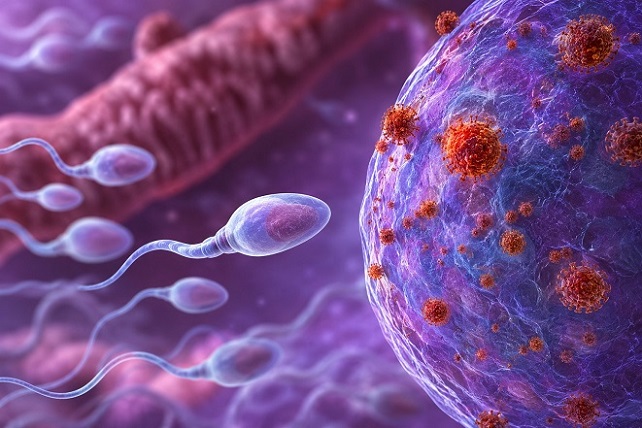 Researchers discovered that hepatitis E virus can persist in male reproductive glands and sperm, raising new concerns
about fertility and possible sexual transmission.
The research was conducted by scientists from the Center for Food Animal Health, Department of Animal Sciences, The Ohio State University, Wooster, Ohio; the Department of Veterinary Preventive Medicine, The Ohio State University College of Veterinary Medicine, Columbus, Ohio; the CFAES Research and Analytical Service Cores at The Ohio State University, Wooster; and the National Bio and Agro-Defense Facility (NBAF), Manhattan, Kansas.
Virus Found Inside Sperm Cells
Using a specially developed pig model that closely resembles chronic HEV infection in immunosuppressed people, the researchers discovered infectious hepatitis E virus attached to the head region of mature sperm cells. Laboratory testing showed that these virus-containing sperm cells were capable of infecting human liver cells, confirming that the virus remained active rather than simply leaving behind harmless genetic material.
Interestingly, sperm cells contained much higher amounts of viral RNA than the surrounding seminal fluid. This suggests that sperm themselves may act as carriers of the virus instead of the virus merely floating within semen.
Evidence of Damage to Male Reproductive Health
The study also found that chronic HEV infection affected sperm quality. Infected animals had significantly lower numbers of normally moving sperm, while more sperm showed poor movement or were completely immobile. Researchers also observed a much higher percentage of sperm with abnormal head shapes and tail defects.
These findings suggest that persistent HEV infection may interfere with normal sperm development and function, potentially affecting male fertility if similar effects occur in humans.
This
Medical News report highlights growing evidence that hepatitis E should no longer be viewed solely as a liver disease. Scientists increasingly recognize that the virus can spread to organs outside the liver, where it may continue causing damage even after traditional signs of infection begin to disappear.
Male Reproductive Glands Become Viral Reservoirs
One of the study's most important discoveries was the detection of HEV inside several male reproductive glands, including the prostate gland, seminal vesicles, Cowper's gland, and epididymis.
<
br />
The virus was actively replicating within these tissues. The prostate showed the highest viral levels, followed by the seminal vesicles and Cowper's gland. The researchers also found immune cell infiltration and increased cell death within these glands, indicating ongoing inflammation and tissue injury caused by the infection.
The findings suggest these glands could serve as long-term reservoirs where the virus survives even when blood viral levels become relatively low.
Testosterone Levels Also Declined
The investigators observed another worrying effect. Animals infected with HEV experienced falling testosterone levels during the later stages of infection. The virus also damaged the blood-testis barrier, a protective structure that normally shields developing sperm from immune attack.
As this barrier broke down, immune cells entered the testicular tissue, inflammation increased, and more cells underwent programmed death. Together, these changes could contribute to impaired sperm production and reduced reproductive health.
Conclusions
The findings suggest that chronic hepatitis E infection may involve far more than liver disease. The male reproductive system appears capable of serving as a protected site where the virus can persist, remain infectious, damage sperm quality, reduce testosterone production, and potentially contribute to viral persistence. Although the study was conducted in pigs, which are a well-established model for human HEV infection, further human studies are urgently needed to determine whether similar viral reservoirs exist in men and whether they increase the risk of fertility problems or sexual transmission.
The study findings were published in the peer reviewed journal: Virulence.
https://www.tandfonline.com/doi/full/10.1080/21505594.2026.2707701
For the latest on Hepatitis and STDs/STI, keep on logging to Thailand
Medical News
Read Also:
https://www.thailandmedical.news/articles/stds




 Share
Share
 Tweet
Tweet
 Share
Share

































