Lychee Polyphenol Drink Dramatically Speeds Muscle Recovery After Vigorous Exercise or Physical Activity
Nikhil Prasad Fact checked by:Thailand Medical News Team Feb 18, 2026 6 months, 1 week, 5 days, 11 hours, 33 minutes ago
Medical News: A new clinical study has found that a special antioxidant derived from lychee fruit may significantly speed up muscle recovery after intense exercise by reducing fatigue-related chemicals and lowering oxidative stress in the body. The research was conducted by scientists from the Department of Health Sciences, Graduate School of Dong-A University; the Department of Physical Education, College of Arts and Physical Education, Dong-A University; and the Department of Food Science and Nutrition, Dong-A University, Busan, Republic of Korea.
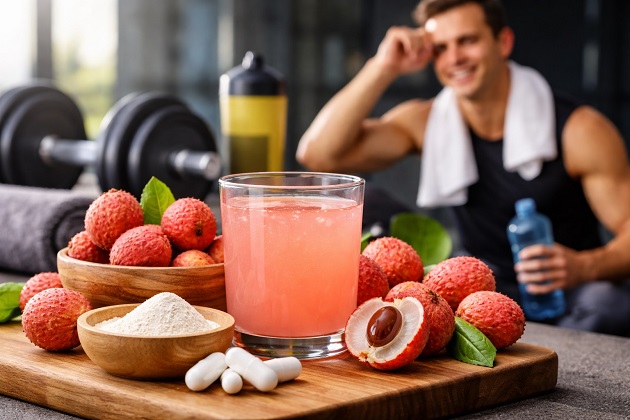 Lychee-derived antioxidant oligonol helps muscles recover faster by reducing fatigue and oxidative stress after intense exercise
Why Muscle Recovery Matters More Than People Think
Lychee-derived antioxidant oligonol helps muscles recover faster by reducing fatigue and oxidative stress after intense exercise
Why Muscle Recovery Matters More Than People Think
When people exercise intensely, their muscles produce substances such as lactate and reactive oxygen species. These substances can cause fatigue, soreness, and slower recovery. In simple terms, lactate buildup makes muscles feel tired and weak, while oxidative stress can damage muscle cells and delay healing.
Scientists have long studied antioxidants, which are natural compounds that help neutralize harmful molecules. However, many traditional antioxidants are not absorbed efficiently by the body, limiting their benefits. To overcome this, researchers developed a low-molecular-weight polyphenol supplement called oligonol, derived from lychee fruit. This
Medical News report highlights how this new formulation is easier for the body to absorb and may work faster to protect muscles from exercise-related stress.
Carefully Designed Human Study Reveals Striking Results
The study involved 10 healthy young men in their twenties. Each participant completed exercise tests under three different conditions: a placebo, a single dose of oligonol, and a five-day oligonol supplementation period. Each test was separated by at least two weeks to ensure accurate comparisons.
Participants performed a maximal treadmill exercise designed to push their bodies to their limits. Researchers then measured fatigue markers, oxidative stress levels, heart rate, and blood lactate levels before exercise, immediately after exercise, and during recovery.
The most dramatic finding was the difference in lactate levels during recovery. After 30 minutes of rest, the placebo group showed very high lactate levels averaging 17.09 mmol/L. In contrast, those who took oligonol had much lower levels, averaging just 8.36 mmol/L after a single dose and 9.18 mmol/L after five days of supplementation. This means their bodies cleared fatigue-causing substances almost twice as fast.
Powerful Reduction in Harmful Oxidative Stress
The study also measured malondialdehyde (MDA), a key indicator of oxidative stress and cell damage. Normally, MDA rises sharply after intense exercise. However, participants who took oligonol experienced much faster normalization of MDA levels.
Remarkably, the single-dose oligonol group actually showed an overall reduction in oxidative stress c
ompared to baseline, while the placebo group showed a 26.8 percent increase in damage markers.
This suggests that oligonol not only reduces fatigue but also protects muscle cells from exercise-related damage.
No Artificial Boost in Performance but Faster Recovery
Interestingly, oligonol did not directly improve exercise performance or endurance during the test itself. Instead, its main benefit was helping the body recover faster afterward.
This distinction is important because faster recovery can allow athletes, fitness enthusiasts, and even ordinary individuals to exercise more frequently and safely without excessive fatigue or muscle damage.
Researchers also noted improvements in blood pressure and certain fatigue-related markers, further supporting the supplement’s protective effects.
Why This Discovery Could Benefit Everyday People
The findings suggest that low-molecular-weight polyphenols like oligonol may offer significant benefits not just for athletes but also for anyone experiencing physical fatigue, muscle soreness, or slow recovery after physical activity.
Unlike traditional antioxidants, oligonol’s improved absorption allows it to act quickly and effectively inside the body. Its ability to lower fatigue markers and oxidative stress may help reduce muscle damage, improve comfort, and support overall physical health.
Conclusion
This study provides strong early evidence that oligonol, a lychee-derived antioxidant, can significantly accelerate recovery from intense exercise by reducing fatigue-causing lactate and lowering harmful oxidative stress. These benefits were seen even after a single dose, highlighting its fast-acting potential. While larger studies are still needed, the results suggest that oligonol could become an important tool for improving muscle recovery, protecting cells from damage, and helping individuals maintain healthier, more active lifestyles without prolonged fatigue or muscle strain.
The study findings were published in the peer reviewed journal: Antioxidants.
https://www.mdpi.com/2076-3921/15/2/250
For the latest on Herbs and Phytochemicals, keep on logging to Thailand
Medical News.
Read Also:
https://www.thailandmedical.news/articles/herbs-and-phytochemicals
https://www.thailandmedical.news/articles/health-news




 Share
Share
 Tweet
Tweet
 Share
Share