Nikhil Prasad Fact checked by:Thailand Medical News Team Jun 08, 2026 3 months, 3 weeks, 5 days, 6 hours, 36 minutes ago
Medical News: A growing body of evidence suggests that COVID-19 may leave behind health consequences that extend far beyond the initial infection. Now, a new study has found that inflammation triggered during COVID-19 could be linked to serious cardiovascular complications and even death as long as six years after recovery.
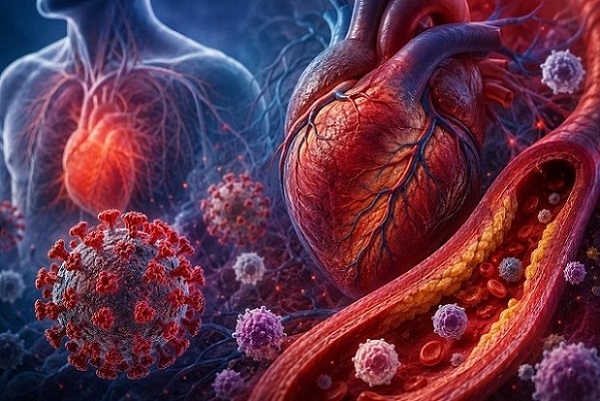 High inflammation levels during COVID-19 may predict heart attacks, arrhythmias, and death up to six years after infection
Researchers discovered that two inflammatory biomarkers measured during the acute stage of COVID-19—interleukin-6 (IL-6) and serum amyloid A (SAA)—were strongly associated with future risks of heart attacks, abnormal heart rhythms, and mortality. The findings add to mounting concerns that the biological effects of SARS-CoV-2 infection may continue to influence cardiovascular health for years.
The study was conducted by researchers from the Department of Nephrology and Internal Disease Clinic at University Hospital “Saint Anna,” the Faculty of Medicine at Medical University Sofia, the Department of Clinical Laboratory at University Hospital “Alexandrovska,” and Comac-Medical Ltd. in Bulgaria, along with scientists from Grenoble University Hospital and Grenoble Alpes University in France.
Looking Beyond the Acute Infection
Since the start of the pandemic, researchers have learned that COVID-19 is far more than a respiratory illness. The virus can affect blood vessels, the immune system, the kidneys, the brain, and the heart. While many patients recover from the initial infection, studies have repeatedly shown that survivors face an increased risk of cardiovascular problems months and even years later.
Scientists have long suspected that excessive inflammation during the acute phase of infection may be a key driver of these long-term complications. IL-6 and SAA are two important markers of inflammation that rise sharply when the immune system is activated. Elevated levels of these biomarkers have previously been linked to cardiovascular disease, but their long-term significance after COVID-19 has remained unclear.
To investigate this possibility, researchers followed 97 individuals with confirmed SARS-CoV-2 infections for six years after their initial illness.
A Concerning Pattern Emerges
During the six-year follow-up period, researchers documented a significant burden of cardiovascular disease among participants.
Seven individuals developed clinically significant arrhythmias, nine suffered myocardial infarctions, and five died. Overall, 14.4 percent of participants experienced at least one major adverse event.
When researchers examined biomarker levels measured during the acute phase of COVID-19, a clear pattern emerged. Individuals who later experienced cardiovascular complications consistently had much higher IL-6 and SAA levels than those who remained free of serious events.
The differences were substantial and remained significant even after researchers adjusted for age, sex, obesity, hypertension, diabetes, and prior cardiovascular disease.
t;
Elevated IL-6 Strongly Linked to Mortality
Among all outcomes examined, IL-6 showed the strongest association with death. Participants who died during the six-year follow-up period had dramatically higher IL-6 levels during their COVID-19 infection compared to survivors. In some cases, IL-6 concentrations were many times higher than those seen in individuals who remained healthy.
IL-6 is a powerful inflammatory signaling molecule that plays a central role in the body's immune response. While essential for fighting infections, excessive IL-6 activity can damage blood vessels, promote clot formation, contribute to arterial plaque instability, and trigger harmful changes within the heart muscle itself.
The findings suggest that the intensity of inflammation during acute COVID-19 may provide important clues about an individual's long-term health trajectory.
Serum Amyloid A Reveals Future Heart Attack Risk
Serum amyloid A also emerged as a powerful predictor of future cardiovascular problems.
Participants who later suffered heart attacks had markedly higher SAA levels than those who did not. In fact, SAA showed particularly strong associations with myocardial infarction and the study's composite endpoint, which included heart attacks, arrhythmias, and death.
SAA is produced by the liver during inflammation and is known to influence blood vessel function, lipid metabolism, and immune responses. Previous research has linked elevated SAA levels to vascular inflammation and atherosclerosis, making it a biologically plausible marker of future cardiovascular risk.
Researchers noted that SAA appeared especially effective at identifying individuals vulnerable to long-term ischemic heart disease.
Two Biomarkers May Offer Better Risk Prediction
One of the most important findings was that IL-6 and SAA appeared to provide complementary information.
While IL-6 was most strongly associated with mortality and arrhythmias, SAA showed stronger links to heart attacks and overall cardiovascular events.
Together, they offered a broader picture of an individual's long-term cardiovascular vulnerability following COVID-19 infection.
This
Medical News report notes that the combined assessment of these two biomarkers could potentially help physicians identify high-risk patients who may benefit from closer monitoring and more aggressive management of cardiovascular risk factors after recovering from COVID-19.
Conclusions
The study provides some of the longest follow-up data available examining the relationship between acute COVID-19 inflammation and future cardiovascular outcomes. The findings suggest that elevated IL-6 and serum amyloid A levels during the initial phase of SARS-CoV-2 infection are associated with significantly increased risks of heart attacks, arrhythmias, and death up to six years later. Although the study cannot establish a direct cause-and-effect relationship and involved a relatively small cohort, the results reinforce growing evidence that severe inflammatory responses during COVID-19 may leave lasting biological effects that continue to influence cardiovascular health long after apparent recovery. The researchers emphasize that larger multicenter studies are needed to confirm the findings and determine whether these biomarkers can eventually be incorporated into clinical risk assessment strategies. If validated, measuring IL-6 and SAA during acute infection could help identify individuals at greatest risk of developing serious cardiovascular complications years down the road.
The study findings were published in the peer reviewed International Journal of Molecular Sciences.
https://www.mdpi.com/1422-0067/27/11/4721
For the latest COVID-19 news, keep on logging to Thailand
Medical News.
Read Also:
https://www.thailandmedical.news/articles/coronavirus
https://www.thailandmedical.news/articles/long-covid




 Share
Share
 Tweet
Tweet
 Share
Share

































