Doctors Warn That Hantavirus Can Trigger Cardiac Tamponade That is Difficult to Diagnose
Nikhil Prasad Fact checked by:Thailand Medical News Team May 22, 2026 3 months, 1 week, 4 days, 15 hours, 17 minutes ago
Medical News: Doctors in the United States are warning that hantavirus infections may sometimes trigger a rare and dangerous heart complication known as cardiac tamponade, a condition that can easily be mistaken for other cardiac disorders and may become fatal if not identified quickly.
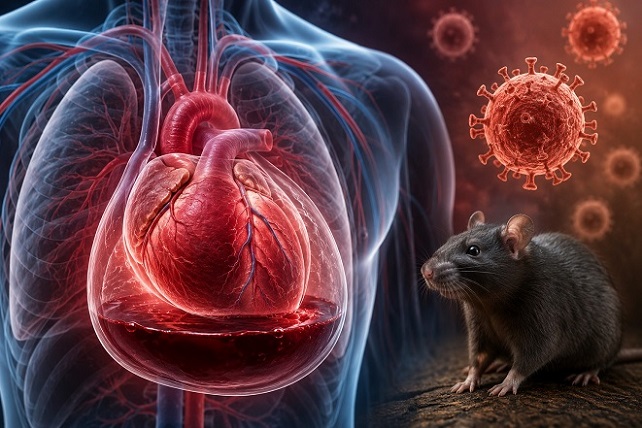 Doctors identify rare hantavirus-linked cardiac tamponade after a patient develops severe heart compression following
exposure to rat-contaminated environments
The alarming case involved a 62-year-old man from New York who developed worsening breathing difficulties, persistent fever, night sweats, and severe fatigue after exposure to rat-contaminated environments. What initially appeared to be a routine cardiac problem soon evolved into a puzzling medical emergency that challenged doctors throughout the diagnostic process.
The researchers behind the case were from Staten Island University Hospital, Northwell Health in Staten Island, New York, and Yale University School of Medicine in New Haven, Connecticut.
A Sudden Medical Crisis
The patient arrived at the emergency department suffering from shortness of breath, nonproductive cough, and difficulty breathing while lying down. Doctors also discovered that he had developed atrial fibrillation, an abnormal heart rhythm that can increase the risk of stroke and heart failure.
Blood tests revealed severe inflammation in the body. His D-dimer levels were dangerously elevated, inflammatory markers were extremely high, and sodium levels had dropped significantly. Surprisingly, tests that usually indicate heart muscle injury remained normal, confusing physicians even further.
Imaging studies later revealed a large accumulation of fluid around the heart. This fluid buildup placed dangerous pressure on the organ and caused cardiac tamponade, a life-threatening condition in which the heart cannot pump blood effectively because it is compressed by surrounding fluid.
Doctors were forced to perform an emergency pericardiocentesis, a procedure in which a needle and catheter are used to drain fluid from the sac surrounding the heart. Nearly 750 milliliters of bloody fluid were removed, immediately improving the patient’s condition.
The Hidden Source Was Rat Exposure
Doctors initially tested for a wide range of infectious diseases and autoimmune disorders. The patient tested negative for COVID-19, influenza, respiratory syncytial virus, hepatitis viruses, HIV, tuberculosis, fungal infections, and several other viral pathogens.
The mystery was finally solved only after physicians obtained a more detailed occupational history. The man revealed that he worked in farm and grain storage environments where rodents were common. About two weeks before becoming ill, he had cleaned a barn contaminated with rat droppings and urine.
Further laboratory testing showed positive hantavirus IgG and IgM antibodies, strongly suggesting a recent hantavirus infection. Doctors believed the likely culprit was the Sin Nombre strain, one of the most common hantavirus strains in North America.
/>
Hantaviruses are mainly transmitted when humans inhale microscopic particles contaminated with infected rodent urine, saliva, or feces. The infection is relatively rare but can become extremely dangerous once symptoms appear.
Why Doctors Say the Condition is Difficult to Diagnose
What made this case especially unusual was that the virus primarily affected the lining surrounding the heart rather than causing the severe lung disease typically associated with hantavirus infections.
Most hantavirus patients develop hantavirus cardiopulmonary syndrome, a disease that attacks the lungs and causes breathing failure. In other documented cases, the virus has also been linked to myocarditis, or inflammation of the heart muscle itself.
However, in this patient, doctors found almost no evidence of direct heart muscle damage despite the severe fluid buildup around the heart.
This
Medical News report highlights how hantavirus infections can imitate more common heart conditions, particularly in older individuals who already have a history of cardiovascular disease. The patient’s previous coronary artery disease and hypertension initially led doctors to suspect heart failure rather than a rodent-borne viral infection.
Researchers explained that hantaviruses trigger powerful immune responses involving inflammatory chemicals such as TNF-alpha and interferon-gamma. These substances can increase blood vessel leakage and tissue inflammation, potentially leading to dangerous fluid accumulation around the heart.
The authors also noted that very few cases of isolated pericardial involvement linked to hantavirus have ever been documented, making recognition extremely challenging for clinicians.
Full Recovery After Emergency Treatment
After drainage of the fluid and supportive treatment, the patient gradually improved. He was discharged on medications including aspirin, metoprolol, colchicine, losartan, and blood thinners to stabilize his condition and prevent complications.
A follow-up examination two weeks later showed complete resolution of the fluid accumulation, and the patient remained symptom-free.
Conclusion
The case serves as an important warning that hantavirus infections may sometimes present in highly unusual ways that can delay diagnosis and treatment. Instead of producing classic respiratory symptoms alone, the virus may trigger life-threatening inflammation around the heart that resembles ordinary cardiac disease. Researchers emphasized that doctors should carefully investigate environmental and occupational exposure histories, especially when patients have unexplained cardiac tamponade or inflammatory heart conditions. Early recognition, rapid imaging, and emergency intervention may be critical for survival in similar cases.
The study findings were published in the peer reviewed International Journal of Infectious Diseases.
https://www.sciencedirect.com/science/article/pii/S1201971224002832
For the latest on Hantavirus, keep on logging to Thailand
Medical News.
Read Also:
https://www.thailandmedical.news/articles/hantavirus-news




 Share
Share
 Tweet
Tweet
 Share
Share

































