The Phytochemical Linarin from Herba Patriniae Emerges as a Potent Lung Cancer Fighter
Nikhil Prasad Fact checked by:Thailand Medical News Team Jan 09, 2026 7 months, 3 weeks, 3 days, 23 hours, 1 minute ago
Medical News: Traditional Herb Meets Modern Biology
A new scientific investigation has revealed that the phytochemical Linarin from Herba Patriniae may strongly inhibit the advance of non-small cell lung cancer, the most common and lethal form of lung cancer globally. This
Medical News report draws on research led by Xiamen Medical College in collaboration with Fudan University’s Xiamen Children’s Hospital and the Center for Human Genome Research at Huazhong University of Science and Technology, offering a striking intersection of traditional herbal wisdom and modern disease biology.
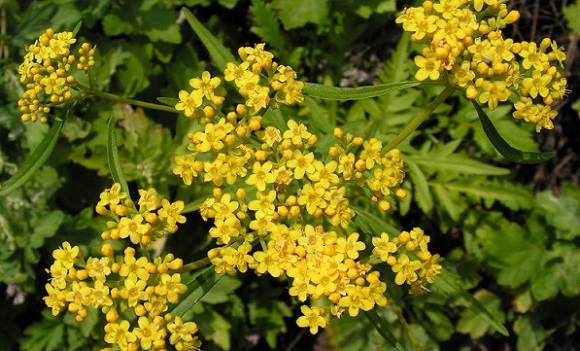 Plant compound Linarin stalled lung cancer cells and pushed them toward aging and self-destruction
Identifying the Key Phytochemical Compound
Plant compound Linarin stalled lung cancer cells and pushed them toward aging and self-destruction
Identifying the Key Phytochemical Compound
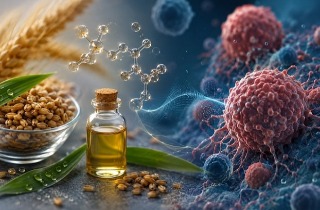
Herba Patriniae contains a spectrum of natural plant molecules used for generations across East Asia to address respiratory ailments and infections. Using digital screening platforms and pharmacology modelling, the research team pinpointed Linarin as the compound most likely to target lung cancer pathways. To validate this prediction, they tested Linarin on two established NSCLC cell lines: A549 cells with normal p53 function and H1299 cells with p53 deleted. This design allowed researchers to determine whether Linarin’s effects depended on the genetic profile of the cancer.
Halting Tumor Cell Growth
Once the cancer cells were exposed to Linarin, their capacity to survive and multiply dropped markedly. Cell viability measurements declined in a dose-dependent pattern, and the formation of new cell clusters—an indicator of long-term cancer growth potential—collapsed. The compound forced cancer cells to stall at the G0/G1 checkpoint, a critical early boundary at which cells commit to replicating. By locking the cell cycle at this stage, Linarin interrupts one of cancer’s most fundamental driving engines: uncontrolled proliferation.
Triggering Irreversible Shutdown
Beyond slowing growth, Linarin induced profound biological changes within the tumor cells. A substantial proportion entered senescence, a form of permanent dormancy where cells stop dividing altogether. Others activated apoptosis, a coordinated internal program in which damaged or dangerous cells dismantle themselves safely. Crucially, these effects occurred even in p53-deficient H1299 cells, which ordinarily resist therapies and contribute to poorer patient outcomes. This suggests the compound may retain utility in genetically diverse tumors.
Mechanistic Clues
Protein and signaling analysis demonstrated that Linarin reduced the expression of several essential cell cycle regulators, including Cyclin A2, Cyclin B1, CDK4 and CHEK1. These molecules normally push cells through growth phases and enable steady replication. Reducing them deprives tumor cells of molecular “fuel,” aligning with the observed arrest and senescence. Because these regulators are commonly overexpressed in NSCLC tumors, the findings support Linarin as a pl
ausible broad-spectrum inhibitor within this cancer type.
Implications for Therapy
Non-small cell lung cancer kills millions annually and frequently outruns current drug options due to mutation, drug resistance and treatment exhaustion. A plant-derived compound that slows tumor spread, forces malignant cells into dormancy and triggers their self-elimination offers a promising concept for future treatment. While extensive animal studies and clinical trials remain necessary, the evidence suggests that long-valued medicinal herbs may still harbor powerful modern therapeutics.
The study findings were published in the peer reviewed journal: Pharmaceuticals
https://www.mdpi.com/1424-8247/19/1/111
For the latest on cancer research, keep on logging to Thailand
Medical News.
Read Also:
https://www.thailandmedical.news/articles/cancer
https://www.thailandmedical.news/articles/herbs-and-phytochemicals




 Share
Share
 Tweet
Tweet
 Share
Share