L-Theanine and Exercise Protect the Brain from Inflammation-Related Memory Problems
Nikhil Prasad Fact checked by:Thailand Medical News Team Feb 26, 2026 4 months, 3 weeks, 4 days, 18 hours, 7 minutes ago
Medical News: A new experimental study has found that a natural compound found in tea and regular aerobic exercise may help protect the brain from inflammation-related memory problems. Scientists from the Department of Physiology, Faculty of Medicine, Medical University of Plovdiv, Bulgaria, and the Institute of Neurobiology at the Bulgarian Academy of Science, Sofia, Bulgaria, explored whether L-theanine and treadmill exercise could prevent cognitive decline triggered by chronic inflammation.
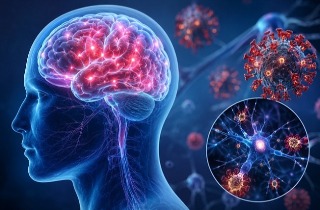
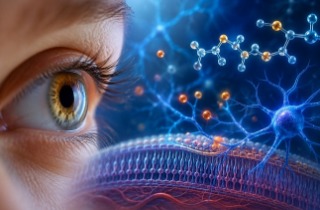
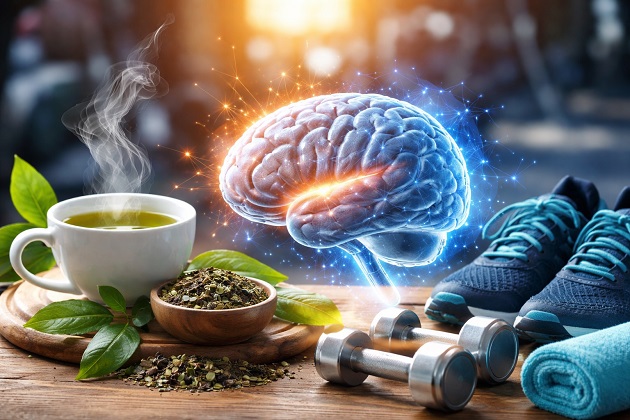 A tea-derived amino acid and regular aerobic exercise may help protect memory and reduce brain inflammation linked
to cognitive decline.
Understanding Brain Inflammation and Memory
Brain inflammation, also known as neuroinflammation, has been linked to conditions such as Alzheimer’s disease, depression, and other neurological disorders. When inflammation becomes prolonged, it can disrupt communication between brain cells, damage memory centers like the hippocampus, and increase harmful proteins in the brain.
In this
Medical News report, researchers used a well-established model in which rats were injected with lipopolysaccharide, or LPS, a bacterial toxin known to trigger strong inflammatory reactions. After seven days of LPS exposure, the animals developed clear signs of memory impairment and increased inflammatory markers in the brain.
How the Study Was Designed
Young adult male rats were divided into five groups. Some remained sedentary, while others underwent five weeks of moderate treadmill exercise. Some rats received daily oral doses of L-theanine, a naturally occurring amino acid found in tea, while others did not. After this preventive phase, all but the control group were exposed to LPS for seven days.
The researchers then tested memory using several behavioral tasks. These included the Y-maze test to assess working and short-term spatial memory, the object recognition test to measure recognition memory, and the object location test to examine spatial awareness. Brain tissue was also analyzed for inflammation markers, beta-amyloid levels, and a protein involved in memory formation called CREB.
Key Findings on Memory and Brain Chemistry
Rats exposed to LPS without any preventive treatment showed clear memory decline. They performed poorly in maze tasks, explored less, and had difficulty recognizing new objects. In addition, they had higher levels of inflammatory markers such as interleukin-1 beta and tumor necrosis factor-alpha in the hippocampus. Blood tests also showed elevated C-reactive protein, a marker of systemic inflammation.
Importantly, LPS also reduced the activation of CREB, a protein critical for learning and memory, and increased levels of beta-amyloid 1–42 in the hippocampus, a protein linked to Alzheimer’s disease.
However, rats that received L-theanine or exercised before LPS exposure showed meaningful protection. Both treatments improved performance in working and recognition memory tests. Exercise was particularly effe
ctive in reducing brain beta-amyloid levels and lowering inflammatory markers within the hippocampus. L-theanine significantly reduced C-reactive protein levels in the blood, suggesting a strong effect on systemic inflammation.
Interestingly, combining L-theanine with exercise provided additional benefits in some tasks, although it did not dramatically outperform each intervention alone in every measure. This suggests that the two strategies may work through partly different biological pathways.
What These Results Mean
The findings show that both L-theanine and moderate aerobic exercise can reduce the harmful effects of chronic brain inflammation on memory. While exercise appeared to act more directly on brain inflammation and amyloid accumulation, L-theanine seemed to exert broader systemic anti-inflammatory effects.
The conclusions of this study are particularly encouraging because they highlight practical, non-pharmaceutical strategies that may help preserve cognitive health under inflammatory stress. Although this research was conducted in animals and more studies are needed in humans, the evidence suggests that lifestyle approaches such as regular aerobic activity and dietary compounds like L-theanine could play complementary roles in protecting the brain. These interventions may not be interchangeable, but together they offer promising avenues for preventing inflammation-related cognitive decline.
The study findings were published in the peer reviewed International Journal of Molecular Sciences.
https://www.mdpi.com/1422-0067/27/5/2131
For the latest on brain inflammation and cognitive issues, keep on logging to Thailand
Medical News.
Read Also:
https://www.thailandmedical.news/articles/herbs-and-phytochemicals




 Share
Share
 Tweet
Tweet
 Share
Share