Nikhil Prasad Fact checked by:Thailand Medical News Team Feb 07, 2026 7 months, 3 weeks, 3 days, 23 hours, 19 minutes ago
Medical News: A newly published case study from Japan is drawing fresh attention to how COVID-19 may trigger serious long term gut disorders, even in young and previously healthy individuals. Researchers report that a teenage patient developed Crohn’s disease only weeks after a SARS-CoV-2 infection, raising concerns that lingering digestive symptoms after COVID-19 should not be casually dismissed.
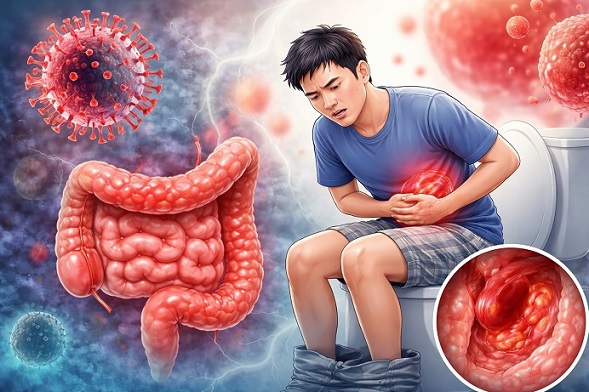 COVID-19 may silently trigger Crohn’s disease in young patients through lasting gut inflammation
COVID-19 and the Gut a Troubling Connection
COVID-19 may silently trigger Crohn’s disease in young patients through lasting gut inflammation
COVID-19 and the Gut a Troubling Connection
While COVID-19 is best known for affecting the lungs, doctors have long observed that the virus can also attack the digestive system. Diarrhea, abdominal pain, and nausea are now recognized as common symptoms during and after infection. However, what makes this case unusual is that the gastrointestinal symptoms never fully resolved and instead progressed into a chronic inflammatory bowel disease.
According to this
Medical News report, an 18-year-old male developed persistent watery diarrhea, abdominal pain, low grade fever, and significant weight loss after testing positive for COVID-19. Despite recovering from the viral infection itself, his digestive symptoms continued for two months, prompting further medical investigation.
Advanced Testing Reveals Crohn’s Disease
Doctors performed detailed blood tests, imaging scans, and an ileocolonoscopy to identify the cause of his ongoing illness. Results showed severe inflammation of the small intestine and colon, along with classic Crohn’s disease features such as longitudinal ulcers and a cobblestone appearance of the intestinal lining. Fecal calprotectin levels, a marker of intestinal inflammation, were extremely elevated, confirming active disease.
Biopsy samples ruled out infections and other conditions, leading physicians to a firm diagnosis of moderately active Crohn’s disease involving both the ileum and colon.
Treatment Brings Relief and Remission
The patient was treated with corticosteroids to rapidly control inflammation, followed by long term immune suppressing medication to maintain remission. His symptoms improved quickly, and after one year of follow up, he remains stable with no disease flare ups. This outcome highlights the importance of early diagnosis and timely treatment.
Why COVID-19 May Trigger Crohn’s Disease
Researchers believe SARS-CoV-2 can infect intestinal cells directly by binding to ACE2 receptors in the gut. This may disrupt the intestinal barrier, alter gut bacteria, and overstimulate immune responses in genetically susceptible individuals. Such immune dysregulation may act as a trigger for Crohn’s disease rather than merely causing temporary post viral diarrhea.
Why This Case Matters
Although rare, similar cases have now been reported worldwide, suggesting a possible link between COVID-19 and ne
w onset inflammatory bowel disease. Clinicians are urged to investigate persistent diarrhea after COVID-19 rather than attributing it solely to long COVID.
Conclusion
This case reinforces the need for heightened clinical awareness when gastrointestinal symptoms persist after COVID-19 infection. Prolonged diarrhea, weight loss, fever, or elevated inflammatory markers should prompt thorough evaluation, including colonoscopy when appropriate. Early recognition of Crohn’s disease can prevent long term bowel damage, improve quality of life, and ensure patients receive effective treatment before complications arise.
The study was conducted by researchers from the Department of General Medicine, Department of Gastroenterology and Hepatology, and the Division of Pathology at the Graduate School of Medical and Dental Sciences, Institute of Science Tokyo, Japan.
The study findings were published in the peer reviewed journal: Case Reports in Gastrointestinal Medicine.
https://onlinelibrary.wiley.com/doi/10.1155/crgm/2252518
For the latest COVID-19 News, keep on logging to Thailand
Medical News.
Read Also:
https://www.thailandmedical.news/articles/coronavirus
https://www.thailandmedical.news/articles/long-covid




 Share
Share
 Tweet
Tweet
 Share
Share

































