Nikhil Prasad Fact checked by:Thailand Medical News Team Jun 18, 2026 3 months, 2 weeks, 1 day, 22 hours, 50 minutes ago
Medical News: A new scientific study has found that the bark of the Rudraksha tree, known scientifically as Elaeocarpus angustifolius, may possess remarkable antidiabetic properties that could one day help support the management of type 2 diabetes. Researchers discovered that extracts from the plant not only reduced blood sugar levels in diabetic animals but also showed strong antioxidant activity and the ability to block key enzymes involved in sugar digestion.
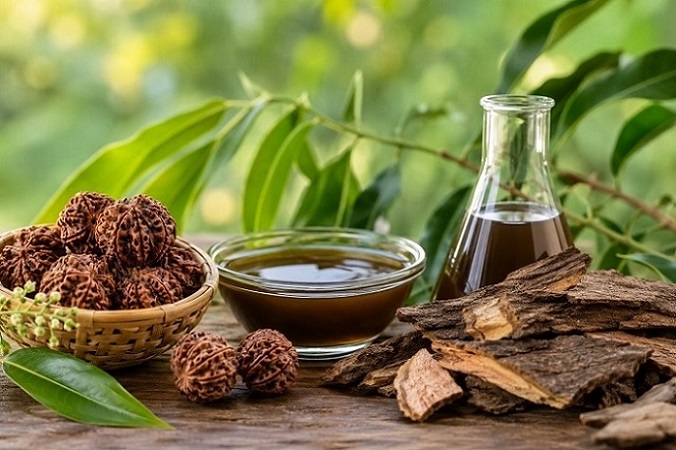 Researchers find that Rudraksha bark extract lowers blood sugar and improves metabolic health in diabetic animals
The research was conducted by scientists from the Central Department of Chemistry and Central Department of Physics at Tribhuvan University in Kathmandu, Nepal; the Department of Pharmacology at Bangladesh University of Health Sciences in Dhaka, Bangladesh; and the Department of Chemistry, Faculty of Science, Chulalongkorn University in Bangkok, Thailand.
A Traditional Remedy Put to the Test
Rudraksha has long been valued in traditional medicine across South Asia. In Nepal, especially in rural communities, the plant has been used as a natural remedy for diabetes and several other health conditions. However, scientific evidence explaining how it works has remained limited.
To investigate its potential, researchers analyzed methanol extracts obtained from the bark of the tree. Laboratory testing revealed that the extract contained a rich mixture of beneficial plant compounds, including flavonoids, phenols, tannins, alkaloids, terpenoids, glycosides, and carbohydrates. These compounds are widely known for their antioxidant and health-promoting effects.
Powerful Antioxidant Activity
One of the most impressive findings was the plant’s antioxidant strength. Antioxidants help protect the body from harmful molecules known as free radicals, which are linked to diabetes complications, cardiovascular disease, and aging.
The ethyl acetate fraction of the bark extract demonstrated exceptionally strong free-radical scavenging activity, even outperforming quercetin, a well-known natural antioxidant often used as a benchmark in scientific studies.
Researchers believe this powerful antioxidant action may help reduce the cellular damage commonly associated with long-term diabetes.
Blocking Sugar Digestion
The study also found that the bark extract strongly inhibited two important digestive enzymes, alpha-glucosidase and alpha-amylase. These enzymes break down carbohydrates into glucose, allowing sugar to enter the bloodstream.
By slowing these enzymes, the plant extract could help reduce the rapid spikes in blood sugar that occur after meals. Remarkably, the inhibitory effects were found to be comparable to, and in some tests stronger than, acarbose, a commonly prescribed diabetes medication.
This
Medical News report highlights that such enzyme-blocking activity is considered one of the most important me
chanisms used by modern antidiabetic drugs to control blood glucose levels.
Promising Results in Diabetic Animals
The researchers then tested the bark extract in diabetic rats over a period of 28 days. The results were encouraging.
Animals receiving the extract experienced a 21 percent reduction in fasting blood glucose levels. In addition, important markers of heart and metabolic health improved. Triglyceride levels fell by about 5 percent, total cholesterol decreased by 2 percent, low-density lipoprotein (LDL) levels declined, and beneficial high-density lipoprotein (HDL) levels increased by around 5 percent.
The treated animals also showed higher liver glycogen stores than those receiving the standard diabetes drug gliclazide. Glycogen acts as the body's storage form of glucose, suggesting improved glucose handling and metabolism.
A Natural Compound Emerges as a Star Candidate
Using advanced computer modeling, the team identified a compound called Corilagin as one of the most promising active ingredients in the plant. The compound displayed strong binding to alpha-amylase, indicating it could effectively block the enzyme’s activity.
Further simulations showed that Corilagin formed stable interactions with the target protein and possessed favorable energy characteristics associated with effective drug candidates.
Conclusion
The findings suggest that Elaeocarpus angustifolius bark contains multiple bioactive compounds capable of reducing blood sugar levels, improving cholesterol profiles, limiting glucose absorption, and protecting cells from oxidative damage. While human clinical trials are still needed before any medical recommendations can be made, the study provides strong evidence that this traditional medicinal plant could serve as a valuable source for future diabetes therapies and natural health products.
The study findings were published in the peer reviewed journal: PLOS One.
https://journals.plos.org/plosone/article?id=10.1371/journal.pone.0349796
For the latest research on herbs and phytochemicals, and diabetes, keep on logging to Thailand
Medical News.
Read Also:
https://www.thailandmedical.news/articles/herbs-and-phytochemicals
https://www.thailandmedical.news/articles/diabetes




 Share
Share
 Tweet
Tweet
 Share
Share

































