Nikhil Prasad Fact checked by:Thailand Medical News Team Feb 02, 2026 8 months, 1 day, 22 hours, 12 minutes ago
Medical News: Subtle Heart Changes Emerging After COVID-19 Recovery
As the world continues to grapple with the long-term effects of COVID-19, scientists are uncovering growing evidence that the virus may leave behind quiet but measurable changes in heart function. A new large-scale analysis now suggests that many people suffering from Long COVID experience subtle heart performance issues, even months after their initial infection has resolved.
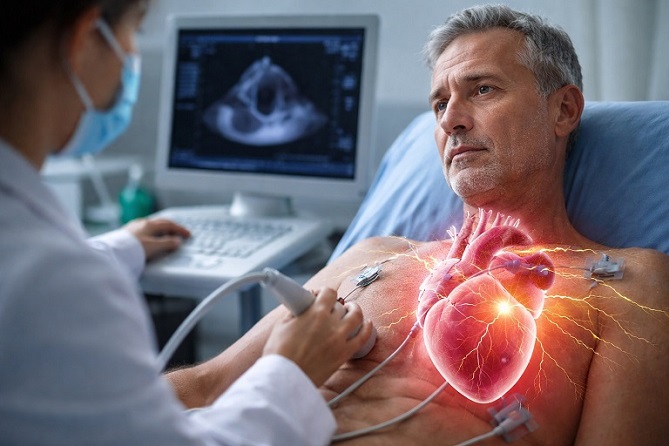 New research reveals subtle but widespread heart function changes in people suffering from Long COVID
This
Medical News report focuses on a comprehensive systematic review and advanced meta-analysis that examined how post-acute sequelae of COVID-19, commonly known as Long COVID, affect the structure and function of the heart.
Who Conducted The Research
The study was led by researchers from the Baker Heart and Diabetes Institute and the University of Melbourne in Australia, with additional contributions from Monash University in Australia, the Federal University of Goiás in Brazil, Perspectum Diagnostics in the United Kingdom, University College London in the United Kingdom, and the University of Tasmania in Australia.
How The Study Was Carried Out
Researchers analyzed data from 17 previous clinical studies involving 4,852 adults, including more than 3,100 individuals diagnosed with Long COVID. Advanced heart imaging methods such as echocardiography and cardiac MRI were used to evaluate heart structure and performance. The research team also gained access to detailed participant-level data from three studies, allowing deeper analysis of individual heart measurements.
Key Findings on Heart Function
One of the most important findings involved a measure known as global longitudinal strain, which detects early and subtle heart muscle weakness. Over half of Long COVID patients showed abnormal strain values, compared to only a small fraction of people without lingering symptoms. This suggests hidden heart muscle impairment that may not show up on routine tests.
The study also found small reductions in left ventricular ejection fraction, a standard measure of how efficiently the heart pumps blood. While these changes were modest and often remained within normal ranges, they consistently appeared more often in people with Long COVID than in control groups.
Who Is Most At Risk
Older adults and individuals with pre-existing conditions such as diabetes or high blood pressure showed more pronounced heart changes. These groups appeared more vulnerable to subtle heart dysfunction after COVID-19, highlighting the importance of targeted monitoring rather than blanket testing for all survivors.
Structural Changes Were Mild
Interestingly, major structural heart changes were uncommon. Most heart chambers remained normal in size, and right-sided heart function showed little difference between Long COVID patients and controls. This re
inforces the idea that Long COVID-related heart effects are often functional rather than structural.
Why These Findings Matter
Although the detected heart changes are usually mild, researchers warn that even small impairments could add up over time, especially in people with other health risks. These findings suggest that Long COVID may quietly increase future cardiovascular vulnerability in certain populations.
Conclusion
Overall, the study shows that Long COVID is linked to modest but consistent reductions in heart performance, particularly affecting how the left side of the heart contracts. While these changes are often subclinical, they may carry long-term implications for cardiovascular health, especially among older adults and those with metabolic conditions. Careful, risk-based follow-up rather than routine heart screening for everyone with Long COVID appears to be the most sensible approach moving forward.
The study findings were published in the peer reviewed American Journal of Preventive Cardiology.
https://www.sciencedirect.com/science/article/pii/S2666667726000516
For the latest COVID-19 News, keep on logging to Thailand
Medical News.
Read Also:
https://www.thailandmedical.news/articles/coronavirus
https://www.thailandmedical.news/articles/long-covid




 Share
Share
 Tweet
Tweet
 Share
Share