Nikhil Prasad Fact checked by:Thailand Medical News Team Feb 21, 2026 6 months, 1 week, 2 days, 14 hours, 2 minutes ago
Medical News: Natural African plant extract shows powerful anti-metastatic effects
Scientists have discovered that an extract from the seeds of Griffonia simplicifolia, a tropical African plant, may help stop bone cancer cells from spreading and becoming more aggressive. Osteosarcoma, one of the most dangerous forms of bone cancer, often spreads to other parts of the body, making treatment difficult and reducing survival rates. Researchers from IRCCS Istituto Ortopedico Rizzoli, University of Palermo, Fondazione Umberto Veronesi ETS, and National Biodiversity Future Center have now found promising evidence that compounds from Griffonia seeds could interfere with cancer progression at multiple levels.
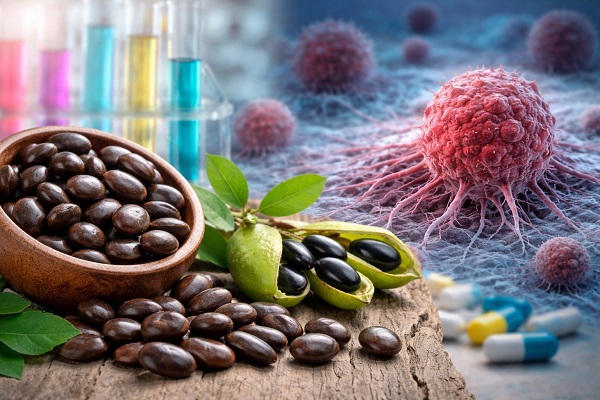 Natural Griffonia seed extract shown to block bone cancer spread and enhance chemotherapy effectiveness in
laboratory research.
Osteosarcoma affects mainly teenagers and young adults, and while chemotherapy drugs such as doxorubicin are commonly used, they often cause severe side effects and may not fully prevent cancer spread. This
Medical News report highlights how scientists investigated a special hydroalcoholic Griffonia seed extract known as Gri70 to see whether it could slow cancer growth, reduce cell movement, and enhance chemotherapy effectiveness.
Extract slows cancer cell movement and aggressive behavior
The researchers tested the Griffonia seed extract on two human osteosarcoma cell lines known as MG63 and SAOS2. These laboratory models mimic aggressive bone cancer. The extract did not directly kill large numbers of cancer cells, but it showed something equally important—it blocked signals that normally make cancer cells grow faster and spread.
One of the most important findings was that the extract significantly reduced cancer cell migration. Normally, inflammatory molecules such as interleukin-1 beta stimulate cancer cells to move and invade nearby tissues. However, when treated with the Griffonia extract, cancer cell migration dropped dramatically, with movement levels falling to less than 7 percent compared to much higher rates in untreated cells.
This suggests the extract may help prevent metastasis, the deadly process where cancer spreads to other organs.
Powerful antioxidant and gene-regulating effects discovered
The Griffonia extract was rich in antioxidant compounds, including flavonoids such as quercetin, kaempferol, myricetin, and naringenin. These molecules help protect cells from oxidative stress and regulate inflammation. The extract demonstrated strong antioxidant activity inside living cells, helping stabilize biological systems involved in cancer development.
Even more remarkable was its ability to influence gene activity through epigenetic effects. The extract prevented harmful activation of the IL-6 gene, which is linked to inflammation, cancer progression, and metastasis. By maintaining proper gene methylation, the extract effectively blocked signals that encourage cancer spread and aggressive tumor behavior.
Works alongside c
hemotherapy without reducing its effectiveness
Another critical finding was that the Griffonia seed extract did not interfere with doxorubicin, one of the main chemotherapy drugs used for osteosarcoma. Instead, the extract enhanced the drug’s anti-metastatic effects. This means it could potentially be used as an adjuvant therapy, improving treatment outcomes while possibly reducing toxic side effects.
Scientists also observed that the extract suppressed genes involved in epithelial-mesenchymal transition, a key process that allows cancer cells to invade and spread. This indicates that Griffonia compounds may target multiple pathways responsible for tumor progression.
Conclusion
These findings suggest that Griffonia simplicifolia seed extract could become a valuable supportive treatment for osteosarcoma by slowing cancer spread, blocking inflammatory signals, and enhancing chemotherapy effectiveness without reducing its potency. While this research is still in laboratory stages and not yet tested in patients, it reveals how natural plant compounds may offer safer, complementary strategies against aggressive cancers. Future studies will be needed to confirm safety, effectiveness, and proper dosing in humans, but the results mark an important step toward developing new, less toxic cancer therapies derived from nature.
The study findings were published in the peer reviewed journal: Antioxidants.
https://www.mdpi.com/2076-3921/15/2/263
For the latest cancer research, keep on logging to Thailand
Medical News.
Read Also:
https://www.thailandmedical.news/articles/cancer
https://www.thailandmedical.news/articles/herbs-and-phytochemicals




 Share
Share
 Tweet
Tweet
 Share
Share

































