Nikhil Prasad Fact checked by:Thailand Medical News Team Jun 23, 2026 3 months, 1 week, 4 days, 2 hours, 31 minutes ago
Medical News: Scientists have unveiled a promising new approach that could help identify and eventually treat some of the world’s most devastating brain disorders long before severe symptoms appear. The research suggests that Alzheimer’s disease, Parkinson’s disease, and multiple sclerosis may share important biological pathways linked to immune system dysfunction and chronic inflammation, opening the door to new blood-based diagnostic tools.
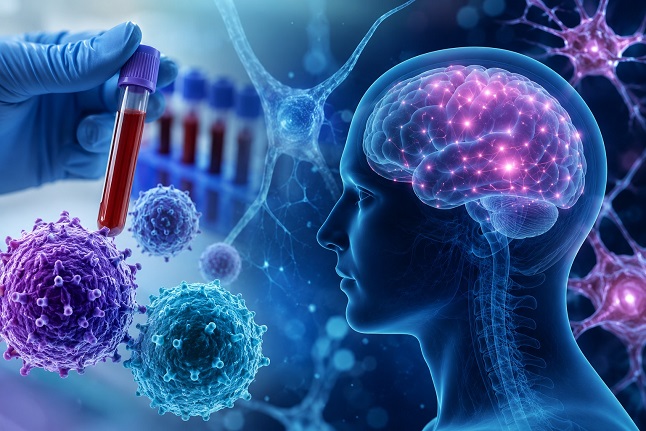 Scientists identify shared blood protein markers that may enable earlier detection and treatment of Alzheimer’s disease,
Parkinson’s disease, and multiple sclerosis
The study was conducted by researchers from SRM University-AP in Amaravati, India; the CSIR-Indian Institute of Chemical Biology in Kolkata, India; Jadavpur University in Kolkata, India; the University of South Florida and its Byrd Alzheimer’s Research Institute in Tampa, Florida, USA; and New England Biolabs in Ipswich, Massachusetts, USA.
A Common Thread Linking Different Brain Disorders
For years, Alzheimer’s disease, Parkinson’s disease, and multiple sclerosis were largely viewed as separate conditions with distinct causes. However, growing evidence suggests that all three disorders share a common feature: persistent inflammation involving interactions between the immune system and the brain.
The researchers developed a new analytical framework called IMMUND to identify protein markers in blood cells that may reveal the earliest stages of disease activity. Their focus was on mild-to-moderate Alzheimer’s disease, early-stage Parkinson’s disease, and multiple sclerosis.
A key part of the investigation centered on peripheral blood mononuclear cells, a group of immune cells that circulate in the bloodstream and can potentially cross a weakened blood-brain barrier. Once this protective barrier becomes compromised, immune cells and inflammatory molecules can enter the brain and contribute to disease progression.
Discovery of 177 Shared Protein Markers
After analyzing nearly 9,500 expressed proteins, the team identified 195 proteins shared among the three diseases. Following additional filtering, 177 common proteins were selected for detailed investigation.
Many of these proteins were associated with inflammation, immune signaling, and cellular communication. The findings support the theory that neurodegenerative diseases and autoimmune disorders may have overlapping biological mechanisms.
Researchers found that immune cells such as macrophages, monocytes, B cells, T cells, dendritic cells, and natural killer cells appear to play major roles in disease development. These cells produce signaling molecules that can either protect nerve cells or worsen damage depending on how they are activated.
Immune Cells May Drive Early Disease Progression
This
Medical News report highlights one of the study’s most
important discoveries: the strong connection between peripheral immune cells and changes occurring inside the brain.
The analysis revealed similarities between blood-derived immune cells and brain-resident cells such as astrocytes, microglia, and other neuroglial cells. Certain proteins showed distinct patterns across different diseases. For example, PAK1 was strongly linked to neurons in Alzheimer’s disease, while other markers appeared prominently in immune cells involved in Parkinson’s disease and multiple sclerosis.
The researchers also identified several important proteins including TREM2, FCGR3A, CD79B, STK3, and CDK12. Some of these markers consistently showed abnormal activity across multiple disease datasets, making them attractive candidates for future diagnostic tests.
Potential Targets for Future Treatments
Beyond diagnosis, the study examined the structural properties of several proteins to determine whether they could be targeted by drugs. Many belonged to kinase and immunoglobulin families, both of which are involved in immune regulation and cellular signaling.
Further validation using independent patient datasets confirmed significant abnormalities in several markers. Notably, STK3 showed consistent dysregulation across Alzheimer’s disease, Parkinson’s disease, and multiple sclerosis, suggesting it may represent a particularly important therapeutic target.
Conclusions
The findings provide compelling evidence that immune system abnormalities may serve as early warning signs for multiple neurological disorders. By identifying shared blood-based protein markers and revealing how immune cells interact with the brain, the IMMUND framework offers a potentially powerful strategy for earlier diagnosis and more precise treatment development. While additional laboratory and clinical studies are still needed, the research significantly advances understanding of the immune-brain connection and could help accelerate the development of new diagnostic tests and therapies for neurodegenerative diseases and multiple sclerosis.
The study findings were published in the peer reviewed International Journal of Molecular Sciences.
https://www.mdpi.com/1422-0067/27/12/5627
For the latest on brain diseases and neurodegeneration, keep on logging to Thailand
Medical News.
Read Also:
https://www.thailandmedical.news/articles/alzheimer,-dementia-




 Share
Share
 Tweet
Tweet
 Share
Share

































