Nikhil Prasad Fact checked by:Thailand Medical News Team Sep 03, 2026 16 minutes ago
Researchers studying an experimental magnetic therapy for people with Long COVID-related cognitive impairment have identified distinctive changes in blood proteins among participants classified as treatment responders.
The exploratory findings do not establish that Microtesla Magnetic Therapy (MMT) causes these biological changes or prove that it is an effective treatment for Long COVID. However, they provide potential clues about the molecular changes associated with clinical improvement and identify candidate biomarkers that could be investigated in larger trials.
The researchers were from Fareon, Inc., San Francisco, California; the Icahn School of Medicine at Mount Sinai, New York, New York; and Vero Bioscience, Inc., San Francisco, California.
Researchers Examined Thousands of Plasma Proteins
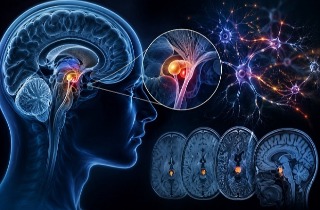
MMT is a low-amplitude, nonthermal radiofrequency electromagnetic field intervention delivered to the brain using a head-worn device. The proteomics investigation was embedded within a randomized, sham-controlled feasibility trial involving participants with cognitive impairment associated with Long COVID.
Researchers analyzed paired plasma samples collected at baseline and week four from 30 participants. Twenty received MMT and 10 received sham treatment, while clinical outcomes were followed through week eight.
Using SomaScan technology, investigators examined more than 10,000 plasma protein targets to determine whether early molecular changes were associated with subsequent clinical response.
More MMT Participants Met Exploratory Response Criteria
For this
Thailand Medical News report, an important finding involved the researchers' post hoc definition of clinical response, which incorporated processing speed, sustained attention, executive flexibility, working memory, and post-exertional malaise.
Under the exploratory requirement of improvement in at least two of five components, 16 of 20 MMT-treated participants met response criteria compared with three of 10 sham-treated participants, representing an observed risk difference of 50 percentage points.
Because this response definition was developed post hoc and the study was small, the result requires confirmation in larger prospective studies.
A 17-Protein Pattern Emerged
Proteomic analysis identified 69 SomaScan features corresponding to 66 unique protein targets that met the researchers' exploratory screening criteria. The findings indicated selective protein changes rather than a broad shift across the plasma proteome.
Researchers subsequently identified an exploratory 17-protein response pattern that was significantly more strongly expressed among MMT responders than MMT nonresponders, sham responders, and sham nonresponders.
One protein, Hedgehog-interacting protein (HHIP), showed the strongest separation between MMT responders and nonresponders. HHIP decreased among responders while increasing among nonresponders. A separate ELISA analysis provided supporting evidence, although the researchers stressed that HHIP has not been validated as a standalone biomarker.
Findings Point Toward Inflammation and Repair Pathways
Pathway analysis showed patterns consistent with lower inflammation and injury-related biol
ogy and higher repair and adaptive remodeling biology among MMT responders.
These included lower innate and myeloid inflammation, acute-phase, TLR, and inflammasome-related signals alongside higher membrane trafficking, vesicle transport, growth-factor responses, protein secretion, and cellular remodeling.
Exploratory OrganAge analysis also produced trends toward lower Brain and Organismal OrganAge changes with MMT, but these comparisons did not establish treatment benefit or organ rejuvenation.
Conclusions
The findings suggest that clinical response to MMT may be associated with selective plasma protein changes involving inflammation, injury, repair, and adaptive remodeling. However, larger independent studies are needed to validate the 17-protein pattern and HHIP, confirm the clinical findings, and determine whether these molecular signals can reliably monitor or predict treatment response.
The study findings were published on a preprint server and have yet to be peer-reviewed.
https://www.medrxiv.org/content/10.64898/2026.08.25.26361319v1
Read Also:
https://www.thailandmedical.news/articles/long-covid




 Share
Share
 Tweet
Tweet
 Share
Share