Nikhil Prasad Fact checked by:Thailand Medical News Team Mar 11, 2026 6 months, 3 weeks, 2 days, 21 hours, 15 minutes ago
Medical News: A Silent but Deadly Vascular Condition
Abdominal aortic aneurysm (AAA) is a dangerous condition where the main artery in the abdomen gradually enlarges and weakens. Often, people do not experience symptoms until the artery ruptures, which can be fatal in up to 85–90 percent of cases. Currently, surgery is the only effective treatment, as there are no approved drugs that can stop aneurysms from growing or prevent rupture.
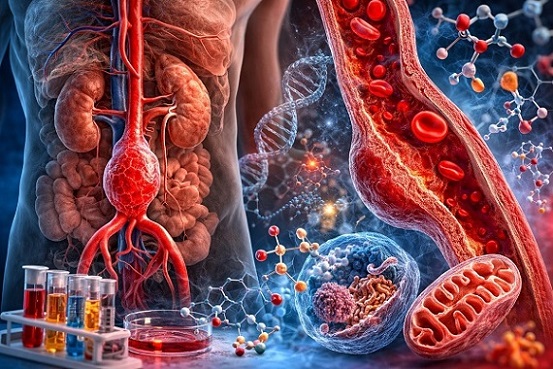 Scientists uncover metabolic changes that may drive the development of deadly abdominal aortic aneurysms
Now, researchers from the Department of Vascular Surgery at Renmin Hospital of Wuhan University, the Aortic Abdominal Aneurysm Translational Medicine Research Center of Hubei Province, and the Department of Pancreatic Surgery at Union Hospital, Tongji Medical College of Huazhong University of Science and Technology in China have uncovered new metabolic clues that may help scientists better understand how this disease develops.
Investigating the Metabolic Roots of AAA
The research team explored how changes in cellular metabolism might contribute to abdominal aortic aneurysm. They focused on vascular smooth muscle cells, which are critical cells that form the wall of blood vessels and help maintain vessel strength and structure.
To mimic disease conditions, scientists exposed these cells to angiotensin II, a hormone known to increase blood pressure and trigger aneurysm formation in experimental models. They also created an animal model using genetically modified mice prone to vascular disease.
Using advanced metabolomics technology, researchers analyzed thousands of small molecules produced inside cells and tissues. This approach allowed them to detect subtle metabolic changes associated with aneurysm development.
Hundreds of Metabolic Changes Detected
The study revealed major shifts in cellular metabolism after exposure to angiotensin II.
In the laboratory cell model, researchers detected 54 significantly altered metabolites, with 24 increasing and 30 decreasing. In mouse aortic tissue, the number was even higher - 470 metabolites showed significant changes, including 206 that increased and 264 that decreased.
These metabolic changes were linked to several biological processes such as:
-amino acid metabolism
-lipid metabolism
-antioxidant defense mechanisms
-inflammatory signaling pathways
The findings suggest that aneurysm formation involves widespread metabolic remodeling in blood vessel cells.
Three Key Molecules Linked to Aneurysm Formation
Among all the metabolic changes, three molecules stood out because they appeared in both cell and animal models:
-Carnitine
-Lysophosphatidylcholine (LPC)
-5-Hydroxyeicosatetraenoic acid (5-HETE)
These molecules are strongly associated with inflammation, energy metabolism, and vascular damage.
Carnitine plays an important role in transporting fatty aci
ds into mitochondria, where they are burned for energy. However, excess carnitine can also be converted by gut bacteria into compounds that increase cardiovascular risk.
LPC and 5-HETE are known inflammatory molecules. Their elevated levels suggest that inflammatory processes may accelerate the weakening of the aortic wall, increasing the risk of aneurysm expansion and rupture.
Discovery of a Potential New Disease Mechanism
One of the most intriguing discoveries involved a biological signaling pathway related to bile acids.
Although vascular cells do not produce bile, the study showed that metabolic pathways linked to bile secretion were strongly activated in aneurysm models. This led scientists to focus on a regulatory mechanism called the carnitine–FXR signaling axis.
FXR is a receptor that responds to bile acid signals and helps regulate inflammation and metabolism. Researchers believe that abnormal carnitine levels may disrupt this protective signaling pathway. If FXR activity is impaired, inflammation in the vessel wall may increase, contributing to aneurysm formation.
A Promising Direction for Future Treatments
This Medical News report highlights how metabolic disturbances may be a key driving force behind abdominal aortic aneurysm. The discovery of shared metabolic changes across both cell and animal models strengthens the evidence that molecules like carnitine, LPC, and 5-HETE play a central role in the disease process.
Understanding these metabolic signals could help researchers identify new biomarkers for early diagnosis and develop targeted therapies to slow or prevent aneurysm growth. However, scientists emphasize that further research involving human patients is needed to confirm these findings and translate them into clinical treatments.
The study findings were published in the peer reviewed journal: Biomedicines.
https://www.mdpi.com/2227-9059/14/3/623
For the latest on Aortic Aneurysms, keep on logging to Thailand
Medical News.
Read Also:
https://www.thailandmedical.news/articles/cardiology
https://www.thailandmedical.news/articles/health-news




 Share
Share
 Tweet
Tweet
 Share
Share

































