Nikhil Prasad Fact checked by:Thailand Medical News Team Mar 09, 2026 4 months, 4 weeks, 2 days, 6 hours, 11 minutes ago
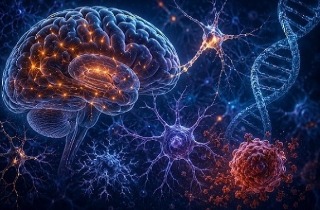
Medical News: Neurodegenerative diseases such as Alzheimer’s and Parkinson’s disease affect millions of people worldwide, gradually damaging the brain and leading to memory loss, confusion, and movement difficulties. Scientists have long known that these diseases are linked to toxic clumps of proteins inside brain cells. Now, researchers have uncovered a promising biological mechanism that could help prevent these dangerous protein buildups.
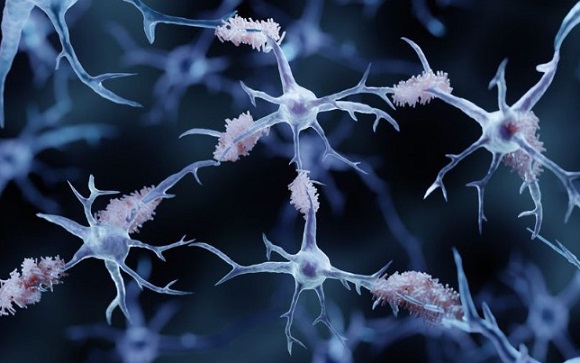 Tubulin helps steer key brain proteins away from dangerous clumps, offering a new path to fight Alzheimer’s
and Parkinson’s disease
A team of scientists from the Department of Biochemistry and Molecular Pharmacology, Baylor College of Medicine, Houston, Texas, USA, has discovered that a protein called tubulin may play a powerful protective role in the brain. Their findings reveal that tubulin can prevent harmful clumping of two key proteins—Tau and alpha-synuclein—by guiding them toward their normal and healthy functions.
The Dangerous Side of Tau and Alpha-Synuclein
Tau and alpha-synuclein are proteins that normally help nerve cells function properly. Tau helps maintain the structural stability of neurons, while alpha-synuclein plays an important role in communication between brain cells.
However, when these proteins misfold, they can stick together and form toxic aggregates. These clumps disrupt normal brain activity and gradually destroy neurons. In Alzheimer’s disease, abnormal Tau tangles are a hallmark feature, while Parkinson’s disease is strongly associated with alpha-synuclein clumps.
According to the researchers, these proteins gather inside microscopic droplet-like structures within cells known as condensates. These droplets help organize cellular processes, but they can also become breeding grounds for harmful aggregates.
Scientists have previously considered blocking the formation of these droplets as a possible treatment. However, since condensates also perform important healthy functions, stopping them completely could harm normal brain activity.
A New Strategy Instead of Blocking Droplets
Rather than preventing these droplets from forming, the researchers explored a different idea—guiding the proteins inside them toward healthy behavior.
Dr. Lathan Lucas, the study’s first author from Baylor College of Medicine, explained that Tau and alpha-synuclein behave somewhat like troublemakers that need the right kind of activity.
Instead of letting them wander into harmful aggregation, tubulin can give them something productive to do.
Tubulin is the building block of microtubules, which act like tiny railway tracks inside cells. These structures help transport nutrients and molecules throughout neurons and maintain their shape.
The research showed that when tubulin is available, Tau and alpha-synuclein are redirected toward building and stabilizing these microtubules instead of forming toxic clumps.
What Happens When Tubulin Levels Drop
>
The scientists found that low levels of tubulin can create a dangerous environment inside neurons.
When tubulin is scarce—something that has been observed in Alzheimer’s disease—microtubules become less stable and fewer in number. Under these conditions, Tau and alpha-synuclein start forming harmful structures such as oligomers and amyloid fibrils, which are strongly linked to neurodegeneration.
However, when tubulin levels are sufficient, the situation changes dramatically. Tubulin enters the protein droplets and promotes microtubule assembly. This interaction prevents the formation of toxic protein aggregates and stabilizes neuronal structures.
Using biochemical experiments, high-resolution microscopy, and neuronal models, the researchers demonstrated that tubulin effectively shifts these proteins away from disease-causing pathways.
This
Medical News report highlights that tubulin not only prevents harmful aggregation but also supports the physiological roles of Tau and alpha-synuclein in healthy neurons.
Transforming the Understanding of Neurodegeneration
The findings significantly change how scientists view tubulin in neurodegenerative diseases. Previously, it was often seen as a passive victim of disease processes. This study suggests that tubulin may actually act as an active defender against toxic protein buildup.
Researchers involved in the study include Dr. Lathan Lucas, Phoebe S. Tsoi, My Diem Quan, Kyoung-Jae Choi, Dr. Allan Ferreon, and Dr. Josephine C. Ferreon, all from the Department of Biochemistry and Molecular Pharmacology at Baylor College of Medicine in Houston, Texas, USA.
Conclusion
The study provides an important new perspective on how neurodegenerative diseases might be treated in the future. Instead of attempting to block protein condensates entirely, scientists may be able to guide the behavior of proteins like Tau and alpha-synuclein so they continue performing their normal roles. By increasing or stabilizing tubulin levels in neurons, it may be possible to reduce the formation of toxic aggregates while preserving essential cellular functions. This approach could open the door to therapies that are more selective and less disruptive to normal brain activity, offering hope for slowing or preventing diseases such as Alzheimer’s and Parkinson’s.
The study findings were published in the peer reviewed journal: Nature Communications.
https://www.nature.com/articles/s41467-026-69618-3
For the latest on Neurogenerative diseases, keep on logging to Thailand
Medical News.
Read Also:
https://www.thailandmedical.news/articles/alzheimer,-dementia-




 Share
Share
 Tweet
Tweet
 Share
Share