Nikhil Prasad Fact checked by:Thailand Medical News Team Jul 29, 2026 2 months, 5 days, 18 hours, 53 minutes ago
Medical News: Tiny Natural Particles from Honeysuckle Could Open New Path for Treating Severe Lung Damage
Scientists in China have developed tiny natural particles extracted from the medicinal plant Lonicera japonica, commonly known as Japanese honeysuckle, that dramatically reduced acute lung injury in laboratory mice. The research was led by investigators from The Third Clinical Medical College of Guangzhou University of Chinese Medicine, The Third Affiliated Hospital of Guangzhou University of Chinese Medicine, the School of Pharmaceutical Sciences, the Artemisinin Research Center, the Second Affiliated Hospital of Guangzhou University of Chinese Medicine, the Sci-tech Industrial Park of Guangzhou University of Chinese Medicine, and China Resources Sanjiu Medical & Pharmaceutical Co., Ltd., all based in China.
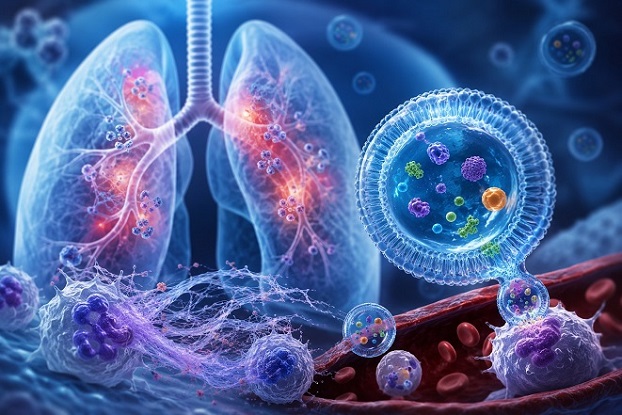 Tiny nanovesicles extracted from honeysuckle dramatically reduced inflammation and protected lungs from severe
injury in laboratory mice
A Serious Disease with Few Effective Treatments
Acute lung injury is a life-threatening condition that causes severe inflammation, fluid leakage into the lungs, and difficulty breathing. It can develop after serious bacterial or viral infections and became widely recognized during the COVID-19 pandemic. Despite advances in supportive care, there are still very few medicines that directly stop the damaging inflammatory process.
Tiny Plant Nanovesicles Target the Lungs
The researchers isolated nanosized vesicles measuring about 72 nanometers from Lonicera japonica. These natural particles were found to accumulate inside lung neutrophils after intravenous injection, allowing them to reach the damaged tissue efficiently. The treated mice showed less weight loss, improved movement, reduced lung swelling, lower leakage from blood vessels into the lungs, and significantly healthier lung tissue compared to untreated animals. The intravenous treatment also performed better than oral administration and even outperformed both traditional honeysuckle extract and dexamethasone in this mouse model.
Blocking the Harmful Immune Overreaction
This
Medical News report highlights that the treatment worked by reducing the formation of neutrophil extracellular traps, or NETs. These sticky web-like structures are normally released by immune cells to trap invading microbes.
However, when produced excessively, they can trigger an overwhelming inflammatory response that damages healthy lung tissue.
The honeysuckle-derived nanovesicles sharply reduced the buildup of neutrophils in the lungs and lowered NET formation. At the same time, they suppressed numerous inflammatory signaling molecules, including IL-2, IL-3, IL-4, IL-6, IL-9, IL-12, TNF-alpha, G-CSF, CXCL1, CCL3, CXCL9, CXCL13 and several other chemokines that normally attract more inflammatory cells into injured lungs. This broad reduction in inflammatory signals helped calm the destructive immune storm responsible for severe lung damage.
Protecting Cells from Int
ernal Damage
The investigators also uncovered how the nanovesicles work inside immune cells. Excessive cellular recycling, known as autophagy, can damage lysosomes and promote NET production. The study showed that the nanovesicles restored healthier autophagy activity, increased protective p62 levels, reduced LC3B-II expression, limited abnormal movement of LC3 into the nucleus, and preserved lysosomal integrity. Electron microscope images confirmed that treated mice had far fewer damaged lysosomes than untreated animals, indicating healthier immune cell function. Importantly, when researchers artificially forced neutrophils to produce NETs using PMA, nearly all of the protective benefits disappeared, confirming that suppression of NET formation was central to the treatment's effectiveness. The nanovesicles also demonstrated good safety, causing no meaningful damage to the liver, kidneys, heart or spleen during the experiments.
Conclusion
Although these findings are limited to animal studies and human clinical trials are still required, the research suggests that naturally derived honeysuckle nanovesicles could become an innovative targeted therapy for acute lung injury by calming excessive immune responses, preventing harmful NET formation, preserving immune cell health, and significantly reducing inflammation without obvious safety concerns.
The study findings were published in the peer reviewed journal: Advanced Healthcare Materials.
https://advanced.onlinelibrary.wiley.com/doi/10.1002/adhm.71470
For the latest on herbs and phytochemicals, keep on logging to Thailand
Medical News.
Read Also:
https://www.thailandmedical.news/articles/herbs-and-phytochemicals




 Share
Share
 Tweet
Tweet
 Share
Share

































