The Phytochemical Polyphyllin II from the Rhizoma Paridis Plant Sparks a Powerful New Pathway Against Liver Cancer
Nikhil Prasad Fact checked by:Thailand Medical News Team Jan 07, 2026 7 months, 3 weeks, 5 days, 13 hours, 19 minutes ago
Medical News: Ancient Herb Compound Shows Modern Promise
Scientists from Beijing University of Chinese Medicine and Guang’anmen Hospital of the China Academy of Chinese Medical Sciences have discovered how a natural plant compound called Polyphyllin II can force liver cancer cells to destroy themselves.
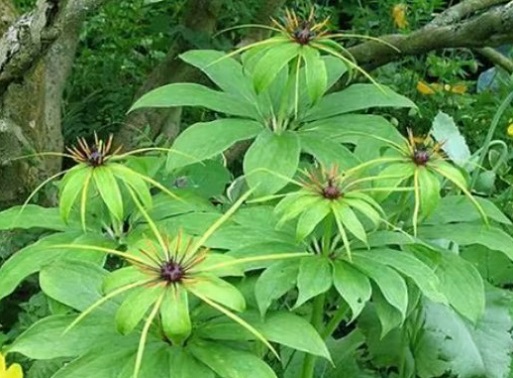 A phytochemical from the Rhizoma Paridis plant triggers explosive self-destruction in liver cancer cells
Polyphyllin II (PPII), the primary bioactive compound in the Chinese herb Rhizoma Paridis, has been shown to possess strong anticancer activity against multiple malignant tumors. This new study reveals that this traditional Chinese medicine ingredient triggers a dramatic form of programmed death known as pyroptosis, a process where cells swell, burst and spill their contents into surrounding tissues.
This type of cell death matters because unlike the quiet, tidy shutdown seen in standard cell death, pyroptosis creates an immune alert. When cancer cells burst open, they release inflammatory signals that may awaken the body’s immune system to step in and help finish the job. This
Medical News report highlights how the compound might one day be used to support liver cancer treatment.
What Is Pyroptosis
Pyroptosis is a fiery biological process where cells balloon, blister and rupture. It is the exact opposite of the silent and clean death known as apoptosis. Under the microscope, liver cancer cells treated with Polyphyllin II swelled like balloons before their membranes split. This release of internal cell material could make tumors more visible to the immune system.
Researchers documented these classic hallmarks using lab-grown cancer cells. They saw swollen cells, pore formation along the membrane, and clouds of immune-triggering chemicals released from the dying cancer cells, suggesting the compound was engaging the true pyroptosis pathway.
The Chemical Chain Reaction Behind Cell Bursting
Polyphyllin II sets off a cascade of reactions inside the tumor cells. First, it causes an unusual wave of calcium to enter the cell. That surge stimulates the overproduction of reactive oxygen species, which are unstable molecules known to damage cells and trigger internal alarm systems.
Once the stress rises high enough, a powerful internal sensor known as NLRP3 becomes activated. This sensor then switches on Caspase-1, an enzyme that slices open a protein called GSDMD. Part of this protein moves into the cell membrane and punches holes into it, causing the contents to leak out and eventually explode outward. During this process, the cells release inflammatory molecules including IL-1β, IL-18, IFN-β, IFN-γ, IL-6, and TNF-α, which can help rally immune cells nearby.
Mouse Experiments Confirm Tumor Shrinkage
To check whether this worked beyond glass dishes, researchers tested Polyphyllin II in mice with human liver tumors. Animals given the
compound showed much slower tumor growth, with higher doses shrinking tumors more dramatically. Although the highest dose caused mild stress in the liver, other organs remained intact, suggesting it could be safely used with careful dosing.
Conclusion
In simple terms, Polyphyllin II appears to blow up liver cancer cells from the inside out. It forces a rise in calcium, increases oxidative stress, activates the key NLRP3 alarm system, and splits proteins that perforate cell membranes. This unleashes inflammatory substances that may draw immune cells into the fight. The findings suggest Polyphyllin II could form the basis of an entirely new approach to liver cancer therapy, one that destroys tumors while potentially helping the immune system recognize them. More research is needed, but the groundwork looks promising and opens fresh pathways for cancer treatment.
The study findings were published in the peer reviewed journal: Antioxidants.
https://www.mdpi.com/2076-3921/15/1/75
For the latest on Liver Cancer, keep on logging to Thailand
Medical News.
Read Also:
https://www.thailandmedical.news/articles/cancer
https://www.thailandmedical.news/articles/herbs-and-phytochemicals




 Share
Share
 Tweet
Tweet
 Share
Share

































