Nikhil Prasad Fact checked by:Thailand Medical News Team Jul 17, 2026 1 month, 2 weeks, 2 days, 16 hours ago
Medical News: Scientists Discover Hidden Nervous System Changes That May Explain Persistent Long-COVID Symptoms
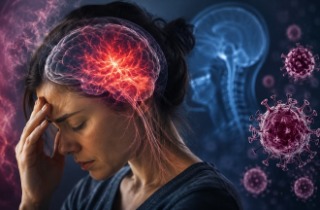
A growing number of people recovering from COVID-19 continue to struggle with unexplained dizziness, rapid heartbeat, overwhelming fatigue and brain fog long after the infection has cleared. Now, researchers in Mexico believe they have uncovered an important piece of the puzzle. Their latest study suggests that damage to a vital body mechanism known as the baroreflex may be one of the hidden drivers behind many Long-COVID symptoms and could become an important new way of diagnosing patients.
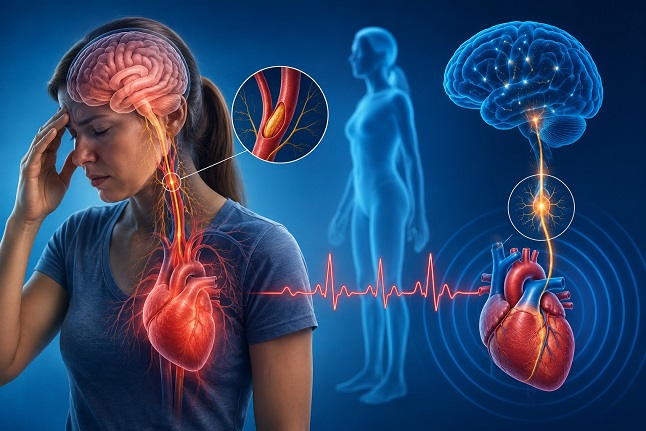 Researchers have identified hidden baroreflex damage as a possible explanation for persistent Long-COVID symptoms
and a promising new diagnostic target
The research was carried out by scientists from the Faculty of Engineering at the National Autonomous University of Mexico (UNAM), the Department of Neurology and Psychiatry at the National Institute of Medical Sciences and Nutrition Salvador Zubirán, the Metabolic Diseases Research Unit at Tecnológico de Monterrey, and the Department of Cardiac Physiology at the National Institute of Cardiology Ignacio Chávez, all located in Mexico City.
What Is Baroreflex Damage and Why Does It Matter?
The baroreflex is one of the body's fastest and most important automatic control systems. Tiny pressure sensors located inside major arteries constantly monitor blood pressure and instantly send signals to the brain whenever pressure rises or falls. In response, the brain automatically adjusts the heart rate and the tightening or relaxing of blood vessels to keep blood flowing normally to vital organs, especially the brain.
When this system works properly, people can stand up without becoming dizzy because blood pressure is rapidly stabilized. However, baroreflex damage means these automatic signals become weaker or slower. As a result, the heart and blood vessels fail to respond efficiently, causing blood pressure and heart rate to fluctuate abnormally. This can lead to dizziness, lightheadedness, blurred vision, palpitations, fatigue, fainting episodes and difficulty remaining upright for long periods.
The researchers believe that this hidden dysfunction may explain why many Long-COVID patients experience symptoms that resemble Postural Orthostatic Tachycardia Syndrome (POTS), even though they do not meet the current medical criteria for that diagnosis.
New Testing Method Detects Hidden Autonomic Dysfunction
The study involved 38 individuals who continued suffering Long-COVID symptoms after recovering from mild or moderate COVID-19 infections. Their results were compared with 14 healthy volunteers.
Participants underwent continuous beat-by-beat monitoring of their heart rate and blood pressure while lying down and again after standing up.
Instead of relying solely on traditional testing methods, the scientists developed a new graphical measurement of baroreflex sensitivity, allowing them to observe how effectively each person's nervous system responded to changes in blood pressure.
The findings revealed that L
ong-COVID patients consistently had significantly reduced baroreflex sensitivity compared to healthy individuals. Even patients who did not qualify for a formal diagnosis of POTS still showed measurable impairment of their autonomic nervous system.
Hidden Damage Appears to Occur Along a Spectrum
One of the study's most important discoveries was that autonomic dysfunction is not simply present or absent. Instead, patients appeared to fall into three distinct groups ranging from relatively mild impairment to severe dysfunction.
This
Medical News report highlights that the new testing approach was able to separate patients according to the severity of their baroreflex damage far more effectively than current diagnostic criteria.
Patients with the worst baroreflex impairment also had higher resting heart rates, elevated blood pressure while standing and markedly lower heart rate variability, an important indicator of healthy communication between the brain and heart.
The researchers also found that as baroreflex function deteriorated, several established measures of heart rhythm regulation—including SDNN, RMSSD and pNN50—declined progressively, indicating worsening autonomic control. Their newly developed graphical technique closely matched the results produced by established gold-standard methods while offering a much simpler way to evaluate patients.
Perhaps most importantly, the new approach successfully identified individuals who had obvious symptoms but would otherwise remain difficult to diagnose using existing clinical definitions.
A New Direction for Long-COVID Diagnosis
The findings suggest that measuring baroreflex sensitivity could become an important addition to Long-COVID assessments by helping physicians detect hidden autonomic nervous system damage earlier and classify patients according to disease severity rather than forcing them into rigid diagnostic categories. While larger studies are still needed before the method becomes part of routine clinical practice, the research offers fresh hope that many patients whose symptoms have remained unexplained may finally receive more accurate diagnoses and better-targeted treatment strategies.
The study findings were published in the peer reviewed journal: Frontiers in Cardiovascular Medicine.
https://www.frontiersin.org/journals/cardiovascular-medicine/articles/10.3389/fcvm.2026.1830347/full
For the latest on Long COVID, keep on logging to Thailand
Medical News.
Read Also:
https://www.thailandmedical.news/articles/long-covid
Visit Also:
https://thailandwellness.news/
https://www.thailandhotel.news
https://bangkokhotel.news/
https://www.thailandai.news
https://bangkokgems.news/
https://www.bangkokbusiness.news




 Share
Share
 Tweet
Tweet
 Share
Share